KAT6 NEWS & STORIES
Latest updates from the KAT6 Foundation
Find stories of hope, updates from the foundation, international news, and more!
Featured blog posts
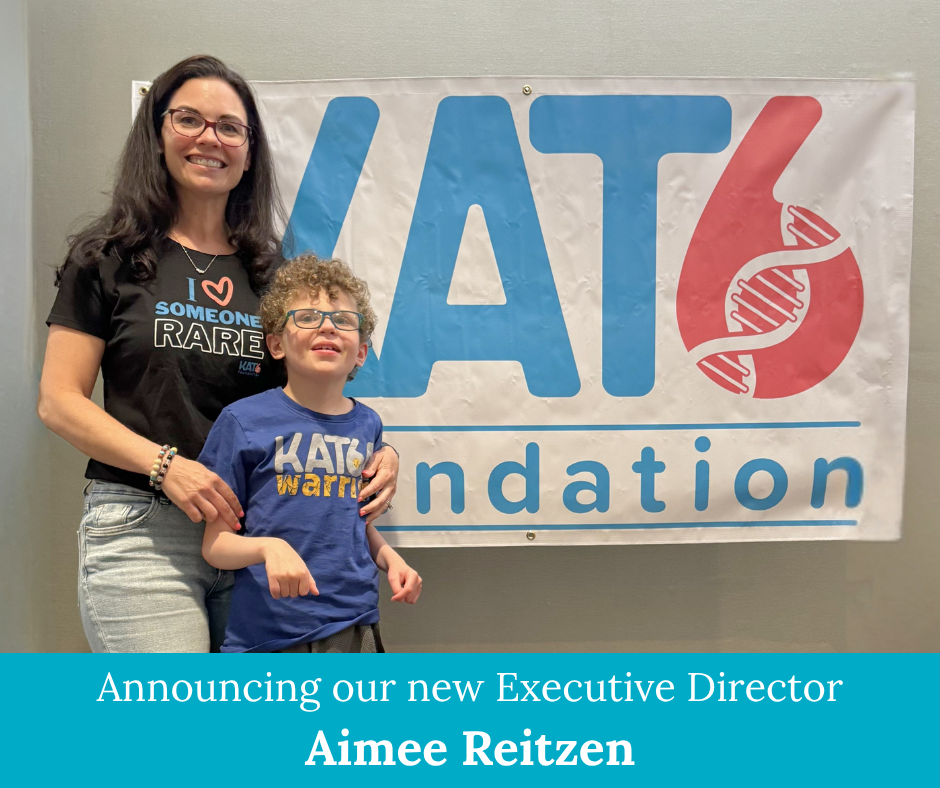
Announcing our New Executive Director
Dear KAT6 Community,
On behalf of the KAT6 Foundation Board of Directors, I am pleased to announce the appointment of Aimee Reitzen as the KAT6 Foundation's new Executive Director.
Many of you already know Aimee through her years of service to our community. As a founding Board member and longtime volunteer, she has helped shape the Foundation from its earliest days. Throughout her nearly decade-long involvement, Aimee has led many of the Foundation's communications, awareness, and family support efforts, including developing the KAT6A & KAT6B Caregiver Handbook, launching the Foundation's website, spearheading the creation of the Empowered Grants Program, and helping grow KATwalk from a small grassroots fundraiser into the Foundation's signature annual event. For many families, she has also been one of the first people they connected with after receiving a diagnosis, offering guidance, resources, and a sense of community during an often overwhelming time.
As the parent of a child with KAT6A syndrome, Aimee brings a unique combination of personal experience, professional expertise, and deep commitment to our mission. For nearly a decade, she has worked tirelessly to support families, strengthen connections across our global community, and help advance research and educational initiatives that benefit individuals with KAT6A and KAT6B syndromes.
Since our founding in 2017, the KAT6 Foundation has grown tremendously. Together, we have funded important research, established the Patient Registry and iPSC Biobank, expanded educational resources, launched family support initiatives, supported the development of the KAT6 Clinic at Boston Children's Hospital, and built a truly global community. Aimee has been an important part of that journey, and we are excited to see her step into this leadership role as we continue building on that progress.
Please join me in congratulating Aimee on her new role. I look forward to working alongside her as we continue advancing our mission to improve the lives of individuals and families affected by KAT6A and KAT6B syndromes.
Thank you for your continued support of the KAT6 Foundation and the incredible community we have built together.
Warm regards,
Jordan Muller
Chairperson, Board of Directors
KAT6 Foundation
.jpeg)
The Day the World Stopped & The Team That Kept Us Moving
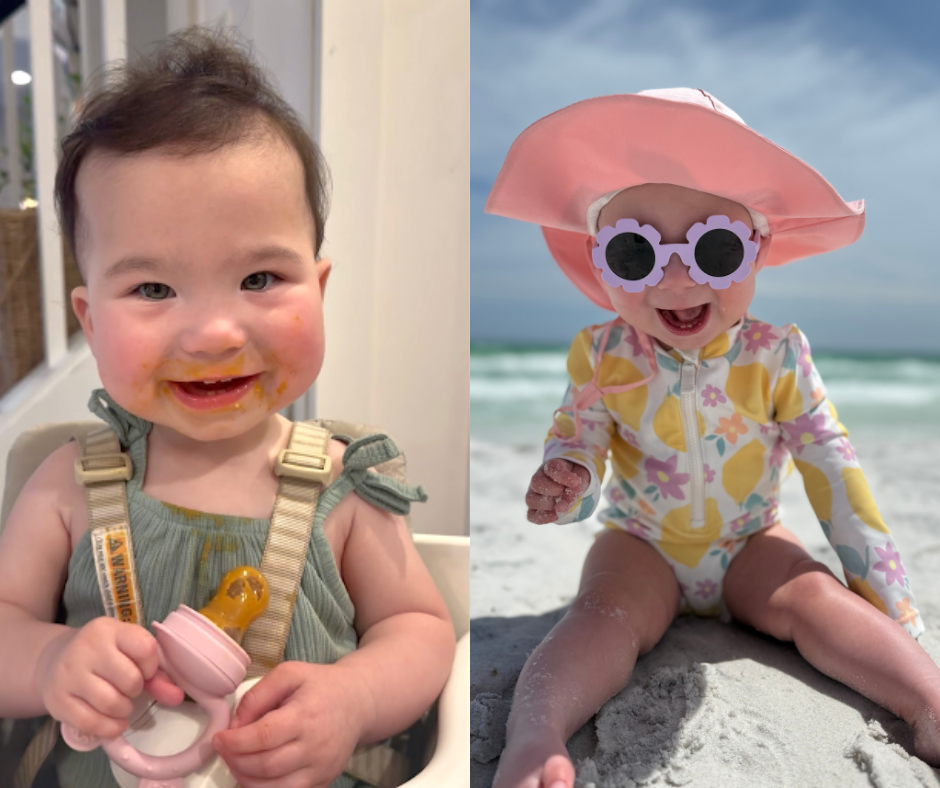
In the Korean culture, we celebrate when a baby turns 100 days old. Historically, it marked the major milestone of a baby surviving past the point where infant mortality was highest. Today, it’s a joyful time for family to come together to bless the baby with happiness and health. On the very day we should have been celebrating Lily’s 100th day of life, we received her KAT6A diagnosis from her neurologist, and the world stopped.
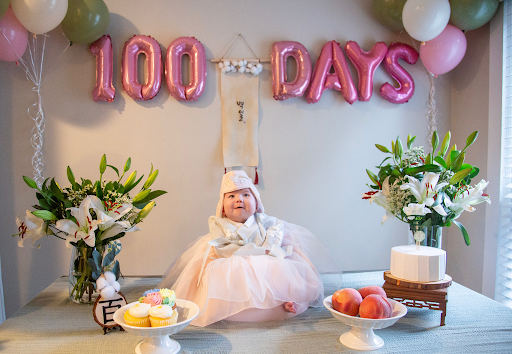
Lily was born at 36 weeks and spent her first 29 days in the NICU. At first, her NICU admission was due to low oxygen saturation but poor feeding and hypotonia quickly followed. Every day, I’d start my routine of trying to nurse her then bottle feed her only for her to end up feeding through a tube. As her mom, I felt immense pressure to figure it out. I was the one who was supposed to be able to take care of her. I spent hours at the NICU, 7 days a week, trying to increase her intake volumes little by little. I assumed this would be very temporary though and that one day, feeding would just click for her and we’d be over this hurdle. But as the days went on, we continued to struggle. Each day brought a new specialist. She became a patient of Neurology, Cardiology, Urology, Audiology, Gastroenterology, Physical Therapy, and Feeding Therapy. Part of me thought the hospital was being overly cautious or just trying to take advantage of my insurance coverage. Why did she need to see all these specialists? We were going to get out of here anyway and resume our normal lives. Looking back now, I don’t think I was fully able (or willing) to grasp the reality of our situation. I was hopeful that this would be a temporary blip and that everything would work out. I never even considered there could be something deeper going on.
After a month, we just barely got to a point with bottle feeding where we received the green light to take her home. I continued to hold out hope that things would just improve naturally, but Lily’s hypotonia made her easily exhausted and she was never able to finish her bottles. Ultimately, she was diagnosed as failure to thrive around the same time we received her diagnosis. This is the point when I realized I needed help. I needed that team of specialists from the NICU that I took for granted. I started to understand the value of early intervention. Lily and I needed help. So at just three months old, Lily started weekly physical therapy and feeding therapy and I started my journey of putting together Lily’s team of doctors.
As a parent of a medically complex child, juggling and repeating are two things I’ve gotten good at. I can list off all of Lily’s doctors, their departments, their locations, and our most recent visit notes. I can coordinate appointments, make calls, and re-arrange schedules. What I can’t do is be an expert in all of these fields, no matter how hard I try. Lily’s Physical Therapist, Sarah, was the one who matched Lily’s pace and worked with her week after week to build her core and help her coordination. Her Feeding Therapist, Rachel, was the one who figured out that using a speciality feeding valve in her bottle would help accommodate her low oral muscle tone. Her Gastroenterologist, Steven, was the one who recommended a high calorie formula to increase her growth velocity. Her Nutritionist, Natalie, is the one who keeps track of her protein intake and volume levels. The KAT6 support group helped us get in touch with Dr. Richard Kelley who was able to review her lab work and recommend the mitochondrial cocktail to support her development. The list goes on and on because Lily has an entire team of doctors, specialists, and therapists who support her (and me).
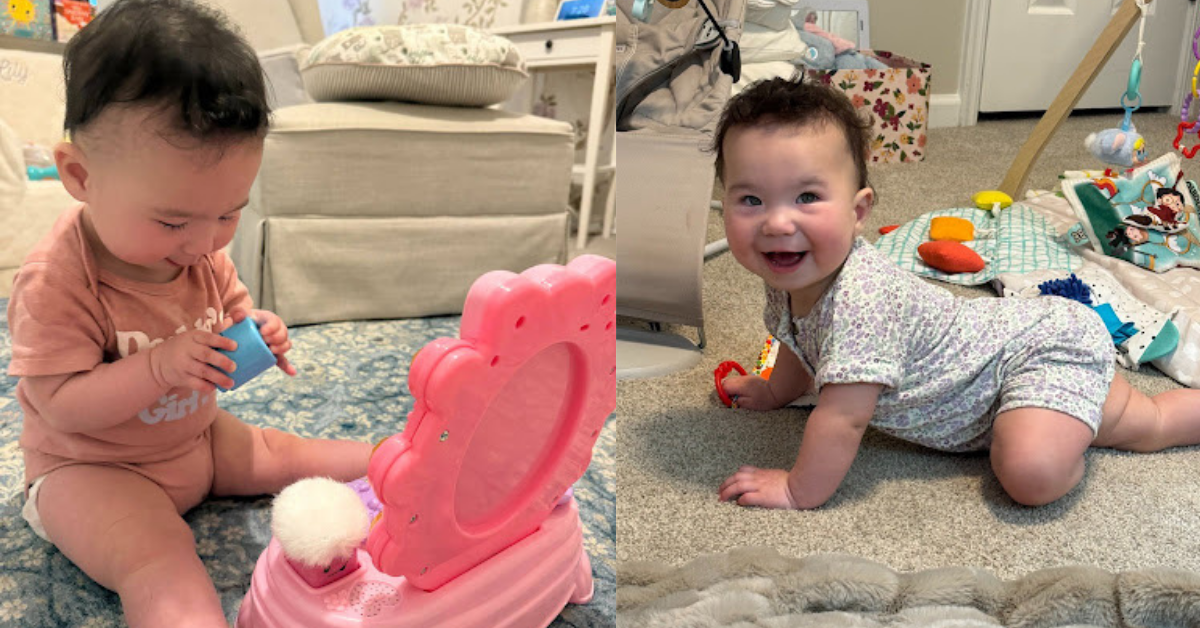
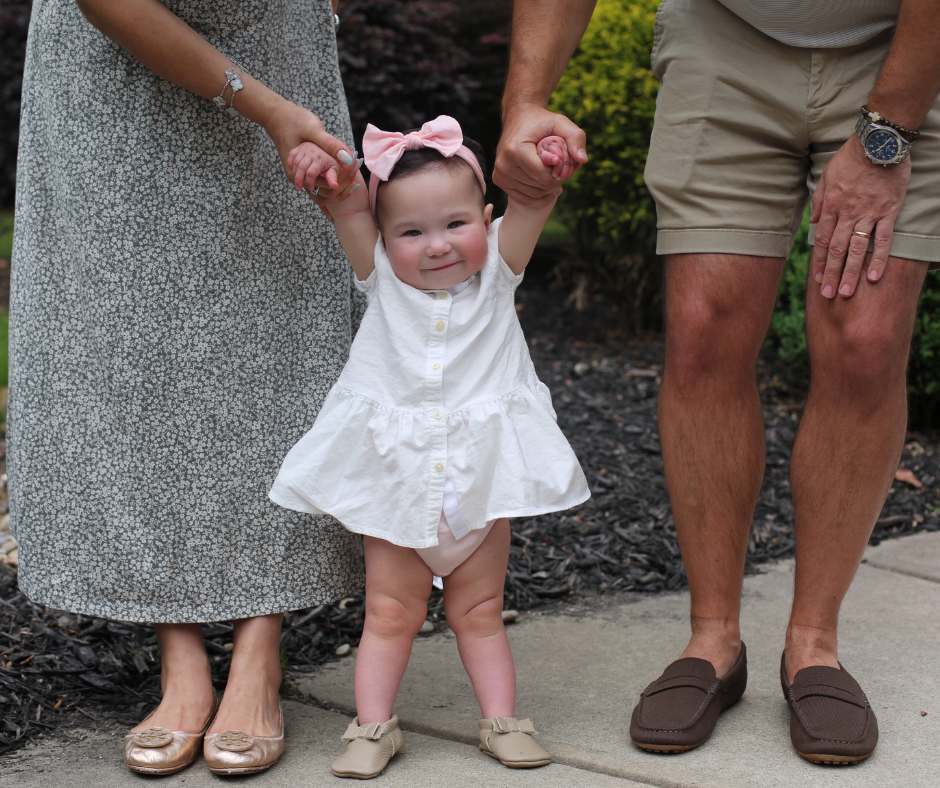
With KAT6A, I’ve learned that it’s hard to know what the future will look like. It’s hard to anticipate what Lily’s progress will be or where she’ll need more support. I’ve learned that instead of wondering or worrying, we need to just tackle the symptoms as they arise. We need to celebrate all the wins both big and small. We need to take things at Lily’s pace. As a parent, you always hear people say that it takes a village and now I truly understand that. She has a community of people who all share a singular goal - ensuring that Lily is able to thrive. I will forever be grateful for her team. Because of them, Lily recently reached some major milestones. She is able to go from her tummy to an independent sitting position without any help. She’s able to scoot around on her belly and army crawl from one side of a room to another. She is eating level 2 solids and learning to drink from a cup. She is waving hello. And lastly, she has started to do something that bursts my heart wide open. She has started to form the word “mama” with her mouth and has even said it a few times. I’m so proud of my sweet girl and everything she has been able to accomplish with the help of all those who love and support her.
Announcing our New Executive Director
Dear KAT6 Community,
On behalf of the KAT6 Foundation Board of Directors, I am pleased to announce the appointment of Aimee Reitzen as the KAT6 Foundation's new Executive Director.
Many of you already know Aimee through her years of service to our community. As a founding Board member and longtime volunteer, she has helped shape the Foundation from its earliest days. Throughout her nearly decade-long involvement, Aimee has led many of the Foundation's communications, awareness, and family support efforts, including developing the KAT6A & KAT6B Caregiver Handbook, launching the Foundation's website, spearheading the creation of the Empowered Grants Program, and helping grow KATwalk from a small grassroots fundraiser into the Foundation's signature annual event. For many families, she has also been one of the first people they connected with after receiving a diagnosis, offering guidance, resources, and a sense of community during an often overwhelming time.
As the parent of a child with KAT6A syndrome, Aimee brings a unique combination of personal experience, professional expertise, and deep commitment to our mission. For nearly a decade, she has worked tirelessly to support families, strengthen connections across our global community, and help advance research and educational initiatives that benefit individuals with KAT6A and KAT6B syndromes.
Since our founding in 2017, the KAT6 Foundation has grown tremendously. Together, we have funded important research, established the Patient Registry and iPSC Biobank, expanded educational resources, launched family support initiatives, supported the development of the KAT6 Clinic at Boston Children's Hospital, and built a truly global community. Aimee has been an important part of that journey, and we are excited to see her step into this leadership role as we continue building on that progress.
Please join me in congratulating Aimee on her new role. I look forward to working alongside her as we continue advancing our mission to improve the lives of individuals and families affected by KAT6A and KAT6B syndromes.
Thank you for your continued support of the KAT6 Foundation and the incredible community we have built together.
Warm regards,
Jordan Muller
Chairperson, Board of Directors
KAT6 Foundation
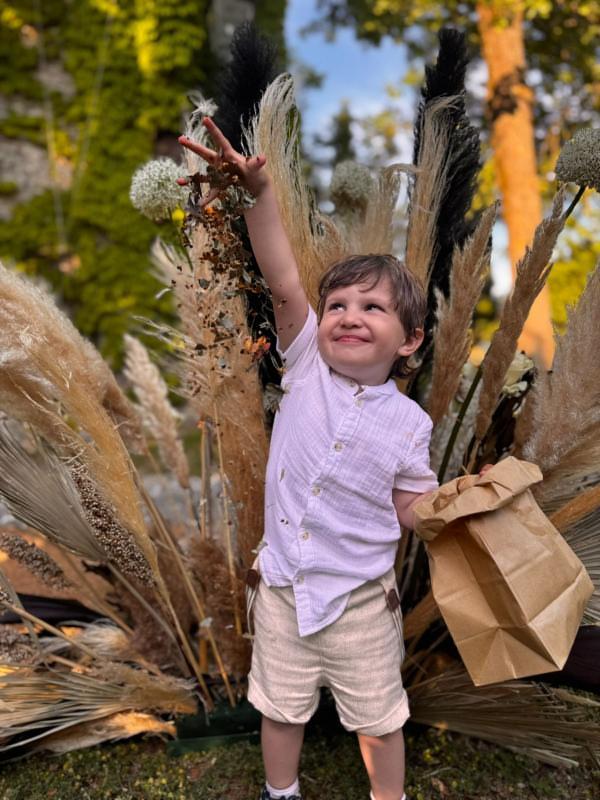
Questo è Samuele
Ciao a tutti,
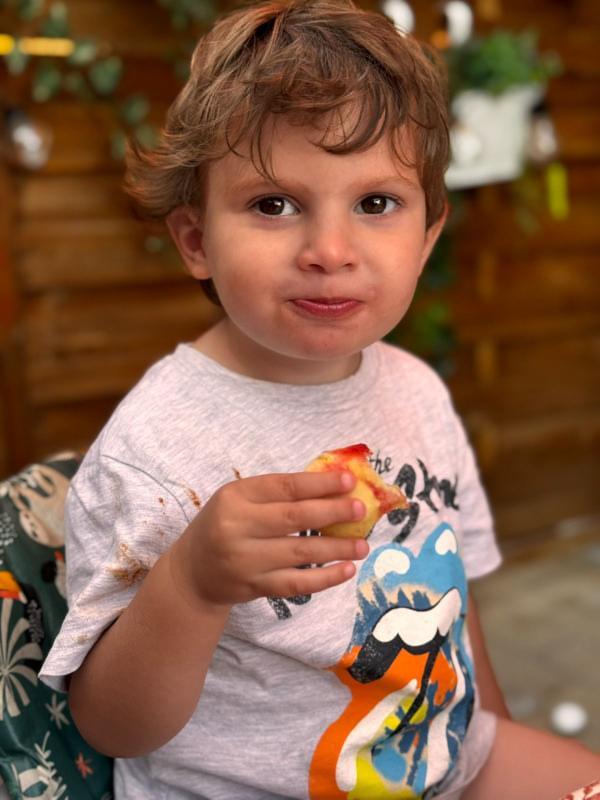
Questo è Samuele. È nato il 5 aprile 2022 e, fin dai suoi primi giorni, ha riempito le nostre vite di un amore difficile da spiegare a parole.
Nei primi mesi di vita, però, qualcosa non tornava. Samuele faceva fatica a fissare e mantenere lo sguardo di mamma e papà. Erano piccoli segnali, quasi impercettibili per molti, ma non per la sua mamma, Serena, educatrice d'infanzia. Il suo sguardo esperto e il suo cuore di mamma avevano già capito che c'era qualcosa da approfondire.
Per mesi si è tenuta dentro dubbi e paure. Poi, il 9 agosto, ha trovato il coraggio di condividere tutto con il papà. Da quel momento è iniziato un percorso che ci ha portato presso l'Ospedale Bellaria di Bologna, seguiti dalla Dott.ssa Paola Visconti (Neuropsichiatria Infantile – IRCCS).
All'inizio l'ipotesi era quella di un disturbo dello spettro autistico. Ci dissero che era "uno dei più piccoli mai visti e con tratti tra i più marcati". Parole che fanno tremare le gambe.
Samuele ha iniziato prestissimo la neuropsicomotricità e la piscina, già a 9 mesi, perché presentava una forte ipotonia.
In tutto questo, la mamma non si è mai arresa. Con amore, passione ed estrema dedizione ha messo tutta se stessa in ogni esercizio, in ogni gioco trasformato in terapia, in ogni piccolo progresso conquistato giorno dopo giorno. Sempre con un obiettivo: fare un passo in più. Anche minuscolo. Ma in più.
Oggi Samuele ha quasi quattro anni. Ha buone capacità di comprensione, considerando la sindrome, e buone competenze motorie. Parla usando singoli vocaboli, detti a modo suo, ma chi lo conosce sa perfettamente cosa vuole dire. La valutazione cognitiva ha evidenziato un QI pari a 88, un dato che racconta molto più potenziale di quanto si possa immaginare.
Il 28 novembre 2025 è arrivata la diagnosi genetica: sindrome KAT6A. Una malattia rara, di quelle che ti costringono a studiare, a cercare, a confrontarti con altri genitori nel mondo, a diventare esperto per necessità.
Ma prima di qualsiasi diagnosi, prima di qualsiasi sigla, Samuele è un bambino. È un bimbo felice. Entusiasta della vita. Ama il suo cane Joy, viaggiare, sperimentare cose nuove, mangiare (da buon italiano questa è una delle sue passioni più grandi!), fa basket, continua ad andare in piscina ed è amato da tutti i suoi compagni.
Ai suoi genitori Samuele ha insegnato che le etichette non definiscono una persona. Che i tempi possono essere diversi, ma il valore è lo stesso. Che la forza non fa rumore, ma costruisce ogni giorno.
E questa è solo l'inizio della sua storia.
This is Samuele
Hi everyone,
This is Samuele. He was born on April 5th, 2022, and from his very first days he filled our lives with a kind of love that is hard to put into words.
In his first months, however, something didn't feel quite right. Samuele struggled to fix and maintain eye contact with mom and dad. They were small signs, almost imperceptible to many, but not to his mother Serena, an early childhood educator. Her trained eye and her mother's heart already knew that something needed to be explored further.
For months she kept her doubts and fears to herself. Then, on August 9th, she found the courage to share everything with his dad. From that moment on, a journey began that led us to the Bellaria Hospital in Bologna, where we were followed by Dr. Paola Visconti (Child Neuropsychiatry – IRCCS).
At first, the hypothesis was autism spectrum disorder. We were told he was "one of the youngest ever seen, and with some of the most marked traits." Words that make your legs tremble.
Samuele started neuropsychomotor therapy and swimming very early, at just 9 months old, due to significant hypotonia.
Throughout all of this, his mother never gave up. With love, passion, and extraordinary dedication, she put all of herself into every exercise, every game turned into therapy, every small achievement earned day after day. Always with one goal: to take one more step forward. Even a tiny one. But forward.
Today Samuele is almost four years old. He has good comprehension skills, considering the syndrome, and good motor abilities. He speaks using single words, pronounced in his own way, but those who know him understand perfectly what he wants to say. His cognitive evaluation showed an IQ of 88, a number that speaks of far more potential than one might imagine.
On November 28th, 2025, we received the genetic diagnosis: KAT6A syndrome. A rare condition, the kind that forces you to study, to search, to connect with other parents around the world, to become an expert out of necessity.
But before any diagnosis, before any label, Samuele is a child. He is a happy little boy. Full of enthusiasm for life. He loves his dog Joy, traveling, trying new experiences, eating (as a true Italian, this is one of his greatest passions!), he plays basketball, continues swimming, and is loved by all his classmates.
To his parents, Samuele has taught that labels do not define a person. That timelines may be different, but value is the same. That strength does not make noise — it builds, quietly, every single day.
And this is only the beginning of his story.
Latest blog posts

Fyona’s Journey with KAT6: A German Family’s Story
Our story is filled with sadness, fear, and despair, but also with a great deal of hope and love.
We are from Germany, in the state of Rhineland-Palatinate — more specifically, from the Westerwald region. We are a small family: mom (Jessica), dad (Daniel), and two children. Our “big” girl, Katelyn, just turned seven, and our little one, Fyona, is four years and six months old and will turn five in April.
From the moment she was born, I (Jessica) felt that something wasn’t right. After birth, Fyona wouldn’t breastfeed. It took hours before she finally latched. She was relatively small and light at birth, which didn’t worry me at first because Katelyn had also been small — not quite as small as Fyona, but still similar. We were allowed to go home, and that’s when the nightmare began. Whether breastfeeding or not, whether asleep or awake, Fyona constantly choked. She would gag, stop breathing, turn blue, and then vomit. Day in and day out. We went from doctor to doctor. No one could help. Everything was brushed off as if we were imagining it. We saw a pulmonologist, but he said everything looked fine.
Fyona wasn’t vaccinated until she was eight months old because she was constantly sick, but the pulmonologist said that as long as she didn’t have a fever, she should be vaccinated. So we did. At eight months, she began sitting up, and the episodes of turning blue became less frequent, but the choking, gagging, and vomiting continued. She would eat fruit purée pouches and vomit afterward as well (I suspect hunger was the only reason she tried to eat something she apparently couldn’t tolerate). She gained weight poorly, wasn’t growing, and refused both drinking and solid foods. The moment any puréed food touched her lips, she started gagging and vomiting.
We went from hospital to hospital and clinic to clinic. Again and again I heard the same thing: “Breastfeeding until age three is normal — if she’s hungry, she’ll eat.”
We had never felt so helpless and abandoned. You watch your child grow thinner and fear how long her body can handle it, all while fighting with doctors just to be taken seriously. Comments like that drove us to despair.
I tried to explain that breast milk is only calorie-rich during the first year and afterward is basically just fluid. I felt like no one was listening.
In one clinic, they diagnosed failure to thrive, developmental delay, a speech disorder, esophageal reflux, esophagitis, and constipation. Then we were sent home with tablets to dissolve, even though I sat in front of the doctor in tears explaining my fears. The only response was, “A cow doesn’t stop giving milk,” and that with enough liquid she would take the tablets. I was so shocked I could only cry. We went home, but she wouldn’t take the tablets, not even with a syringe in her mouth — everything came right back up.
Since birth she couldn’t tolerate anything touching her body. If she touched sand outside, her hands had to be cleaned immediately. Nothing was allowed on her face. Our doctor prescribed speech therapy, but didn’t think occupational therapy was necessary. We had to fight for every bit of help. We discussed a PEG tube with the doctor, but she didn’t think it was needed. After a long back and forth, we were finally told to go to the hospital for a nasogastric tube. I explained how sensitive Fyona is around her face, and they still wanted to try. Only if it failed would they consider a PEG.
We went, and they tried three times to place the tube. I have never felt so much pain and anger. I had to hold her on my lap, holding her arms while one nurse held her head and another her legs. They tried placing the tube; Fyona’s nose started bleeding and she gagged and vomited again. Then they tried the other nostril. I was tense and told them this had to be the last attempt. Same result. After that they said they would try once more with her lying down. Another nurse came. Again her head, arms, and legs were held down. After a struggle, they managed to place the tube, but she wasn’t even sitting up yet before she pulled it out again. We finally received a date for a PEG placement.
On December 24, 2023, we had to go to the hospital in the evening. She had an infection and constant fevers over 40°C, which we couldn’t control because she couldn’t take anything orally, and suppositories were extremely painful due to her constipation. At the hospital, they admitted us. She was exhausted and had a streptococcal infection. One doctor initially said we would get oral antibiotics and could go home, even though I had explained she couldn’t take anything by mouth. We were then admitted after all. She was given IV fluids and antibiotics. Later she also received Nexium and folic acid. Then they gave her iron intravenously, telling me to alert them if I noticed redness around the IV site. I did when it started turning red. They said they’d monitor it and to tell them if it increased. It got worse — she turned red all over, vomited, and became unresponsive. I cannot describe the thoughts that went through my mind. It was unbearable. She lay in my arms motionless. The doctor came quickly; they checked her oxygen level and blood pressure, disconnected her from the IV, and administered medications. Her oxygen was low, and she was put on oxygen and taken to monitoring. She slowly came back — a moment I will never forget.
She developed one infection after another: strep, RSV, and influenza. We were in the hospital from December 24, 2023, until January 18, 2024. On January 4, the PEG tube was placed. During this entire time, Katelyn wasn’t allowed to visit because we were on an infectious disease ward.
Feeding remained difficult — the vomiting continued. Later, in another clinic, her PEG was changed to a button PEG. There, they suggested that because I had struggled with an eating disorder (which I have well under control), my daughter might have one as well. No one should be made to feel such guilt.
The good part was that the doctor said, since they didn’t know what else to do, they would finally do a genetic test. I had been fighting for that test for two years — no doctor thought it was necessary.
On November 5, 2018, we received the diagnosis: Arboleda-Tham Syndrome (KAT6A).
It hit us hard, but at least the uncertainty was over and the constant hospital stays finally had an explanation.
Despite everything, Fyona is a happy child with a big heart.
We share her journey to raise awareness, give others courage, and hopefully connect with other affected families.
Because even though daily life is often difficult, it is full of love.
Thank you for taking the time to read our story.
Warm regards,
Jessica
German Version:
Unsere Geschichte ist mit viel Traurigkeit, Angst, Verzweiflung aber auch mit viel Hoffnung und Liebe zu erzählen.Wir kommen aus Deutschland/ Rheinland-Pfalz wenn mans genau nimmt aus dem Westerwald.Wir sind eine kleine Familie Mama(Jessica), Papa(Daniel) und 2 Kinder, die ,,große'' Maus heißt Katelyn und ist 7 Jahre alt geworden, die kleine Maus Fyona ist 4 Jahre und 6 Monate, wird im April 5 Jahre alt.
Unsere Geschichte etwas zusammengefasst:
Von Geburt an hatte ich (Jessica) das Gefühl, dass etwas nicht stimmt. Fyona wollte nach der Geburt nicht gestillt werden, es hat stunden gedauert bis sie sich hat stillen lassen. Sie war relativ klein und leicht bei der Geburt, dass mir zu Beginn jetzt aber keine Sorgen machte, da Katelyn auch relativ klein und leicht war, nicht ganz wie Fyona aber doch schon nah dran.
Wir durften nach Hause und da fing der Horror erst an. Ob gestillt oder nicht ob schlafend oder wach, Fyona verschluckt sich ständig, bis Ie anfing zu würgen, keine Luft mehr zu holen - blau wurde und dann erbrochen hat. Tag ein Tag aus. Wir sind von Arzt zu Arzt. Keiner konnte helfen. Es wurde alles runter gespielt als würden wir uns das alles einbilden. Wir waren beim Pneumologe aber er sagte es sei alles in Ordnung.
Fyona wurde bis zum 8. Monat nicht geimpft, da Sie ständig Infekte hatte aber der Pneumologe sagte solang sie kein Fieber hat soll sie geimpft werden. Haben wir dann auch gemacht.
Mit 8 Monaten fing sie an zu sitzen, da wurde es mit dem blau werden besser, das verschlucken, würgen und brechen blieb leider. Si2 nahm Quetschies zuvsich und erbrach dansch auch wieder (ich vermute es war der Hunger, weshalb sie eas zu sich nahm was sie anscheinend nicht konnte).
Sie nahm schlecht zu, ist nicht wirklich gewachsen, hat Trinken und Beikost komplett verweigert, sobald sie etwas Brei an den Lippen hatte fing sie an zu würgen und zu Erbrechen.
Wir sind von Krankenhaus zu Krankenhaus von Klinik zu Klinik, immer wieder habe ich nur gehört: ,,Ja bis 3 Jahre stillen sei ja normal, wenn sie Hunger hat wird sie schon essen".
So Hilflos und alleingelassen haben wir uns noch nie Gefühlt. Man muss zusehen wie sein Kind immer schmaler wird, hat Angst wie lange das gut geht und muss bei den Ärzten drum kämpfen geholfen zu bekommen. Solche Aussagen haben uns Verzweifeln lassen.
Ich habe versucht den Ärzten zu erklären, dass die Muttermilch nur das 1. Jahr kalorienreich ist, danach nur noch Flüssigkeit. Ich fühlte mich, als würde mir keiner zuhören.
In einer Klinik wurde dann die Gedeihstörung, Entwicklungsverzögerung, Sprachstörung, Ösophagealer Reflux, Ösophagitis, Obstipation festgestellt. Dann wurden wir mit Tabletten zum Auflösen nach Hause geschickt, obwohl ich weinend vor dem Arzt saß und ihm meine Ängste und Befürchtungen mitteilte.
Dann hieß es nur: ,,Eine Kuh hört auch nicht auf Milch zu geben" und mit Flüssigkeit wird sie die Tabletten schon nehmen. Ich wsr so geschockt das mir nur die Tränen gelaufen sind ich aber kein Wort mehr raus bekam.
Wir sind heim, sie nahm die Tabletten nicht auch nicht lit einer spritze im Mund, es kam immer wieder alles raus.
Ebenso konnte sie von Anfang an nichts am Körper ertragen (Wenn sie draußen in den Sand mit den Händen kam, mussten diese immer direkt sauber gemacht werden. Es durfte auch nichts ins Gesicht.)
Unsere Ärztin verschrieb uns Logopädie, aber Ergotherapie hielt sie nicht für nötig. Man kämpfte für jedes bisschen.
Wir haben mit dem Arzt über eine PEG-Anlage diskutiert, hielt sie nicht für nötig. Dann nach langem hin und her sollten wir ins Krankenhaus für eine Nasogastrale-Sonde.
Ich erklärte ihr wie empfindlich sie im Gesicht ist und dann sollte dort ein Schlauch herlaufen und festgelegt werden. Wir mussten hin und erst wenn das nicht klappt, würde sie die PEG-Sonde akzeptieren.
Wir waren da 3 mal wurde versucht die Sonde zu legen, so viel Hass und Schmerz habe ich noch nie empfunden. Ich habe Sie auf meinen Schoß genommen und sollte die Arme festhalten, eine Schwester hielt den Kopf, eine andere die Beine.
Sie versuchten die Sonde zu legen. Fyona blutete bereits aus dem Nasenloch etwas und würgte und hat sich wieder übergeben. Dann noch ein Versuch auf der anderen Seite. Ich stand schon unter Spannung und habe gesagt das ist das letzte mal.
Das selbe Spiel bei dem anderen Nasenloch.
Dann wollte sie das im Liegen versuchen, der letzte Versuch um eine PEG gewährt zu bekommen. Quälerei mehr war das nicht.
Im Liegen kam noch eine Schwester dazu. Ihr wurde der Kopf, die Arme und die Beine wieder festgehalten. Sie legte die Sonde. Nach hin und her hat es geklappt, fyona saß noch nicht und hat sie sich wieder gezogen.
Wir bekamen einen Termin für eine PEG-Anlage.
Am 24.12.2023 mussten wir abends ins Krankenhaus. Sie hatte einen Infekt und ständig über 40 Fieber was wir nicht runter bekamen, da Sie oral nichts zu sich nahm und Zäpfchen so schmerzhaft waren durch ihre Verstopfungen.
Im Krankenhaus wurden wir dann aufgenommen. Sie war exsikkiert und hatte eine Infektion mit Streptokkoken.
Dann hieß es bei dem 2. Arzt wir bekommen Antibiotikum mit und können gehen, obwohl ich vorher erklärte dass sie oral nichts zu sich nimmt. Dann wurden wir doch aufgenommen.
Sie bekam Infusionen (Flüssigkeit und Antibiotikum). Dann bekam sie im Verlauf auch Nexium und Folsäure dazu.
Dann wurde Eisen intravenös gegeben. Ich sollte mich melden wenn ich sehe dass sie rot um den Zugang wird.
Das habe ich gemacht als sie rot wurde. Dann hieß es ja wir beobachten das, ich sollte mich melden wenn es schlimmer wird.
Es wurde schlimmer. Sie wsr rot am ganzen Körper, hat sich übergeben und war nicht mehr ansprechbar.
Meine Gedanken in dem Moment möchte man keinem erzählen. So unerträglich.
Sie lag bei mir im Arm und regte sich nicht.
Die Ärztin kam direkt. Ihr wurde der Sauerstoffgehalt gemessen, der Blutdruck. Sie wurde von der Infusion abgemacht, ihr wurden Medikamente gespritzt.
Der Sauerstoffgehalt war schlecht. Sie wurde an ein Sauerstoffgerät gehangen und blieb in der Überwachung.
Sie kam langsam wieder zu sich, ein Moment den ich nie wieder vergessen werde.
Sie bekam ein Infekt nach dem anderen: Streptokkoken, RS-Virus und Influenza.
Wir waren vom 24.12.23 bis zum 18.01.24 in der Klinik. Am 04.01.24 wurde die PEG gelegt.
Eine Zeit in der uns Katelyn nicht besuchen durfte, da wir auf einer Infektionsstation lagen.
Der Anfang mit der Nahrung war auch nicht einfach, das Erbrechen hörte nicht auf.
Danach waren wir später nochmal in einer Klinik. Da wurde ihr die PEG zu einer Button-PEG gewechselt.
Da hieß es dann da ich eine Essstörung hatte (die ich gut im Griff habe) kann das meine Tochter auch haben. Solche Schuldgefühle habe ich keinem gewünscht.
Das gute war, der Arzt hat gesagt weil sie nicht mehr wussten was sie noch machen sollten machen wir noch ein Gentest.
Darum habe ich 2 Jahre gekämpft. Kein Arzt hielt es für nötig.
Am 5.11.2018 bekamen wir dann die Diagnose Arboleda-Tham-Syndrom (KAT6A).
Ein Schlag den wir nicht erwartet hatten, aber die Ungewissheit hat ein Ende und die ganzen Klinikaufenthalte auch.
Trotz allem ist Fyona ein fröhliches Kind mit einem großen Herzen.
Wir teilen Ihren Weg, um aufzuklären, anderen Mut zu machen und vielleicht ein Austausch mit betroffenen Familien zu ermöglichen.
Denn auch wenn der Alltag oft schwer ist, ist er voller Liebe.
Danke, dass Sie sich die Zeit nehmen unsere Geschichte zu lesen.
Liebe Grüße
Jessica

KAT6 Foundation: Leadership Update
Dear KAT6 Families, Friends, and Partners,
We are writing to share an important update about the KAT6 Foundation’s leadership.
The Board of Directors would like to share an important recent change to our organization. After eight years of incredible service to our community, Natacha Esber and Emile Najm, the founders of the KAT6 Foundation, have made the decision to step down from their positions as Chair of the Science Committee and CEO, respectively. We extend tremendous gratitude to them as the creators of our foundation, and as tireless advocates for our mission to advance scientific research and to support our families. There is no part of this organization that has not been touched by their incredible passion, vision and drive. Natacha has advanced scientific research and provided countless hours of medical advice to numerous families. Emile has run the legal and financial aspects of our foundation, as well as overseeing all of our committees. Together they created our conferences and enthusiastically welcomed new families into our fold.
We are beyond grateful to them for founding this organization and for the many years of dedication, vision, and relentless work they have poured into building a brighter future for individuals living with KAT6A and KAT6B. Their leadership helped create the strong foundation we stand on today, and because of their efforts, our community, our research network, and our global visibility have grown in extraordinary ways.
They will always be a cherished part of our community, and we hope you will join us in thanking them for their years of service and lasting impact.
Our Board of Directors is fully engaged and will be stepping in collectively to ensure uninterrupted operations during this transition. In the meantime, Jordan Muller will be serving as Interim Executive Director, providing operational leadership, coordination, and continuity.
Our Science Committee members will continue their work without interruption, and all funded research projects and partnerships remain active. There will be no delays or changes to ongoing scientific or community initiatives.
The heart of the KAT6 Foundation has always been our community and the many dedicated parents, caregivers, clinicians, and volunteers who bring this work to life. That remains absolutely unchanged.
As the Foundation evolves, we will post several new roles in the coming weeks. If you or someone you know would like to join our mission, we would love to hear from you. Our team is mostly made up of parents and caregivers, but not entirely, and we welcome anyone with a passion for helping this community thrive. Please keep an eye out for position announcements soon.
We are also thrilled to share that planning is underway for our first ever KAT6 Family Weekend in 2026. This is a milestone event many of our families have dreamed of. We cannot wait to bring our community together in person for connection, learning, joy, and support. The date and location will be announced in January 2026, and we look forward to seeing you all there.
We are confident that this next chapter will bring continued growth, clarity, and opportunity for our community. Our mission remains unwavering: to advance research, strengthen family support, and build a connected global community for every individual living with KAT6A and KAT6B.
With deep gratitude for Emile and Natacha’s incredible service, and with excitement for the road ahead, we thank you for your trust, your compassion, and your partnership.
With appreciation,
The Board of Directors
KAT6 Foundation
For more information: Q and A
The Story Behind 'KAT6 and Me': Turning a Family's Journey into Hope
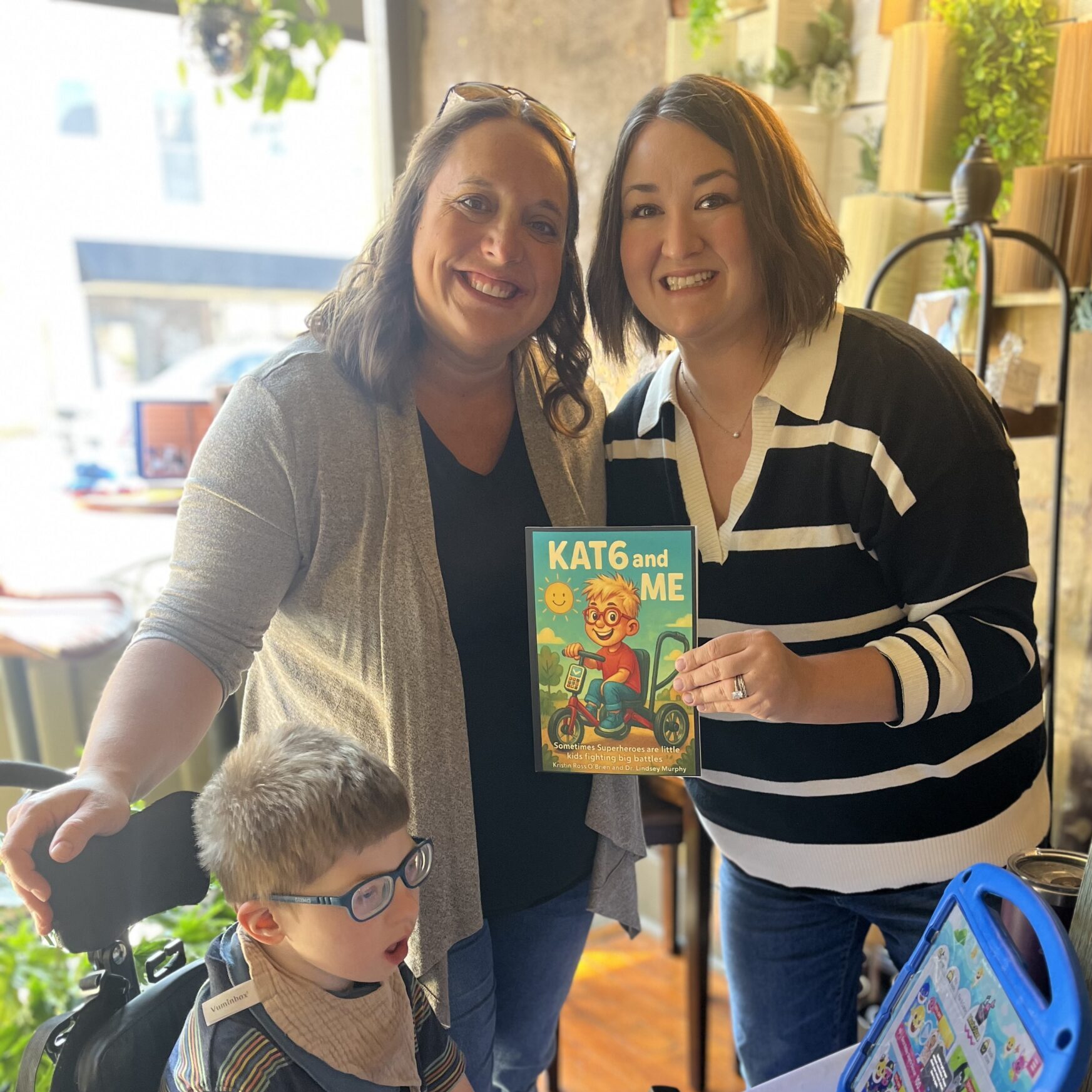
When Kristin Ross O’Brien’s son Max wanted to write a school report about his younger brother’s rare genetic condition, she made a surprising discovery; there were no children’s books about KAT6.That moment sparked a dream: to create the story that didn’t yet exist.Together with her friend and child life specialist, Dr. Lindsey Murphy, Kristin brought that dream to life in KAT6 and Me; a beautifully written and illustrated book that teaches, comforts, and celebrates children living with KAT6 disorders, while helping others understand and include them.“The idea for KAT6 and Me began with Max,” Kristin recalls. “He wanted to write about KAT6, but there weren’t any books, not even for adults. From that moment, it became our family’s wish to one day write the children’s book that didn’t exist; a story that could teach, comfort, and celebrate kids like Bash, and help others understand them too.”
A Collaboration Built on Friendship and Shared Purpose
Kristin shared her idea with longtime friend Dr. Lindsey Murphy, an associate professor of child life at Missouri State University. The connection between the two was immediate.“I’ve been a witness to Bash’s journey from the beginning,” Lindsey says. “Knowing there was something tangible I could do to support their efforts for education, inclusion, and advocacy was an easy ‘yes.’”The writing process flowed naturally.“We’d already been friends for years, connected through a playgroup for our kids,” Lindsey explains. “Kristin brought the heart and soul. She knows her child and the KAT6 community better than anyone. My background as a child life specialist helped us make complex or emotional topics understandable for children. Together, we blended those strengths.”Kristin agrees that the process was both heartfelt and fulfilling.“We wrote this book in the fringes of our lives- over coffee while our kids happily destroyed the playroom,” she laughs. “We talked about how to highlight Bash’s abilities instead of just his challenges, and how to weave facts into storytelling that still felt magical.”
The Heart of the Story: Bash
At the center of KAT6 and Me is Bash, Kristin’s youngest son, whose journey has inspired many.“Bash came into our lives first as our foster son when he was six months old and instantly captured our hearts,” Kristin shares. “Before he turned two, we were blessed to officially adopt him and make him a forever part of our family.”Diagnosed with KAT6B syndrome as an infant, Bash’s life has been filled with both challenges and incredible joy. Despite facing multiple therapies, surgeries, and medical complexities, his optimism and determination shine through.“Every small victory, every sound, and every step for Bash is a celebration,” Kristin says. “He’s a kindergartener, a disability advocate, and even a playground philanthropist. . . helping bring adaptive playground equipment to our small town. His happy personality touches everyone he meets.”
A Bridge for Families, Educators, and Professionals
Both authors hope KAT6 and Me will serve as more than a story. They see it as a bridge for connection and understanding.“For families, I hope this book gives language they can use to explain a diagnosis in a positive, age-appropriate way,” Lindsey says. “For professionals, I hope it reminds them that small gestures, listening, explaining clearly, offering hope — make a lasting impact.”Kristin adds,“My greatest hope is that KAT6 and Me becomes a bridge. I want families who are newly diagnosed to feel less alone. I want siblings to have words that help them explain and celebrate their brothers and sisters. I want teachers and classmates to see what inclusion looks like- to recognize that kids with complex needs have the same love of laughter, friendship, and play as any other child.”
A Ripple of Awareness
Since its release, KAT6 and Me has reached far beyond the rare disease community.“We expected families affected by KAT6 to be our main audience,” Lindsey notes, “but teachers, advocates, and libraries across the world have embraced it as a tool for inclusion and awareness.”Kristin and her family have shared the book through local events and readings in Boonville, Missouri, and have donated copies to schools, hospitals, and libraries.“Parents of children with rare diagnoses have sent us pictures of their kids holding the book,” Kristin says. “Teachers have told us they’re using it to start conversations in classrooms. And siblings, kids like my Jack, Max, and Leah, now have a way to explain and understand their brother’s condition. That’s exactly what we dreamed this book could do.”
Giving Back to the Community
To honor the children and families affected by KAT6 disorders, all royalties from KAT6 and Me are donated to the KAT6 Foundation to support research, awareness, and family connection.“Every purchase helps fund the search for answers and celebrates children like ours,” Kristin explains.Lindsey and Kristin’s collaboration continues, with plans for additional projects to serve families across the KAT6 community.“Our conversations keep sparking new ideas,” Lindsey says. “We already have plans for more books to reach other audiences within the KAT6 community.”
A Story That Connects and Inspires
What began as a school project has grown into a heartfelt movement of awareness and inclusion. Through KAT6 and Me, Lindsey Murphy and Kristin O’Brien remind readers that every story, no matter how small, has the power to connect, to teach, and to bring hope to families everywhere.“I learned that hope grows when it’s shared,” Kristin reflects. “Every message from another family, every photo of a child holding the book, reminds me that stories can connect people who might have otherwise felt alone.”About the AuthorsKristin Ross O’Brien is a writer, advocate, and mother of four living in Boonville, Missouri. Her family is passionate about inclusion and rare disease awareness.Dr. Lindsey Murphy is an Associate Professor of Child Life at Missouri State University and a dedicated advocate for children with complex medical needs.Read More about their journey in Q&A: Dr. Lindsey Murphy and Kristin Ross O'Brien

I Want to Get to Know You
As I am getting my son ready for bed each night I like to put some gentle music on in his room. Sam loves melodic tunes, familiar voices, songs that soothe.
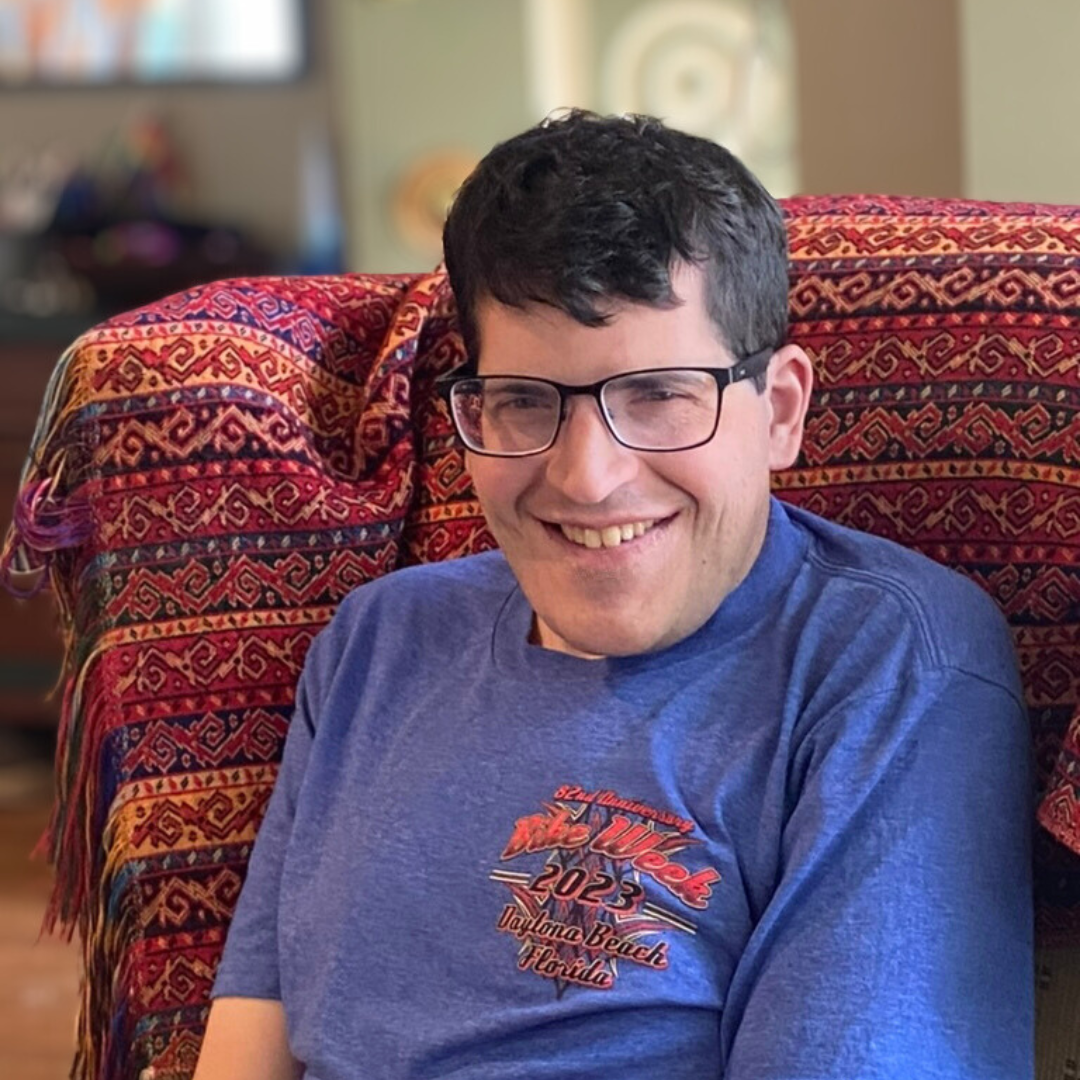
For those who don’t know him: Sam is 35, non-verbal, exclusively tube-fed since he was a baby, severely limited from birth both physically and mentally. He learned to walk with a walker by about age 5, but by 15 he had fallen too many times and was afraid to stand up unless supported by someone. He communicates some needs and preferences with gestures and vocal utterances, and he also effectively expresses enthusiasm and protest. He confers winsome smiles and initiates hugs when he feels like it. If something is interesting he moves his wheelchair toward it. If it’s not interesting he propels himself away. I think he understands that he is dependent. He trusts us, his parents, and trusts those others who regularly occupy his time, whether as caregivers, close relatives, or friends. He clearly understands love. He clearly fears certain potential risks and is especially fearful of falling when he is briefly on his feet to transfer from one situation to another — wheelchair to car, for instance. These limitations are the reason Beth and I are the ones who prepares his bedtime medicines, get him into his nightwear, and tuck him in as his favorite gentle music plays quietly in the background.
It’s late September, 2025. Last night we were listening to Anne Murray as I was getting him ready for bed. And the song we were hearing as I pulled the covers over him before turning off the light, was “A Love Song.”
For those acquainted with Anne Murray, it’s the song that begins:
There’s a wren in a willow wood
Flies so high and sings so good
And he brings to you
What he sings to you
Like my brother, the wren and I
Well, he told me, if I try
I could fly for you
And I want to try for you, ’cause
I want to sing you a love song
I want to rock you in my arms all night long
I want to get to know you
I want to show you the peaceful feeling of my home…
For those not acquainted with Anne Murray, well, this is the sort of stuff she sings.
As I was reaching to pat his head before turning off the music, I heard myself quietly singing along with the refrain, and one line stopped me short: “I want to get to know you” echoed across the canyons of my consciousness. I let the song play out. Then I stopped the music and said, as I always do: “Good night, Sam. We love you.”
I have seldom, even in Sam’s lifetime, been moved to tears. But, for me anyway, there was a message from God last night in those seven words, “I want to get to know you.” For, even though he’s been in the core of my own life since the day he was born, and even though I’ve often wondered what he’s seeing — (he has “cortical visual impairment”), what he’s thinking, whether he hurts somewhere or is thirsty or hungry or lonely, I hadn’t, until last night, considered that it would ultimately be granted to me, by the grace of God, to fully get to know him. For — once we have both left this physical world, I, in the fullness of my time and he, in his — he will surely be able to tell me what it was like to be Sam.
It came over me that those who doubt the existence of God have no explanation for the roots of love. Error-prone as I am, how can I treat Sam with such tenderness and such longing to get to know him if there is no God, no divine origin of love? It would be a cruel creator who would let us yearn so much and not offer fulfillment. The words of Jesus in Luke 11:11-13 came to mind as I stood in the darkened house, outside his bedroom door, wiping my cheeks: “And what father is there among you, if his son asks for a fish, will give him a snake instead of a fish? Or if he asks for an egg, he will give him a scorpion? If you who are evil know how to give good gifts to your children, how much more certainly will your heavenly Father give the holy spirit to those who ask him?”
Rarely has Sam spoken in my nighttime dreams, and when he has, it has been only a word or two. On the night of December 26, 2021, though, he spoke much more, and it tore my heart out. In a dream that night, Beth and I were supporting Sam as he slowly and awkwardly walked between us. We began climbing the five front steps to the little house we owned before Sam was born. We had barely started upward when we realized there was a large, noisy, demanding crowd on the small front porch, their attention turned toward something inside.
There was no explanation in the dream for the presence of such a group, and whatever they sought, it was suddenly no longer inside the modest little home. They all stampeded down the stairs in pursuit of the attraction they sought, and they ran us over. The abrupt rush quickly passed, but the three of us, Beth, Sam, and I, were trampled.
In the aftermath Beth and I picked ourselves up and brought Sam to his feet. Gushing tears from the pained face of one who knows too well how it feels to be pushed aside, ignored, and left behind, Sam cried out: “I try so hard, to understand, to keep up, to do what everyone wants me to…” — and that’s where that mercifully brief nightmare woke me up.
I have seldom taken the trouble to put a dream into writing, but I quickly did so with this one and I still have that note. For, that day back in 2021, I understood that I’d had a glimpse into Sam’s humble, quiet spirit.
Last night, though, after hearing the lyrics, “I want to get to know you,” I had what I felt was a promise. Not in this lifetime, but in that realm that some call the afterlife — in Paradise, in the our spiritual presence before God, I will get to know Sam. Perhaps I’ll get to know him as if I had lived inside his struggling, tortured body, as if I had felt the hope in his wishing heart, and as he has seen me, his father, through his flawed vision.
Sam, to you I say: In this life I can only imagine what it’s like to be you. In the next, I trust I will truly get to know you. It’s not what I want, though, that matters. I believe that you will get to know what it might have been like if you could have lived in this world free of the bonds of KAT6A syndrome. You deserve that much from the God who created love.
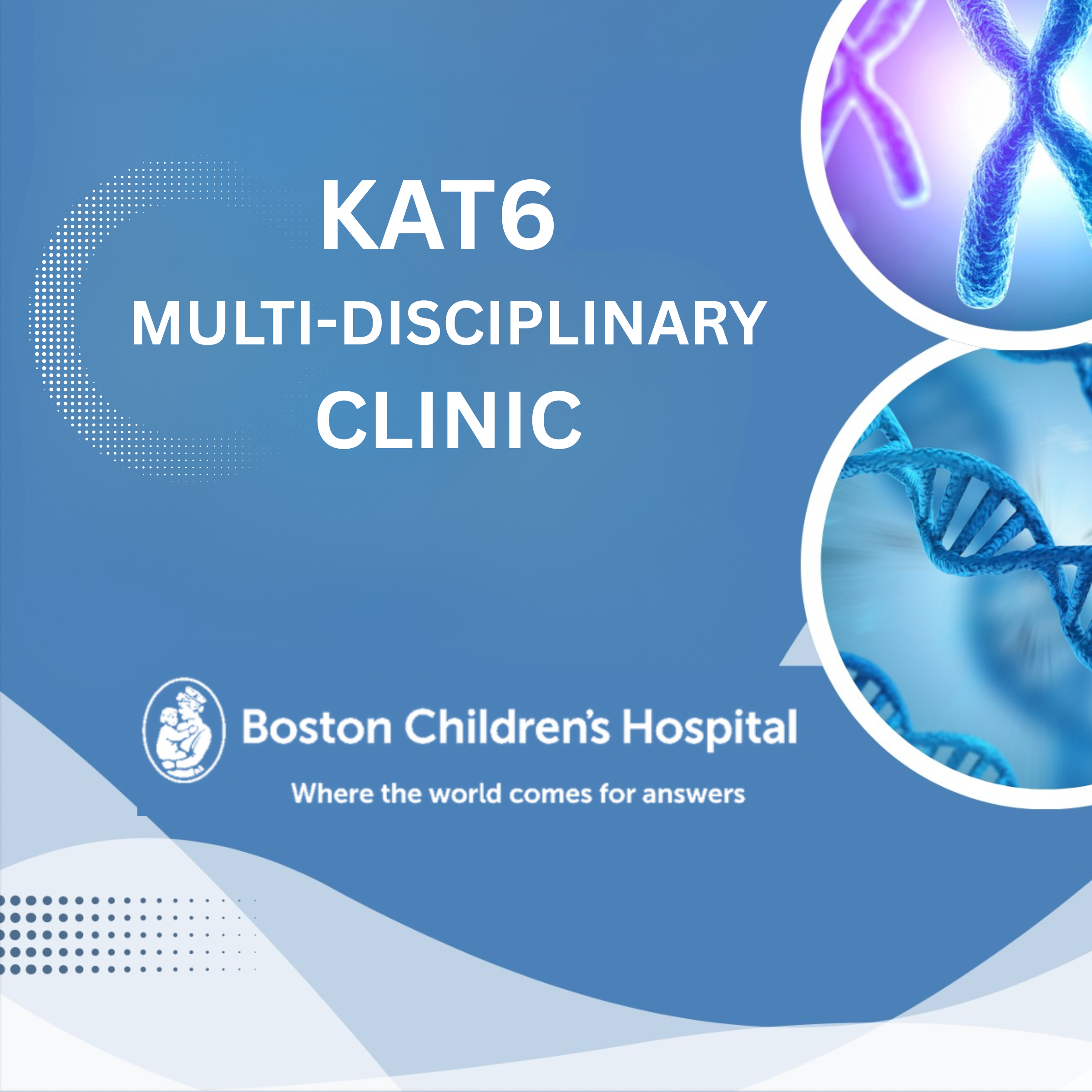
KAT6 Clinic Opens at Boston Children's Hospital
Major Development: A KAT6 Clinic Has Opened at Boston Children’s Hospital
We’re excited to share that a new multidisciplinary clinical program for individuals with KAT6A and KAT6B is now open at Boston Children’s Hospital, led by Dr. Olaf Bodamer and Dr. William Brucker. This clinic will serve as a true medical home for families, offering coordinated care across specialties.
The KAT6 Foundation is proud to have helped fund the development of this program, made possible through the generosity of our donors.
As the team continues organizing the clinic, families who are interested in care are encouraged to contact rarediseases@childrens.harvard.edu. This inbox is monitored several times a day, and families can expect a response within 24 to 48 hours. After reaching out, families will receive an intake form and the opportunity for a brief informal meeting to discuss expectations. Appointments for an initial evaluation are available on a regular basis with Dr. Brucker and/or Dr. Bodamer.
In addition to patient care, the clinic will gather natural history data and collect biospecimens for the IRB-approved KAT6 biorepository, which supports ongoing biomarker discovery. The clinicians will also continue collaborating with research partners such as the Serrano Lab at Boston University.
For appointments or additional details, families can reach the clinic coordinator at rarediseases@childrens.harvard.edu
300 Longwood AvenueBoston, MA 02115


Empowering Families Through the Empowered Grant
"Wilder has done so well with the therapies she has received with the help of the Empowered Grant!" KAT6A and KAT6B syndromes are a pair of rare genetic variants that can cause a spectrum of health complications, impacting those diagnosed to varying degrees. As a foundation, we strive to spread awareness and advance research surrounding these syndromes. Part of this mission is fostering a strong community that supports individuals diagnosed and their families.
However, while essential and irreplaceable, support alone is not enough to address the wide range of complications many individuals face. Therapies and accessibility equipment—among other forms of treatment—allow individuals diagnosed with KAT6A and KAT6B to experience life more fully and with greater ease. Unfortunately, the more impactful the solution, the higher the cost—expenses that not everyone can afford.
Empowered Grants provide individuals diagnosed with KAT6A and KAT6B the funding needed to purchase assistive equipment, treatments, and technologies that may otherwise be out of reach.
Take Jack’s family, for example. While society has become increasingly accessible, there is still much work to be done—especially in historic areas where equipment like Jack’s wheelchair can be difficult to maneuver.
With help from the Empowered Grant, Jack’s family was able to purchase a portable ramp that has allowed them to take Jack into shops and restaurants with ease. Jack’s mother, Elyse, explains, “Purchasing and using the ramp in public has not only helped us, but helped many others, as the ramp has encouraged local business owners to purchase their own portable ramps for public use!”
Families have also used the grant to address more specialized needs. For example, David Exl explains that his daughter, Ella, was diagnosed with KAT6A, “which affects both her mental and physical development,” and “CVI (Cortical Visual Impairment), a visual processing disorder that makes it difficult for Ella to interpret visual stimuli.”
Using the Empowered Grant to fund Ella’s physical therapy, Exl shared that “a major milestone came in the fall of 2023 when she started crawling—it was the first time she could move around on her own.”
In addition to medical treatments, meaningful social connections have proven instrumental in the lives of KAT6 families. The Empowered Grant also supports these connections by helping families—like Siahna Anderson’s—fund special programs such as summer camps.
According to Shannon Anderson, Siahna’s mother, at “Adams Camp—a camp designed specifically for kids with special needs—” Siahna “gets to experience camp activities such as swimming, canoeing, horseback riding, summer tubing, shopping, and overnights with friends.” She also receives therapies such as speech, music, occupational therapy, physical therapy, and art therapy.
These programs offer individuals with KAT6 a sense of belonging and normalcy that may be difficult to experience otherwise. Living with any condition can be scary and isolating, but the opportunities made possible by the Empowered Grant can ease that burden through new experiences and meaningful connections.
Backed by our generous donors, we have awarded more than 120 Empowered Grants to KAT6 families around the world. Whether for medical equipment or specialized therapies, this funding provides individuals access to essential resources tailored to their unique needs. The KAT6 Foundation remains deeply committed to supporting our community through Empowered Grants—and the life-changing opportunities they make possible.
Learn more about how to apply for an Empowered Grant to support your child here.
Personal Stories
The Day the World Stopped & The Team That Kept Us Moving
In the Korean culture, we celebrate when a baby turns 100 days old. Historically, it marked the major milestone of a baby surviving past the point where infant mortality was highest. Today, it’s a joyful time for family to come together to bless the baby with happiness and health. On the very day we should have been celebrating Lily’s 100th day of life, we received her KAT6A diagnosis from her neurologist, and the world stopped.
Lily was born at 36 weeks and spent her first 29 days in the NICU. At first, her NICU admission was due to low oxygen saturation but poor feeding and hypotonia quickly followed. Every day, I’d start my routine of trying to nurse her then bottle feed her only for her to end up feeding through a tube. As her mom, I felt immense pressure to figure it out. I was the one who was supposed to be able to take care of her. I spent hours at the NICU, 7 days a week, trying to increase her intake volumes little by little. I assumed this would be very temporary though and that one day, feeding would just click for her and we’d be over this hurdle. But as the days went on, we continued to struggle. Each day brought a new specialist. She became a patient of Neurology, Cardiology, Urology, Audiology, Gastroenterology, Physical Therapy, and Feeding Therapy. Part of me thought the hospital was being overly cautious or just trying to take advantage of my insurance coverage. Why did she need to see all these specialists? We were going to get out of here anyway and resume our normal lives. Looking back now, I don’t think I was fully able (or willing) to grasp the reality of our situation. I was hopeful that this would be a temporary blip and that everything would work out. I never even considered there could be something deeper going on.
After a month, we just barely got to a point with bottle feeding where we received the green light to take her home. I continued to hold out hope that things would just improve naturally, but Lily’s hypotonia made her easily exhausted and she was never able to finish her bottles. Ultimately, she was diagnosed as failure to thrive around the same time we received her diagnosis. This is the point when I realized I needed help. I needed that team of specialists from the NICU that I took for granted. I started to understand the value of early intervention. Lily and I needed help. So at just three months old, Lily started weekly physical therapy and feeding therapy and I started my journey of putting together Lily’s team of doctors.
As a parent of a medically complex child, juggling and repeating are two things I’ve gotten good at. I can list off all of Lily’s doctors, their departments, their locations, and our most recent visit notes. I can coordinate appointments, make calls, and re-arrange schedules. What I can’t do is be an expert in all of these fields, no matter how hard I try. Lily’s Physical Therapist, Sarah, was the one who matched Lily’s pace and worked with her week after week to build her core and help her coordination. Her Feeding Therapist, Rachel, was the one who figured out that using a speciality feeding valve in her bottle would help accommodate her low oral muscle tone. Her Gastroenterologist, Steven, was the one who recommended a high calorie formula to increase her growth velocity. Her Nutritionist, Natalie, is the one who keeps track of her protein intake and volume levels. The KAT6 support group helped us get in touch with Dr. Richard Kelley who was able to review her lab work and recommend the mitochondrial cocktail to support her development. The list goes on and on because Lily has an entire team of doctors, specialists, and therapists who support her (and me).
With KAT6A, I’ve learned that it’s hard to know what the future will look like. It’s hard to anticipate what Lily’s progress will be or where she’ll need more support. I’ve learned that instead of wondering or worrying, we need to just tackle the symptoms as they arise. We need to celebrate all the wins both big and small. We need to take things at Lily’s pace. As a parent, you always hear people say that it takes a village and now I truly understand that. She has a community of people who all share a singular goal - ensuring that Lily is able to thrive. I will forever be grateful for her team. Because of them, Lily recently reached some major milestones. She is able to go from her tummy to an independent sitting position without any help. She’s able to scoot around on her belly and army crawl from one side of a room to another. She is eating level 2 solids and learning to drink from a cup. She is waving hello. And lastly, she has started to do something that bursts my heart wide open. She has started to form the word “mama” with her mouth and has even said it a few times. I’m so proud of my sweet girl and everything she has been able to accomplish with the help of all those who love and support her.
Questo è Samuele
Ciao a tutti,
Questo è Samuele. È nato il 5 aprile 2022 e, fin dai suoi primi giorni, ha riempito le nostre vite di un amore difficile da spiegare a parole.
Nei primi mesi di vita, però, qualcosa non tornava. Samuele faceva fatica a fissare e mantenere lo sguardo di mamma e papà. Erano piccoli segnali, quasi impercettibili per molti, ma non per la sua mamma, Serena, educatrice d'infanzia. Il suo sguardo esperto e il suo cuore di mamma avevano già capito che c'era qualcosa da approfondire.
Per mesi si è tenuta dentro dubbi e paure. Poi, il 9 agosto, ha trovato il coraggio di condividere tutto con il papà. Da quel momento è iniziato un percorso che ci ha portato presso l'Ospedale Bellaria di Bologna, seguiti dalla Dott.ssa Paola Visconti (Neuropsichiatria Infantile – IRCCS).
All'inizio l'ipotesi era quella di un disturbo dello spettro autistico. Ci dissero che era "uno dei più piccoli mai visti e con tratti tra i più marcati". Parole che fanno tremare le gambe.
Samuele ha iniziato prestissimo la neuropsicomotricità e la piscina, già a 9 mesi, perché presentava una forte ipotonia.
In tutto questo, la mamma non si è mai arresa. Con amore, passione ed estrema dedizione ha messo tutta se stessa in ogni esercizio, in ogni gioco trasformato in terapia, in ogni piccolo progresso conquistato giorno dopo giorno. Sempre con un obiettivo: fare un passo in più. Anche minuscolo. Ma in più.
Oggi Samuele ha quasi quattro anni. Ha buone capacità di comprensione, considerando la sindrome, e buone competenze motorie. Parla usando singoli vocaboli, detti a modo suo, ma chi lo conosce sa perfettamente cosa vuole dire. La valutazione cognitiva ha evidenziato un QI pari a 88, un dato che racconta molto più potenziale di quanto si possa immaginare.
Il 28 novembre 2025 è arrivata la diagnosi genetica: sindrome KAT6A. Una malattia rara, di quelle che ti costringono a studiare, a cercare, a confrontarti con altri genitori nel mondo, a diventare esperto per necessità.
Ma prima di qualsiasi diagnosi, prima di qualsiasi sigla, Samuele è un bambino. È un bimbo felice. Entusiasta della vita. Ama il suo cane Joy, viaggiare, sperimentare cose nuove, mangiare (da buon italiano questa è una delle sue passioni più grandi!), fa basket, continua ad andare in piscina ed è amato da tutti i suoi compagni.
Ai suoi genitori Samuele ha insegnato che le etichette non definiscono una persona. Che i tempi possono essere diversi, ma il valore è lo stesso. Che la forza non fa rumore, ma costruisce ogni giorno.
E questa è solo l'inizio della sua storia.
This is Samuele
Hi everyone,
This is Samuele. He was born on April 5th, 2022, and from his very first days he filled our lives with a kind of love that is hard to put into words.
In his first months, however, something didn't feel quite right. Samuele struggled to fix and maintain eye contact with mom and dad. They were small signs, almost imperceptible to many, but not to his mother Serena, an early childhood educator. Her trained eye and her mother's heart already knew that something needed to be explored further.
For months she kept her doubts and fears to herself. Then, on August 9th, she found the courage to share everything with his dad. From that moment on, a journey began that led us to the Bellaria Hospital in Bologna, where we were followed by Dr. Paola Visconti (Child Neuropsychiatry – IRCCS).
At first, the hypothesis was autism spectrum disorder. We were told he was "one of the youngest ever seen, and with some of the most marked traits." Words that make your legs tremble.
Samuele started neuropsychomotor therapy and swimming very early, at just 9 months old, due to significant hypotonia.
Throughout all of this, his mother never gave up. With love, passion, and extraordinary dedication, she put all of herself into every exercise, every game turned into therapy, every small achievement earned day after day. Always with one goal: to take one more step forward. Even a tiny one. But forward.
Today Samuele is almost four years old. He has good comprehension skills, considering the syndrome, and good motor abilities. He speaks using single words, pronounced in his own way, but those who know him understand perfectly what he wants to say. His cognitive evaluation showed an IQ of 88, a number that speaks of far more potential than one might imagine.
On November 28th, 2025, we received the genetic diagnosis: KAT6A syndrome. A rare condition, the kind that forces you to study, to search, to connect with other parents around the world, to become an expert out of necessity.
But before any diagnosis, before any label, Samuele is a child. He is a happy little boy. Full of enthusiasm for life. He loves his dog Joy, traveling, trying new experiences, eating (as a true Italian, this is one of his greatest passions!), he plays basketball, continues swimming, and is loved by all his classmates.
To his parents, Samuele has taught that labels do not define a person. That timelines may be different, but value is the same. That strength does not make noise — it builds, quietly, every single day.
And this is only the beginning of his story.
Rare Should Never Mean Invisible
Eleven-year-old Christopher from Adelaide, South Australia is vibrant, funny and deeply compassionate. He is my cherished son and my constant “wingman.”
He loves video games and, most of all, animals, especially Molly, our miniature dachshund. These simple joys sustain us amidst the daily realities of living with his complex KAT6B-related disabilities.
Christopher has a rare genetic change in the KAT6B gene, meaning his body is missing a protein critical for regulating development and repair across multiple body systems. This has a significant impact on his bones, muscles, and connective tissue, affecting far more than what people can see.
Over the past year, Christopher has experienced significant regression in both his health and functional capacity due to his KAT6B-related disabilities. He has not been able to attend school since May 2025. His hospital and therapy teams continue searching for answers in a space where there is very limited research and understanding to guide them. Living with an ultra-rare condition often means facing uncertainty without a roadmap.
As his mum, my role has become one of constant learning and fierce advocacy. I have learned to trust my instincts and to speak up because parental insight matters. There have been critical moments where advocating strongly led directly to important treatment decisions. Families like ours are not just carers; we are part of the clinical picture.
Christopher’s resilience and gentle nature inspire me every single day. But inspiration alone is not enough.
We urgently need:
• Increased research into ultra-rare genetic conditions like KAT6B
• Better clinical guidelines and standards of care
• Greater awareness within medical and disability communities
We are incredibly grateful to the KAT6 Foundation, which proudly funds and supports international research by connecting families to current research studies. In a world where rare conditions can feel isolating, the Foundation provides hope, direction, and a sense of global community. Their work is vital in moving us closer to understanding, treatments, and better outcomes for children like Christopher.
Rare should never mean invisible.
On Rare Disease Day 2026, I share Christopher’s story to raise awareness for the KAT6 community because children like Christopher deserve answers, targeted therapies, and a future built on understanding, not uncertainty.
Fyona’s Journey with KAT6: A German Family’s Story
Our story is filled with sadness, fear, and despair, but also with a great deal of hope and love.
We are from Germany, in the state of Rhineland-Palatinate — more specifically, from the Westerwald region. We are a small family: mom (Jessica), dad (Daniel), and two children. Our “big” girl, Katelyn, just turned seven, and our little one, Fyona, is four years and six months old and will turn five in April.
From the moment she was born, I (Jessica) felt that something wasn’t right. After birth, Fyona wouldn’t breastfeed. It took hours before she finally latched. She was relatively small and light at birth, which didn’t worry me at first because Katelyn had also been small — not quite as small as Fyona, but still similar. We were allowed to go home, and that’s when the nightmare began. Whether breastfeeding or not, whether asleep or awake, Fyona constantly choked. She would gag, stop breathing, turn blue, and then vomit. Day in and day out. We went from doctor to doctor. No one could help. Everything was brushed off as if we were imagining it. We saw a pulmonologist, but he said everything looked fine.
Fyona wasn’t vaccinated until she was eight months old because she was constantly sick, but the pulmonologist said that as long as she didn’t have a fever, she should be vaccinated. So we did. At eight months, she began sitting up, and the episodes of turning blue became less frequent, but the choking, gagging, and vomiting continued. She would eat fruit purée pouches and vomit afterward as well (I suspect hunger was the only reason she tried to eat something she apparently couldn’t tolerate). She gained weight poorly, wasn’t growing, and refused both drinking and solid foods. The moment any puréed food touched her lips, she started gagging and vomiting.
We went from hospital to hospital and clinic to clinic. Again and again I heard the same thing: “Breastfeeding until age three is normal — if she’s hungry, she’ll eat.”
We had never felt so helpless and abandoned. You watch your child grow thinner and fear how long her body can handle it, all while fighting with doctors just to be taken seriously. Comments like that drove us to despair.
I tried to explain that breast milk is only calorie-rich during the first year and afterward is basically just fluid. I felt like no one was listening.
In one clinic, they diagnosed failure to thrive, developmental delay, a speech disorder, esophageal reflux, esophagitis, and constipation. Then we were sent home with tablets to dissolve, even though I sat in front of the doctor in tears explaining my fears. The only response was, “A cow doesn’t stop giving milk,” and that with enough liquid she would take the tablets. I was so shocked I could only cry. We went home, but she wouldn’t take the tablets, not even with a syringe in her mouth — everything came right back up.
Since birth she couldn’t tolerate anything touching her body. If she touched sand outside, her hands had to be cleaned immediately. Nothing was allowed on her face. Our doctor prescribed speech therapy, but didn’t think occupational therapy was necessary. We had to fight for every bit of help. We discussed a PEG tube with the doctor, but she didn’t think it was needed. After a long back and forth, we were finally told to go to the hospital for a nasogastric tube. I explained how sensitive Fyona is around her face, and they still wanted to try. Only if it failed would they consider a PEG.
We went, and they tried three times to place the tube. I have never felt so much pain and anger. I had to hold her on my lap, holding her arms while one nurse held her head and another her legs. They tried placing the tube; Fyona’s nose started bleeding and she gagged and vomited again. Then they tried the other nostril. I was tense and told them this had to be the last attempt. Same result. After that they said they would try once more with her lying down. Another nurse came. Again her head, arms, and legs were held down. After a struggle, they managed to place the tube, but she wasn’t even sitting up yet before she pulled it out again. We finally received a date for a PEG placement.
On December 24, 2023, we had to go to the hospital in the evening. She had an infection and constant fevers over 40°C, which we couldn’t control because she couldn’t take anything orally, and suppositories were extremely painful due to her constipation. At the hospital, they admitted us. She was exhausted and had a streptococcal infection. One doctor initially said we would get oral antibiotics and could go home, even though I had explained she couldn’t take anything by mouth. We were then admitted after all. She was given IV fluids and antibiotics. Later she also received Nexium and folic acid. Then they gave her iron intravenously, telling me to alert them if I noticed redness around the IV site. I did when it started turning red. They said they’d monitor it and to tell them if it increased. It got worse — she turned red all over, vomited, and became unresponsive. I cannot describe the thoughts that went through my mind. It was unbearable. She lay in my arms motionless. The doctor came quickly; they checked her oxygen level and blood pressure, disconnected her from the IV, and administered medications. Her oxygen was low, and she was put on oxygen and taken to monitoring. She slowly came back — a moment I will never forget.
She developed one infection after another: strep, RSV, and influenza. We were in the hospital from December 24, 2023, until January 18, 2024. On January 4, the PEG tube was placed. During this entire time, Katelyn wasn’t allowed to visit because we were on an infectious disease ward.
Feeding remained difficult — the vomiting continued. Later, in another clinic, her PEG was changed to a button PEG. There, they suggested that because I had struggled with an eating disorder (which I have well under control), my daughter might have one as well. No one should be made to feel such guilt.
The good part was that the doctor said, since they didn’t know what else to do, they would finally do a genetic test. I had been fighting for that test for two years — no doctor thought it was necessary.
On November 5, 2018, we received the diagnosis: Arboleda-Tham Syndrome (KAT6A).
It hit us hard, but at least the uncertainty was over and the constant hospital stays finally had an explanation.
Despite everything, Fyona is a happy child with a big heart.
We share her journey to raise awareness, give others courage, and hopefully connect with other affected families.
Because even though daily life is often difficult, it is full of love.
Thank you for taking the time to read our story.
Warm regards,
Jessica
German Version:
Unsere Geschichte ist mit viel Traurigkeit, Angst, Verzweiflung aber auch mit viel Hoffnung und Liebe zu erzählen.Wir kommen aus Deutschland/ Rheinland-Pfalz wenn mans genau nimmt aus dem Westerwald.Wir sind eine kleine Familie Mama(Jessica), Papa(Daniel) und 2 Kinder, die ,,große'' Maus heißt Katelyn und ist 7 Jahre alt geworden, die kleine Maus Fyona ist 4 Jahre und 6 Monate, wird im April 5 Jahre alt.
Unsere Geschichte etwas zusammengefasst:
Von Geburt an hatte ich (Jessica) das Gefühl, dass etwas nicht stimmt. Fyona wollte nach der Geburt nicht gestillt werden, es hat stunden gedauert bis sie sich hat stillen lassen. Sie war relativ klein und leicht bei der Geburt, dass mir zu Beginn jetzt aber keine Sorgen machte, da Katelyn auch relativ klein und leicht war, nicht ganz wie Fyona aber doch schon nah dran.
Wir durften nach Hause und da fing der Horror erst an. Ob gestillt oder nicht ob schlafend oder wach, Fyona verschluckt sich ständig, bis Ie anfing zu würgen, keine Luft mehr zu holen - blau wurde und dann erbrochen hat. Tag ein Tag aus. Wir sind von Arzt zu Arzt. Keiner konnte helfen. Es wurde alles runter gespielt als würden wir uns das alles einbilden. Wir waren beim Pneumologe aber er sagte es sei alles in Ordnung.
Fyona wurde bis zum 8. Monat nicht geimpft, da Sie ständig Infekte hatte aber der Pneumologe sagte solang sie kein Fieber hat soll sie geimpft werden. Haben wir dann auch gemacht.
Mit 8 Monaten fing sie an zu sitzen, da wurde es mit dem blau werden besser, das verschlucken, würgen und brechen blieb leider. Si2 nahm Quetschies zuvsich und erbrach dansch auch wieder (ich vermute es war der Hunger, weshalb sie eas zu sich nahm was sie anscheinend nicht konnte).
Sie nahm schlecht zu, ist nicht wirklich gewachsen, hat Trinken und Beikost komplett verweigert, sobald sie etwas Brei an den Lippen hatte fing sie an zu würgen und zu Erbrechen.
Wir sind von Krankenhaus zu Krankenhaus von Klinik zu Klinik, immer wieder habe ich nur gehört: ,,Ja bis 3 Jahre stillen sei ja normal, wenn sie Hunger hat wird sie schon essen".
So Hilflos und alleingelassen haben wir uns noch nie Gefühlt. Man muss zusehen wie sein Kind immer schmaler wird, hat Angst wie lange das gut geht und muss bei den Ärzten drum kämpfen geholfen zu bekommen. Solche Aussagen haben uns Verzweifeln lassen.
Ich habe versucht den Ärzten zu erklären, dass die Muttermilch nur das 1. Jahr kalorienreich ist, danach nur noch Flüssigkeit. Ich fühlte mich, als würde mir keiner zuhören.
In einer Klinik wurde dann die Gedeihstörung, Entwicklungsverzögerung, Sprachstörung, Ösophagealer Reflux, Ösophagitis, Obstipation festgestellt. Dann wurden wir mit Tabletten zum Auflösen nach Hause geschickt, obwohl ich weinend vor dem Arzt saß und ihm meine Ängste und Befürchtungen mitteilte.
Dann hieß es nur: ,,Eine Kuh hört auch nicht auf Milch zu geben" und mit Flüssigkeit wird sie die Tabletten schon nehmen. Ich wsr so geschockt das mir nur die Tränen gelaufen sind ich aber kein Wort mehr raus bekam.
Wir sind heim, sie nahm die Tabletten nicht auch nicht lit einer spritze im Mund, es kam immer wieder alles raus.
Ebenso konnte sie von Anfang an nichts am Körper ertragen (Wenn sie draußen in den Sand mit den Händen kam, mussten diese immer direkt sauber gemacht werden. Es durfte auch nichts ins Gesicht.)
Unsere Ärztin verschrieb uns Logopädie, aber Ergotherapie hielt sie nicht für nötig. Man kämpfte für jedes bisschen.
Wir haben mit dem Arzt über eine PEG-Anlage diskutiert, hielt sie nicht für nötig. Dann nach langem hin und her sollten wir ins Krankenhaus für eine Nasogastrale-Sonde.
Ich erklärte ihr wie empfindlich sie im Gesicht ist und dann sollte dort ein Schlauch herlaufen und festgelegt werden. Wir mussten hin und erst wenn das nicht klappt, würde sie die PEG-Sonde akzeptieren.
Wir waren da 3 mal wurde versucht die Sonde zu legen, so viel Hass und Schmerz habe ich noch nie empfunden. Ich habe Sie auf meinen Schoß genommen und sollte die Arme festhalten, eine Schwester hielt den Kopf, eine andere die Beine.
Sie versuchten die Sonde zu legen. Fyona blutete bereits aus dem Nasenloch etwas und würgte und hat sich wieder übergeben. Dann noch ein Versuch auf der anderen Seite. Ich stand schon unter Spannung und habe gesagt das ist das letzte mal.
Das selbe Spiel bei dem anderen Nasenloch.
Dann wollte sie das im Liegen versuchen, der letzte Versuch um eine PEG gewährt zu bekommen. Quälerei mehr war das nicht.
Im Liegen kam noch eine Schwester dazu. Ihr wurde der Kopf, die Arme und die Beine wieder festgehalten. Sie legte die Sonde. Nach hin und her hat es geklappt, fyona saß noch nicht und hat sie sich wieder gezogen.
Wir bekamen einen Termin für eine PEG-Anlage.
Am 24.12.2023 mussten wir abends ins Krankenhaus. Sie hatte einen Infekt und ständig über 40 Fieber was wir nicht runter bekamen, da Sie oral nichts zu sich nahm und Zäpfchen so schmerzhaft waren durch ihre Verstopfungen.
Im Krankenhaus wurden wir dann aufgenommen. Sie war exsikkiert und hatte eine Infektion mit Streptokkoken.
Dann hieß es bei dem 2. Arzt wir bekommen Antibiotikum mit und können gehen, obwohl ich vorher erklärte dass sie oral nichts zu sich nimmt. Dann wurden wir doch aufgenommen.
Sie bekam Infusionen (Flüssigkeit und Antibiotikum). Dann bekam sie im Verlauf auch Nexium und Folsäure dazu.
Dann wurde Eisen intravenös gegeben. Ich sollte mich melden wenn ich sehe dass sie rot um den Zugang wird.
Das habe ich gemacht als sie rot wurde. Dann hieß es ja wir beobachten das, ich sollte mich melden wenn es schlimmer wird.
Es wurde schlimmer. Sie wsr rot am ganzen Körper, hat sich übergeben und war nicht mehr ansprechbar.
Meine Gedanken in dem Moment möchte man keinem erzählen. So unerträglich.
Sie lag bei mir im Arm und regte sich nicht.
Die Ärztin kam direkt. Ihr wurde der Sauerstoffgehalt gemessen, der Blutdruck. Sie wurde von der Infusion abgemacht, ihr wurden Medikamente gespritzt.
Der Sauerstoffgehalt war schlecht. Sie wurde an ein Sauerstoffgerät gehangen und blieb in der Überwachung.
Sie kam langsam wieder zu sich, ein Moment den ich nie wieder vergessen werde.
Sie bekam ein Infekt nach dem anderen: Streptokkoken, RS-Virus und Influenza.
Wir waren vom 24.12.23 bis zum 18.01.24 in der Klinik. Am 04.01.24 wurde die PEG gelegt.
Eine Zeit in der uns Katelyn nicht besuchen durfte, da wir auf einer Infektionsstation lagen.
Der Anfang mit der Nahrung war auch nicht einfach, das Erbrechen hörte nicht auf.
Danach waren wir später nochmal in einer Klinik. Da wurde ihr die PEG zu einer Button-PEG gewechselt.
Da hieß es dann da ich eine Essstörung hatte (die ich gut im Griff habe) kann das meine Tochter auch haben. Solche Schuldgefühle habe ich keinem gewünscht.
Das gute war, der Arzt hat gesagt weil sie nicht mehr wussten was sie noch machen sollten machen wir noch ein Gentest.
Darum habe ich 2 Jahre gekämpft. Kein Arzt hielt es für nötig.
Am 5.11.2018 bekamen wir dann die Diagnose Arboleda-Tham-Syndrom (KAT6A).
Ein Schlag den wir nicht erwartet hatten, aber die Ungewissheit hat ein Ende und die ganzen Klinikaufenthalte auch.
Trotz allem ist Fyona ein fröhliches Kind mit einem großen Herzen.
Wir teilen Ihren Weg, um aufzuklären, anderen Mut zu machen und vielleicht ein Austausch mit betroffenen Familien zu ermöglichen.
Denn auch wenn der Alltag oft schwer ist, ist er voller Liebe.
Danke, dass Sie sich die Zeit nehmen unsere Geschichte zu lesen.
Liebe Grüße
Jessica
I Want to Get to Know You
As I am getting my son ready for bed each night I like to put some gentle music on in his room. Sam loves melodic tunes, familiar voices, songs that soothe.
For those who don’t know him: Sam is 35, non-verbal, exclusively tube-fed since he was a baby, severely limited from birth both physically and mentally. He learned to walk with a walker by about age 5, but by 15 he had fallen too many times and was afraid to stand up unless supported by someone. He communicates some needs and preferences with gestures and vocal utterances, and he also effectively expresses enthusiasm and protest. He confers winsome smiles and initiates hugs when he feels like it. If something is interesting he moves his wheelchair toward it. If it’s not interesting he propels himself away. I think he understands that he is dependent. He trusts us, his parents, and trusts those others who regularly occupy his time, whether as caregivers, close relatives, or friends. He clearly understands love. He clearly fears certain potential risks and is especially fearful of falling when he is briefly on his feet to transfer from one situation to another — wheelchair to car, for instance. These limitations are the reason Beth and I are the ones who prepares his bedtime medicines, get him into his nightwear, and tuck him in as his favorite gentle music plays quietly in the background.
It’s late September, 2025. Last night we were listening to Anne Murray as I was getting him ready for bed. And the song we were hearing as I pulled the covers over him before turning off the light, was “A Love Song.”
For those acquainted with Anne Murray, it’s the song that begins:
There’s a wren in a willow wood
Flies so high and sings so good
And he brings to you
What he sings to you
Like my brother, the wren and I
Well, he told me, if I try
I could fly for you
And I want to try for you, ’cause
I want to sing you a love song
I want to rock you in my arms all night long
I want to get to know you
I want to show you the peaceful feeling of my home…
For those not acquainted with Anne Murray, well, this is the sort of stuff she sings.
As I was reaching to pat his head before turning off the music, I heard myself quietly singing along with the refrain, and one line stopped me short: “I want to get to know you” echoed across the canyons of my consciousness. I let the song play out. Then I stopped the music and said, as I always do: “Good night, Sam. We love you.”
I have seldom, even in Sam’s lifetime, been moved to tears. But, for me anyway, there was a message from God last night in those seven words, “I want to get to know you.” For, even though he’s been in the core of my own life since the day he was born, and even though I’ve often wondered what he’s seeing — (he has “cortical visual impairment”), what he’s thinking, whether he hurts somewhere or is thirsty or hungry or lonely, I hadn’t, until last night, considered that it would ultimately be granted to me, by the grace of God, to fully get to know him. For — once we have both left this physical world, I, in the fullness of my time and he, in his — he will surely be able to tell me what it was like to be Sam.
It came over me that those who doubt the existence of God have no explanation for the roots of love. Error-prone as I am, how can I treat Sam with such tenderness and such longing to get to know him if there is no God, no divine origin of love? It would be a cruel creator who would let us yearn so much and not offer fulfillment. The words of Jesus in Luke 11:11-13 came to mind as I stood in the darkened house, outside his bedroom door, wiping my cheeks: “And what father is there among you, if his son asks for a fish, will give him a snake instead of a fish? Or if he asks for an egg, he will give him a scorpion? If you who are evil know how to give good gifts to your children, how much more certainly will your heavenly Father give the holy spirit to those who ask him?”
Rarely has Sam spoken in my nighttime dreams, and when he has, it has been only a word or two. On the night of December 26, 2021, though, he spoke much more, and it tore my heart out. In a dream that night, Beth and I were supporting Sam as he slowly and awkwardly walked between us. We began climbing the five front steps to the little house we owned before Sam was born. We had barely started upward when we realized there was a large, noisy, demanding crowd on the small front porch, their attention turned toward something inside.
There was no explanation in the dream for the presence of such a group, and whatever they sought, it was suddenly no longer inside the modest little home. They all stampeded down the stairs in pursuit of the attraction they sought, and they ran us over. The abrupt rush quickly passed, but the three of us, Beth, Sam, and I, were trampled.
In the aftermath Beth and I picked ourselves up and brought Sam to his feet. Gushing tears from the pained face of one who knows too well how it feels to be pushed aside, ignored, and left behind, Sam cried out: “I try so hard, to understand, to keep up, to do what everyone wants me to…” — and that’s where that mercifully brief nightmare woke me up.
I have seldom taken the trouble to put a dream into writing, but I quickly did so with this one and I still have that note. For, that day back in 2021, I understood that I’d had a glimpse into Sam’s humble, quiet spirit.
Last night, though, after hearing the lyrics, “I want to get to know you,” I had what I felt was a promise. Not in this lifetime, but in that realm that some call the afterlife — in Paradise, in the our spiritual presence before God, I will get to know Sam. Perhaps I’ll get to know him as if I had lived inside his struggling, tortured body, as if I had felt the hope in his wishing heart, and as he has seen me, his father, through his flawed vision.
Sam, to you I say: In this life I can only imagine what it’s like to be you. In the next, I trust I will truly get to know you. It’s not what I want, though, that matters. I believe that you will get to know what it might have been like if you could have lived in this world free of the bonds of KAT6A syndrome. You deserve that much from the God who created love.
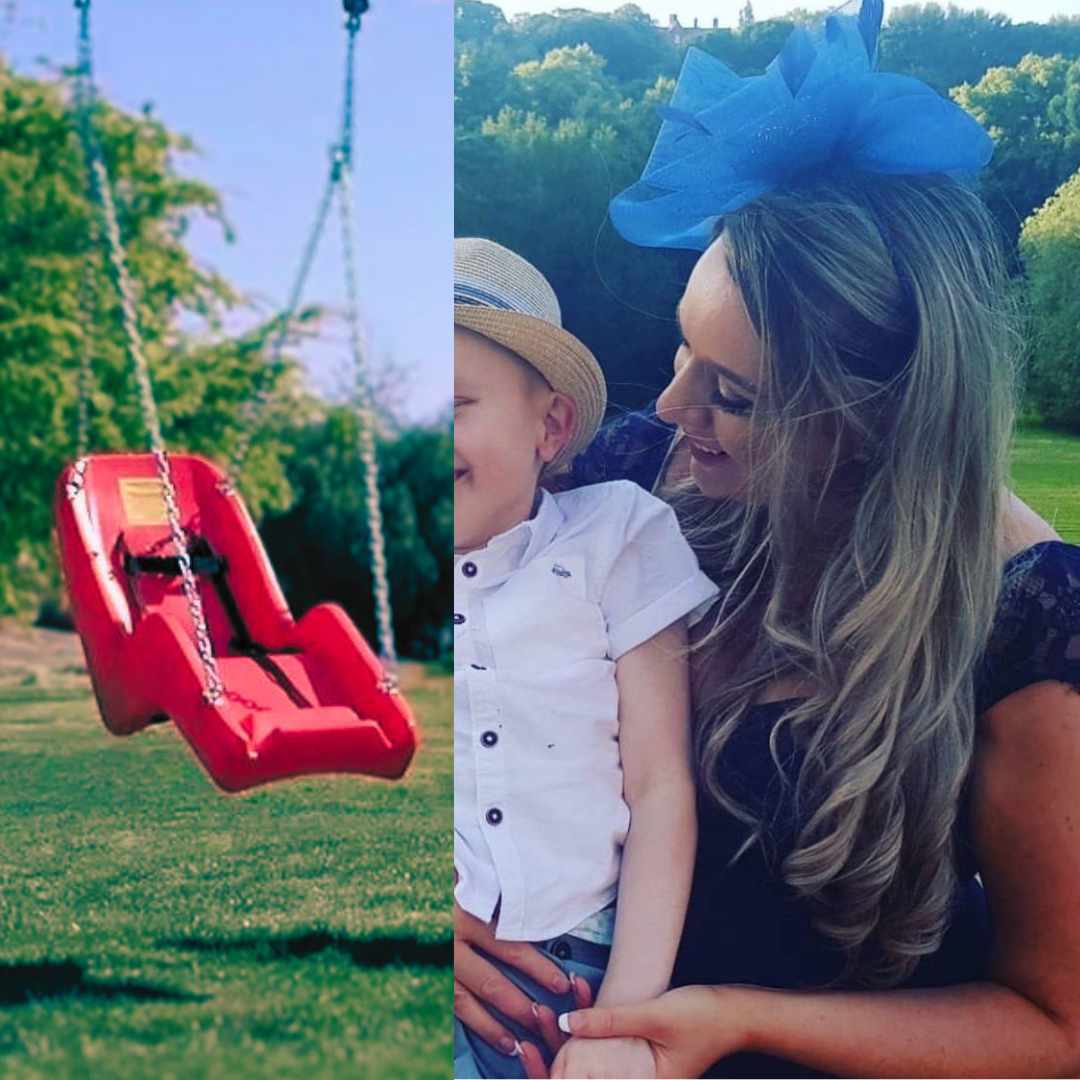
KAT6 Mother Advocates for Inclusive Playground
Our KAT6 community is made up of many dedicated parents who advocate tirelessly for their loved ones. Recently, Kerrie, mother of a child diagnosed with KAT6A syndrome, was able to make a positive impact in her UK neighborhood for children with disabilities. Due to Kerrie’s perseverance, a playground in her local community is now more inclusive.
Kerrie says:
“We have a local park we take Woody to quite often. As he grew, we realized there were less and less facilities for him to use. As I visited more parks around Manchester, I noticed there wasn’t really any accessible playground equipment for children with disabilities.
This really upset me as a mother. Woody loves the swing and I strongly feel that play areas should be inclusive for all children.
I contacted the local council and didn’t get anywhere for a long time, but I wasn’t going to let it rest and eventually I met with a member of staff. We met at the park that we often visit with Woody and I asked her to have a look around. She agreed the equipment did not provide ample opportunities for children with disabilities and it wasn’t good enough.
She assured me she would do something about it and that other parks in the area would also be assessed. It took three years but we now have a swing for Woody and other children to use. I will continue working alongside the local council to ensure they follow through in their mission to provide more inclusive playground equipment for our children.”
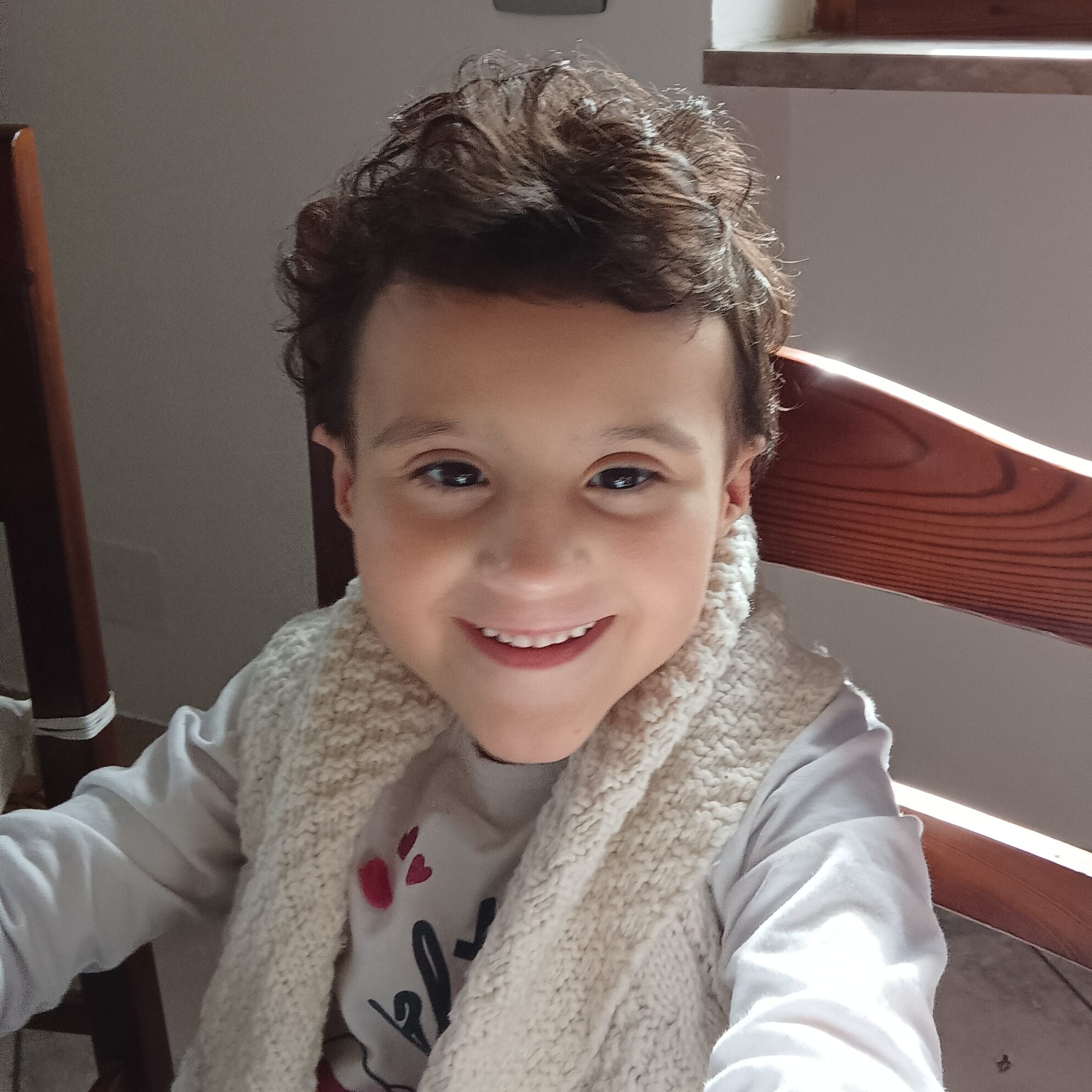
A Long-Awaited Answer
It was just a few days before Anna’s birthday and, after being in several different hospitals, we were about to receive the long-awaited answer. It didn’t seem true that we could name Anna’s problems after years of research.
What we did not expect was to be confronted with a rare genetic disease: the KAT6A syndrome. She was the 86th person in the world with that genetic variant. Our world suddenly fell silent, hearts stopped and everything went black. Bitter and sad tears, but Anna tried to comfort us by telling us that she had not cried. The doctors explained what they knew, provided support also why there is no cure or acceptable case history.
An uphill and uncertain path awaited us on the horizon. In the huge list of things to do we did a Google search: we found an in-depth description of Anna’s KAT6A syndrome! Thanks also to @pietrodurando’s suggestion, we also found the “KAT6 foundation” an American foundation that helps people and families of those living with KAT6 disorders. With a click we went from being alone to finding ourselves in a community with our same goals: the search for a cure and the improvement of the living conditions of our children, brothers and sisters!
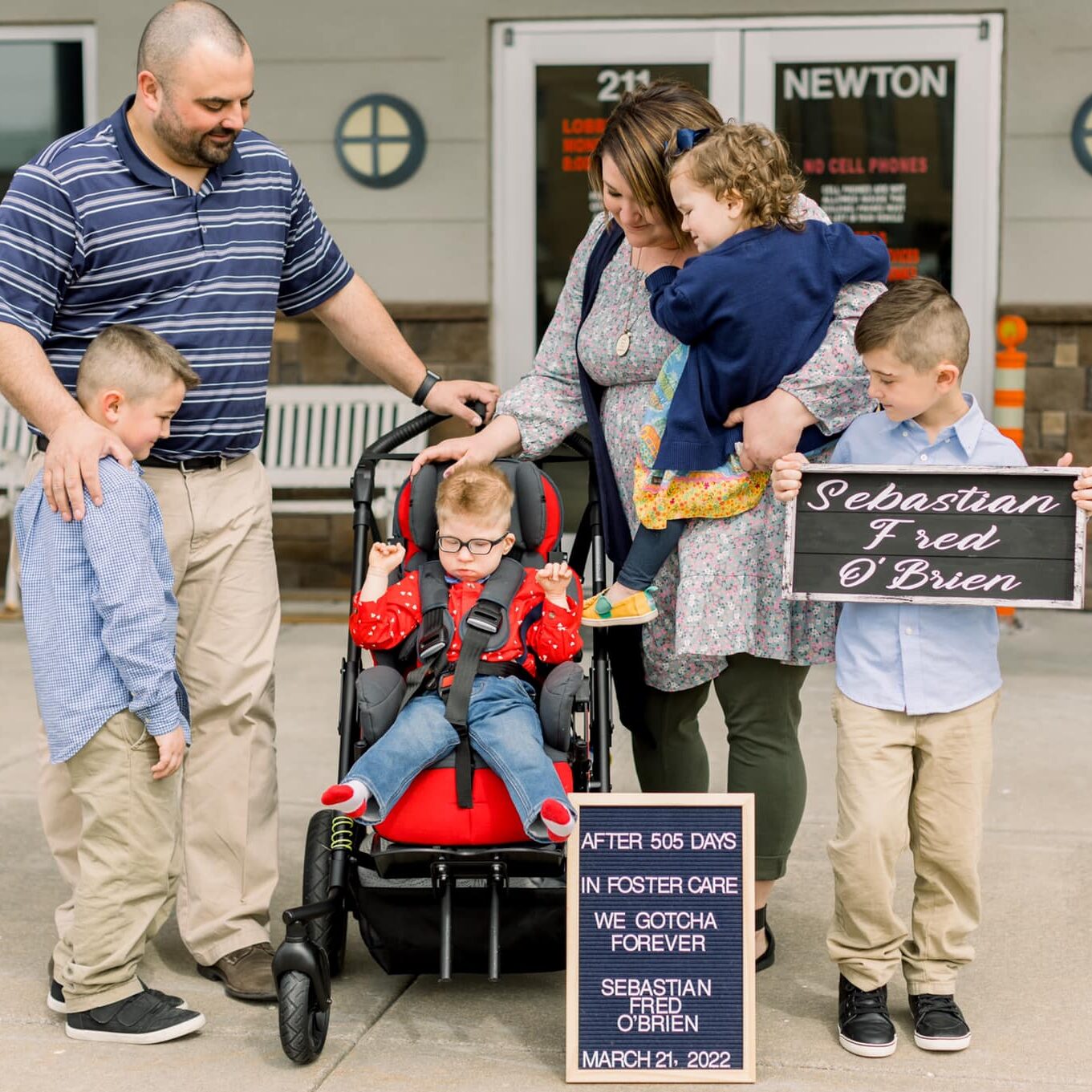
“For however long” became our FOREVER
Our journey to diagnosis looks different than most, our journey to our boy also looks different. In the fall of 2019, my husband and I, had 3 small children and decided to take steps forward toward becoming foster parents. By springtime of 2020, we were ready to start our foster parenting classes, but the pandemic suspended in person classes. Eventually we ended up in the first zoom foster parenting classes the state of Missouri ever had. We had extra time in our licensing process, so we took the adoptive parent classes as well. Towards the end of our home study our licensing worker asked if we would consider becoming medical foster parents. Despite me telling her we had zero clue about medical children we agreed to adding medical to our license, but we never thought we would get a call for anything beyond giving simple medications!
Cut to October of 2020, on Halloween, we got a call for our first placement, a six-month-old boy was waiting in the hospital for someone to come. The first phone call didn’t provide much information, we knew he was g-tube fed, had delays, and desperately needed a safe home. We told the caseworker we didn’t know anything about tube feeding and she said we would stay over night at the hospital to train on his care. I expected my husband to say no, we already had 3 children under the age of six, this baby needed a lot of complex care, but my husband said yes and so did I.
The following day, we drove two hours to the hospital, so nervous, worrying if we could be who this boy needed. It made no sense, but it was right, a God thing. We had several phone calls with doctors and social workers between our first call and the trip to the hospital we learned the baby had a very long list of complex diagnoses. Entering his hospital room for the first time, laying eyes on him, so small, so frail, so alone was unlike anything I’ve ever experienced. My husband and I just stood there staring at him in silence, after a couple minutes my husband looked at me and said, “he’s with us now”.
We stayed three days and two nights in the hospital before bringing our boy home. During that whirlwind, we learned every aspect of his care, g-tube feeds, oxygen, suctioning, medications, physical therapies and so much more. They told us his genetic diagnosis, KAT6B mutation, no one caring for him knew what it was or what to expect long term. I googled it from the hospital room and read there were less than 100 people diagnosed worldwide. Flooded with instant panic, I stopped googling to focus on learning his day-to-day needs, until we made it home and I could do a deep dive into researching KAT6.
Our baby boy’s name was and still is Sebastian, we call him Bash for short. From the beginning his differences from typically developing babies were apparent, caused both from his genetic differences and the traumatic homelife he had lived in resulting in him coming into foster care. He was limp and stiff all at the same time. He was so underweight, failure to thrive, malnourished, dehydrated and treated for refeeding syndrome. His hair was falling out from lack of nutrition. He didn’t make eye contact; his eyes shook back and forth. He was terrified to be held, had an extreme startle response, and never relaxed in our arms. He vomited frequently. He was in survival mode just trying to recover. We had no idea what his baseline would eventually be. Slowly he began to trust us, we began to find a new normal, chaotic yet balanced routine blending our lives with his constant care and appointments. He gained weight, he began to inch alone in his physical therapy goals. We signed up for every intervention therapy we could find. The early days were so difficult and rewarding. Loving him was easy. Every day as his foster parents, we loved him as our own son, we had no idea how long he would be with us.
As the ups and downs of the foster care system played out simultaneously with the ups and downs of medical parenting, we found the KAT6 Foundation and the Facebook parent communities. We leaned into figuring out all we could to provide our boy every resource he needed. When given the opportunities he needs he happily does the work required, he is so motivated. Having a support system of other parents living this complex medical life has been invaluable. He has never stopped progressing, intensive therapy programs mixed with daily interventions from his First Steps providers has propelled him forward. We have in home nursing, along with supportive extended family and community helping to make our little world go round. He works harder than anyone I have ever known; he is such a positive light.
Being a medical foster parent is an indescribable uphill battle. Just gaining access to his complete medical records took over five months, taking my child to appointments and not knowing simple information such as birth weight or previous surgery dates was so stressful, it shouldn’t have been so hard. We spent a lot of time catching up on appointments he had missed before coming into foster care, his schedule was jam packed every day.
Grieving a diagnosis is something I know parents go through. For me, in the beginning I immediately accepted his list of known diagnoses and only grieved for the situation he had been in leading to him being taken into foster care. As the months and years have passed, he has received additional diagnoses and I have grieved them. I don’t stay down for long, his positive perspective keeps me upbeat, living five minutes at a time is how we do life now. He has a lot of accessories, a list of medical complexities and yet, is my most easy-going child. Everyone who meets him is blessed by his calm presence.
After 505 days in our home, we were able to officially adopt Bash. I was so thrilled at the courthouse when our home nurse took out her tablet and charted, “Patient was adopted today”. We celebrated him with a big party with the family and friends who have supported us on this journey. Our family truly needed him. He has made us better parents, taught our older children a lifetime of compassion and empathy, and given our family the gift of living in the present. Every family should be so blessed to have a child like him.
Kristin Ross O’Brien
Sebastian’s Mom
Boonville, Missouri

We Urge Doctors to Dig Deeper When Children are Struggling to Gain Weight
The Oxford dictionary defines insidious as: proceeding in a gradual, subtle way, but with harmful effects. Most people associate this term with clever criminals. Today I am writing this to ask you to think about it in another way.
Perhaps the greatest joy a person can experience is welcoming a child into the world. So many dreams and visions for the future. Ideally, those dreams come true. But not always. Sometimes things don’t go as planned. The baby doesn’t learn to walk, to talk, to play with others. These things happen unfortunately, but no one is blamed. In our present day life we have learned how to address these issues – physical therapy, occupational therapy, play therapy, speech therapy are just a few of the remedies that are prescribed, and they usually help to some degree.
But what if the problem is “gradual, subtle, but harmful”? What if the child can’t seem to gain weight, can’t seem to digest food properly? In medical jargon this is called “Failure To Thrive”. But in this case, often, someone is blamed – the parents.
In the last decade genetic testing has revealed dozens of disorders not previously identified. “With a combined prevalence of ~17% among 3- to 17-year-old children in the United States, neurodevelopmental disabilities are the most prevalent chronic medical conditions encountered in primary care” (Savatt, Myers Genetic Testing in Neurodevelopmental Disorders). One of these is a disorder called KAT6A. It is a rare condition that can have devastating effects, including feeding difficulties. As affected infants age, they may experience difficulties feeding because of problems with the movements of the muscles of the face (oromotor dysfunction), swallowing (dysphagia), and there can be a risk of food, liquid or other foreign material accidentally going into the lungs (aspiration). Infants can have additional symptoms involving the gastrointestinal tract including backflow of the contents of the stomach into the esophagus (gastroesophageal reflux), constipation, and abnormally twisting or rotation of the intestines (intestinal malrotation), which can cause pain and bowel obstruction (Esber, KAT6A Syndrome). All of this means the child does not gain weight as expected. But, because this is a rare, newly discovered disorder, the medical community is often unaware that this is a symptom of a syndrome, not a result of parental neglect. Too many parents in these circumstances have been blamed, and even threatened, by professionals who thought they were doing their job. Here are a few of their stories….
We had a failure to thrive diagnosis from the day she was born. She was born hypotonic and with almost no sucking ability (she was also 7 weeks early). Her twin sister developed normally and that should have been a HUGE clue something was wrong with her. We actually did get reported to CPS and had to work six months with a social worker when she was 8 years old to prove it wasn’t what I was doing, but my daughter’s inability to eat and gain weight. We were easily dismissed after six months but the emotional damage done to me was almost irreparable. We did not get our diagnosis till our child was 29 years old. I have played conversations over in my head so many times over the years…
I went through the same thing – my son was dx’d “failure to thrive” at 6 weeks and I was told I wasn’t feeding him enough and the healthiest organic formula I gave him must not be nourishing enough. I researched myself and found he had a TONGUE TIE. I took him to a new pediatrician and she said it was the most severe case she had seen and clipped it right there…
We had a similar issue with our daughter and the dietician accused us of not feeding her enough calories even though we were following the plan she provided for her. She said it wasn’t enough at the following appointment when I read back what we were giving her….which was still the plan she provided…
In October 2020, my son was approximately 1 year and 4 months old. I took my son to get checked out for genetics because he was delayed and showing symptoms of retardation. I explained that we had chosen to make my son’s own food. Specialists came to our house and questioned every step on how we made the foods and sent us to a dietitian once a month. The dietitian did not see anything we did was out of the ordinary. My son continued to not gain weight and I found myself force feeding him to try and put weight on him, as the doctor said she would report us to the Department of Family Services if he did not gain weight and size. An investigator from DFS came to our house. Finally, in February of 2022 genetic testing revealed my son had KAT6A, which explained so much of the issues we were experiencing.Eventually the director of this hospital called to apologize about what had been done to us and let us know that this doctor was no longer working there…
Our family was investigated. However, when our child had to be hospitalized, and the hospital staff fed our daughter, it became clear this was not a problem of neglect…
In our world today with medical discoveries being made every day, it is impossible for anyone to keep up. But, exactly for this reason, it is so important for those that are responsible for the welfare of our children, to not make assumptions that can have devastating effects. The KAT6 Foundation is dedicated to research and raising awareness of KAT6 syndromes and we hope this article will take one step forward in that direction. These links provide more information about KAT6A and KAT6B. Even if your child is thriving, please share this article with your doctors, as it may help avoid the heartache the parents have experienced.
Medical News
KAT6 Clinic Opens at Boston Children's Hospital
Major Development: A KAT6 Clinic Has Opened at Boston Children’s Hospital
We’re excited to share that a new multidisciplinary clinical program for individuals with KAT6A and KAT6B is now open at Boston Children’s Hospital, led by Dr. Olaf Bodamer and Dr. William Brucker. This clinic will serve as a true medical home for families, offering coordinated care across specialties.
The KAT6 Foundation is proud to have helped fund the development of this program, made possible through the generosity of our donors.
As the team continues organizing the clinic, families who are interested in care are encouraged to contact rarediseases@childrens.harvard.edu. This inbox is monitored several times a day, and families can expect a response within 24 to 48 hours. After reaching out, families will receive an intake form and the opportunity for a brief informal meeting to discuss expectations. Appointments for an initial evaluation are available on a regular basis with Dr. Brucker and/or Dr. Bodamer.
In addition to patient care, the clinic will gather natural history data and collect biospecimens for the IRB-approved KAT6 biorepository, which supports ongoing biomarker discovery. The clinicians will also continue collaborating with research partners such as the Serrano Lab at Boston University.
For appointments or additional details, families can reach the clinic coordinator at rarediseases@childrens.harvard.edu
300 Longwood AvenueBoston, MA 02115
Bowel Obstructions in the KAT6 Population
Parents and caregivers of children or adults with KAT6 disorders are the first to recognize whether the person they care for is in distress. Those continually looking after the person’s needs are the best ones to intervene and advocate for medical care when it appears that a problem is present and getting worse. But what are we looking for and when might it call for emergency care?
INTESTINAL BLOCKAGE
Gastrointestinal issues are common with KAT6 disorders. Low muscle tone throughout the body may mean low motility in the gut — weak contraction of the muscles that mix and propel contents in the gastrointestinal tract. When there is a temporary lack of normal muscle contractions of the intestines this is known as ileus — not a blockage, but a stoppage. (Think of a blockage as a train wreck, preventing any other train from passing through, and think of a stoppage as merely a train sitting on the tracks and failing to move along.)
When the contents of the upper or lower bowel cease to move, the resulting mass can become enlarged and can harden as it dries out, stretching the part of the intestine where the mass occurs. Regular contractions can return and eventually move it along, but if the contents sit too long they can begin to ferment and decay, with potentially serious results. Vomiting and diarrhea, for example, are normal consequences once the body applies its other resources to the obstruction.
If it does not eventually start moving on its own it may respond to non-invasive treatments such as stimulants taken orally or a rectal enema, depending on proper assessment of the location of the problem. But if there is a physical barrier to continued movement of intestinal contents, the problem can quickly become life-threatening.
MALROTATION AND VOLVULUS
Around the tenth week of gestation, as the intestinal tract is developing, it normally moves from the base of the umbilical cord into the abdominal cavity. As the intestine descends into the abdomen, it makes two rotations and settles into its normal position. When a portion of the intestine, or even the entire intestinal tract, fails to lie properly in this space, it ls known as a malrotation.
A malrotation may cause immediate symptoms and problems after a baby is born or may lead only to intermittent trouble, or it may cause no problems at all. In some people it is not discovered until well into adulthood or perhaps never discovered at all. In others, it can be the source of repeated obstructions. The point is, a malrotation is an anatomical defect and one that must be suspected if problems arise, especially in early childhood. It can lead either to continuous or intermittent problems but is not necessarily dangerous.
When a loop of intestine and the membrane that holds it in place twist around each other like sausage links or a kinked garden hose, this causes a bowel obstruction called a volvulus. A certain kind of volvulus in a horse is commonly called a torsion. It is not going to clear and open back up on its own, and normal muscle contractions in the gut are not going to force a trapped mass of intestinal contents to move past it.
The trapped material, already partially digested, continues to break down, though, and some contents may be ejected as diarrhea or gas, while most of it will remain and swell the gut. A person suffering a volvulus, who enters emergency surgery soon enough, may still lose part of the intestinal tract in surgery. Without emergency surgery a volvulus is almost certain to be fatal.
If a volvulus is suspected in an emergency room, a buildup of gas in the intestine may show up on a series of x-rays, which must be taken at intervals long enough for changes to appear but no so long that surgery comes too late.
OTHER GI ISSUES
The esophageal sphincter is the valve between the esophagus and the stomach. When the muscle that keeps this valve closed is weak, a blast of burning stomach acid may rise as far as the throat. This is acid reflux. A baby with KAT6A or KAT6B can be resting quietly in a baby seat, alert and cheerful, and suddenly scream in pain and terror. If this happens with any frequency, reflux should be suspected when nothing else is likely.
Dumping syndrome is a group of symptoms, such as diarrhea, nausea, and feeling light-headed or tired after a meal, that are caused by rapid gastric emptying, a condition in which food moves too quickly from the stomach to the duodenum. This can become an issue after a person has undergone GI surgery. Adjustments in diet or medicine can resolve things, and, if surgery was involved, time may be the best healer.
OUR NEED TO REMAIN VIGILANT
Communication problems are common with the KAT6 population as well as an apparent high tolerance for pain. Children and adults with KAT6 disorders, especially those who can’t tell us that something hurts or where it hurts, need to be monitored continually for lack of gut movement. Constipation, (a general term for any disruption of intestinal activity that leads to pain and irregularity of bowel movements), can make a normally cheerful person irritable.
A volvulus is a rare occurrence in the general population, but among the KAT6 population it seems common enough to be of serious concern. Although we are still studying the matter and don’t have statistics, it appears that untreated bowel obstructions are the leading cause of death among children affected by KAT6 disorders.
Many of those with KAT6 disorders are tube-fed through a gastrostomy. For some, this is their only source of nutrition, and so variations in gastrointestinal activity are less likely to be caused by daily changes in diet.
What is the person’s normal frequency of bowel movements? Has it been a day longer than normal? Two days? Is she also becoming irritable, combative, unable to sleep? Does this happen in repeating cycles? What does her blood work show? What does a gastroenterologist say? Do cycles of irritability correlate with cycles of unusual toilet contents? Someone close to the patient needs to be asking these questions and insisting on answers.
People with KAT6 disorders may show no signs of a bowel obstruction until it has progressed to a serious degree. They may quietly tolerate the increasing pain until it has become severe. An obstruction can go from bad to dangerous quickly. It is hard to differentiate an obstruction from other gastro-intestinal issues. Obstructions can happen again and again and can strike at any age.
While it is probably more likely to become an issue early in a child’s life, an affected person who has a KAT6 disorder can seem to be OK for years, perhaps irritable at times for no apparent reason. Just because it hasn’t been diagnosed at an early age it could be that a complete obstruction simply hasn’t happened yet. The best prevention of complications is be on top of it all of the time. Not all doctors understand that, with a bowel blockage, you can still pass diarrhea — the assumption seems to be that if they’re passing anything at all then there’s no obstruction.
Medical services vary from country to country, and while another country may have excellent hospitals and perfectly competent doctors, they may also have different approaches to parent involvement, different protocols for intervention, and different standards for what can and should be treated.
Compounding the danger, a doctor may not consider an intestinal obstruction if a parent or caregiver hasn’t suggested it, and so a doctor wants to ascribe a change in behavior to anxiety, a virus, a food allergy, and so on. Meanwhile the child has mere hours to get the problem resolved or else irreversible damage has been done with a high potential for fatal results.
LIVING WITH IT
We aren’t supposed to tell people about our poop or ask others about theirs. With KAT6 in a family we could save a life if we get beyond that taboo. In our own experience, Beth and I share in all phases of the care of our son, Sam, who is now 32 years old. He is one of the more severely disabled individuals with KAT6A syndrome, and so we must pay constant attention to all the signs he gives us. We “read” his behavior, we both examine his bowel movements daily or at least describe to each other what he has done. (He even has an “I POOPED TODAY” T-shirt.)
Sam has had a gastrostomy and feeding tube since he was a baby and receives all medicine and sustenance through the tube. He had a nissen fundoplication during his first surgery as a baby, so he cannot burp or vomit. He had a malrotation of the duodenum at birth (corrected by surgery), reflux as a baby, a volvulus before he was two (indicated by changes in a gas pocket on successive x-rays), a second near-fatal obstruction due to adhesions, and numerous instances of ileus and other partial obstructions requiring hospital stays. As an adult he is now treated for ulcerative colitis. He does not walk and can’t speak. But he is engaging and even mischievous, affectionate, enthusiastic, and popular. When he hurts, his only ways to show it are in withdrawal, resistance, and restlessness.
We are fortunate that Sam has had doctors who care about him as a person and who listen to us, his parents. His doctors, though, need to trust what we are telling them, and so our information must be reliable. By educating ourselves, paying close attention to the signs that Sam gives us, and making sure we communicate consistently and accurately with medical providers, we have been Sam’s best advocates.
Many parents have observed GI benefits from a mitochondrial cocktail and other supplements, such as Cytra-3. Learn more about these supplements by watching Dr. Richard Kelley’s presentation from our 2022 Conference. It is essential to consult your child’s physician before starting anything new.
Foundation News
We Urge Doctors to Dig Deeper When Children are Struggling to Gain Weight
The Oxford dictionary defines insidious as: proceeding in a gradual, subtle way, but with harmful effects. Most people associate this term with clever criminals. Today I am writing this to ask you to think about it in another way.
Perhaps the greatest joy a person can experience is welcoming a child into the world. So many dreams and visions for the future. Ideally, those dreams come true. But not always. Sometimes things don’t go as planned. The baby doesn’t learn to walk, to talk, to play with others. These things happen unfortunately, but no one is blamed. In our present day life we have learned how to address these issues – physical therapy, occupational therapy, play therapy, speech therapy are just a few of the remedies that are prescribed, and they usually help to some degree.
But what if the problem is “gradual, subtle, but harmful”? What if the child can’t seem to gain weight, can’t seem to digest food properly? In medical jargon this is called “Failure To Thrive”. But in this case, often, someone is blamed – the parents.
In the last decade genetic testing has revealed dozens of disorders not previously identified. “With a combined prevalence of ~17% among 3- to 17-year-old children in the United States, neurodevelopmental disabilities are the most prevalent chronic medical conditions encountered in primary care” (Savatt, Myers Genetic Testing in Neurodevelopmental Disorders). One of these is a disorder called KAT6A. It is a rare condition that can have devastating effects, including feeding difficulties. As affected infants age, they may experience difficulties feeding because of problems with the movements of the muscles of the face (oromotor dysfunction), swallowing (dysphagia), and there can be a risk of food, liquid or other foreign material accidentally going into the lungs (aspiration). Infants can have additional symptoms involving the gastrointestinal tract including backflow of the contents of the stomach into the esophagus (gastroesophageal reflux), constipation, and abnormally twisting or rotation of the intestines (intestinal malrotation), which can cause pain and bowel obstruction (Esber, KAT6A Syndrome). All of this means the child does not gain weight as expected. But, because this is a rare, newly discovered disorder, the medical community is often unaware that this is a symptom of a syndrome, not a result of parental neglect. Too many parents in these circumstances have been blamed, and even threatened, by professionals who thought they were doing their job. Here are a few of their stories….
We had a failure to thrive diagnosis from the day she was born. She was born hypotonic and with almost no sucking ability (she was also 7 weeks early). Her twin sister developed normally and that should have been a HUGE clue something was wrong with her. We actually did get reported to CPS and had to work six months with a social worker when she was 8 years old to prove it wasn’t what I was doing, but my daughter’s inability to eat and gain weight. We were easily dismissed after six months but the emotional damage done to me was almost irreparable. We did not get our diagnosis till our child was 29 years old. I have played conversations over in my head so many times over the years…
I went through the same thing – my son was dx’d “failure to thrive” at 6 weeks and I was told I wasn’t feeding him enough and the healthiest organic formula I gave him must not be nourishing enough. I researched myself and found he had a TONGUE TIE. I took him to a new pediatrician and she said it was the most severe case she had seen and clipped it right there…
We had a similar issue with our daughter and the dietician accused us of not feeding her enough calories even though we were following the plan she provided for her. She said it wasn’t enough at the following appointment when I read back what we were giving her….which was still the plan she provided…
In October 2020, my son was approximately 1 year and 4 months old. I took my son to get checked out for genetics because he was delayed and showing symptoms of retardation. I explained that we had chosen to make my son’s own food. Specialists came to our house and questioned every step on how we made the foods and sent us to a dietitian once a month. The dietitian did not see anything we did was out of the ordinary. My son continued to not gain weight and I found myself force feeding him to try and put weight on him, as the doctor said she would report us to the Department of Family Services if he did not gain weight and size. An investigator from DFS came to our house. Finally, in February of 2022 genetic testing revealed my son had KAT6A, which explained so much of the issues we were experiencing.Eventually the director of this hospital called to apologize about what had been done to us and let us know that this doctor was no longer working there…
Our family was investigated. However, when our child had to be hospitalized, and the hospital staff fed our daughter, it became clear this was not a problem of neglect…
In our world today with medical discoveries being made every day, it is impossible for anyone to keep up. But, exactly for this reason, it is so important for those that are responsible for the welfare of our children, to not make assumptions that can have devastating effects. The KAT6 Foundation is dedicated to research and raising awareness of KAT6 syndromes and we hope this article will take one step forward in that direction. These links provide more information about KAT6A and KAT6B. Even if your child is thriving, please share this article with your doctors, as it may help avoid the heartache the parents have experienced.
Recap of KAT6A & KAT6B Virtual Symposium: Speech & Language
On March 24, 2022, The KAT6A Foundation hosted the second KAT6A and KAT6B Virtual Symposium. The event was designed to solidify the KAT6A and KAT6B research network of clinicians and researchers through identification of research gaps, opportunities and collaborations. The symposium series aims to drive patient- centered and collaborative research to improve outcomes for individuals with KAT6A and KAT6B syndromes. The symposium series also aims to spark new collaborations among the KAT6A and KAT6B research groups and healthcare communities.The first KAT6A and KAT6B symposium, conducted in 2021, discussed a range of neurodevelopmental challenges faced by children with KAT6A and KAT6B gene variations. The second symposium expanded on the stakeholder representation to include parents of children with KAT6A and KAT6B gene variations along with health care professionals, clinicians, and researchers. This symposium focused on understanding the impact of KAT6A and KAT6B gene variations on speech and language development, a domain that is most commonly affected in this population of children.10 speakers and nearly 60 members of the KAT6 community attended the the symposium. The symposium ran for three hours and was organized in two sessions: the first session provided an overview of the KAT6A Foundation’s goal to empower patient-centered research and initiatives led by the Foundation to support research. The second session focused on understanding the pathophysiology of KAT6A and KAT6B related speech and language disorders.
Please read the symposium recap pdf for a complete summary of each presentation. The next virtual symposium is tentatively scheduled in September 2022. This symposium will focus on unraveling the range of gastrointestinal difficulties faced by individuals diagnosed with KAT6A and KAT6B syndromes.
CZI's Rare as One Project Awards KAT6 Foundation $150,000
The KAT6 Foundation is honored to receive a third year of funding from the Chan Zuckerberg Initiative (CZI), in the amount of US$150,000. The grant supports the expansion of the KAT6A/KAT6B Research Network and accelerates our work to find treatments or a cure for KAT6A and KAT6B syndromes.
“We are so grateful to the Chan Zuckerberg Initiative for their continued support of the KAT6 Foundation and the rare disease community. Their continued support recognizes the great progress our foundation has made in developing and organizing the community of researchers seeking to understand and treat KAT6A and KAT6B syndromes. We look forward to continuing to develop new research opportunities and collaborations as we seek future sustaining funding opportunities,” shared Jordan Muller, chairperson of the KAT6 Foundation.
In February 2020, The KAT6 Foundation was selected as one of thirty patient-led organizations for CZI’s Rare as One Project and was awarded a grant of US$450,000 to be used over 30 months. This grant has enabled the foundation to expand its Research Network by funding a science director, research coordinator, and patient registry coordinator, which helped facilitate the first KAT6A & KAT6B Virtual Symposium in 2021. This was the first collaborative research event organized by the KAT6 Foundation in which 16 speakers presented their research related to KAT6A or KAT6B genes. This conference provided researchers an opportunity to discuss their findings, ask questions and receive feedback while strengthening collaboration. In June 2022, these funds will allow us to host the 3rd International KAT6A & KAT6B Conference so that we can bring families, researchers, and medical doctors together for the first time since 2019. Furthermore, the CZI grant has been critical in helping us improve fundraising and awareness initiatives by supporting marketing and communications costs.
As we move forward, we will continue CZI’s mentorship program, which has provided us with the valuable opportunity to collaborate and learn from other rare disease organizations. This additional funding will foster greater collaboration between all the researchers currently working or interested in KAT6 through subsequent meetings in the KAT6A and KAT6B Virtual Symposium series. The opportunity CZI has provided us to strengthen our Research Network has allowed us to be a driving force in international KAT6A and KAT6B research. It is an honor to serve the KAT6 patient community as we move forward in our mission to ensure equity in access to testing, knowledge, and therapies for KAT6 patients around the world. Thank you for your continued support.

Dr. Arboleda's KAT6A Research
KAT6A Families,On March 1, 2018, Dr. Francis Collins, the Director of the National Institutes of Health (NIH) dedicated his blog posting to Dr. Valerie Arboleda’s research on KAT6A. This blog post provides great visibility for our community and the KAT6A Foundation, and is a very good summary of her research plan. https://directorsblog.nih.gov/…/creative-minds-looking-fo…/…
I also wanted to recognize and thank all of the families who supported the Children’s National Race For Every Child over the past several years. It was funds you raised for those events that supported her initial research. This research provided the early findings that helped her win the NIH grant that will help sustain this research going forward. So congratulations to all of you for helping further KAT6A research. And thank you for your continued support of our new KAT6A Foundation as we continue to raise funds to support future research.
Jordan Muller
Chairperson of the KAT6A Foundation
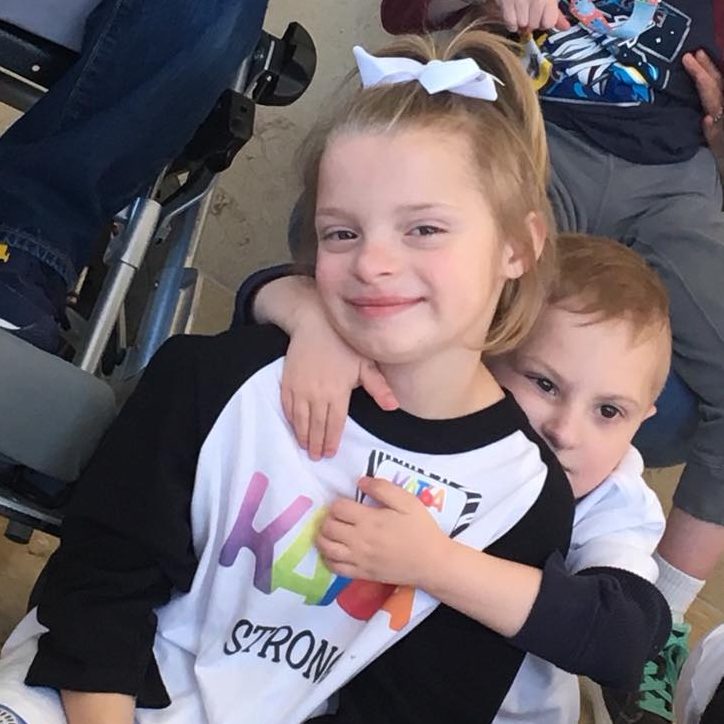
KAT6A Clinic - February 3, 2018
On February 3, 2018, the first KAT6A clinic was held in Baltimore, Maryland, at the Kennedy Krieger Institute. Nineteen families attended and several more followed the clinic by livestream.
We were pleased to have in attendance and as speakers Jacqueline Harris, M.D., Ph.D., Pediatric Neurologist from the Kennedy Krieger Institute in Baltimore, Hans Thomas Bjornsson, M.D., Ph.D., Director of Epigenetic and Chromatin Clinic and Assistant Professor of Pediatrics at Johns Hopkins Hospital in Baltimore, Jill Fahrner, M.D., Ph.D., Assistant Residency Program Director at Johns Hopkins Genetic Medicine Residency Program and Assistant Professor of Pediatrics at Johns Hopkins Hospital in Baltimore, and Richard Kelley, M.D., Ph.D., former Director of Division of Metabolism at Kennedy Krieger Institute in Baltimore and current researcher at the Division of Genetics and Boston Children’s Hospital.
After a welcome by KAT6A Communications Director Brittany Green, Dr. Jacqueline Harris presented an overview of the KAT6A clinical syndrome. She explained that KAT6A is a histone modifier epigenetic disorder. This means that the gene function is changed, not the gene sequence, and it is influenced by the histone machinery. It is most often de novo, which means that the genetic change happens in the child and is not inherited from either parent. She reported that there are only a few documented cases, so not much is known about KAT6A syndrome. Researchers need more cases to study. However, there seem to be some features that are nearly universal and some features that seem to be related. Some of the universal features include hypotonia, feeding problems, congenital heart disease, eye or vision problems, skull abnormalities, distinctive facial features, and global developmental delay. Less common but probably associated features are small birth size, perinatal complications, seizures, specific behavioral features, sleep disturbances, immune system irregularities, dental abnormalities, hand abnormalities, and brain MRI abnormalities. She concluded by stating that current researchers learn most from the patients and their families and by drawing from information from other similar epigenetic syndromes.
Next, Dr. Kelley spoke about mitochondrial dysfunction in KAT6A. KAT6A affects metabolic protein absorption, and children with this disorder often have abnormal levels of certain plasma amino acids. Some that he mentioned were citrate, asparagine, and phenylalanine. Using common lab standards, amino acid levels often seem within normal range but a doctor who specializes in mitochondrial disorders uses a conversion scale to determine whether there is a mitochondrial disorder. Dr. Kelley has been working with several families to analyze plasma amino acid levels and then recommending parts or all of a mitochondrial cocktail that he has developed as treatment. Carnitine has been shown to potentiate chromatin opening, and Vitamin B5 helps the body break down carnitine, so these are often helpful to children with KAT6A. Several parents have documented developmental progress in their children who are taking carnitine and vitamin B5. Dr. Kelley is quite confident that carnitine is very beneficial to individuals with KAT6A.
Dr. Bjornsson was the last speaker and he spoke about mendelian disorders of the epigenetic machinery and therapeutic possibilities. He has been studying a disorder very similar to KAT6A called Kabuki Syndrome. They are both epigenetic disorders of the histone machinery. Dr. Bjornsson is studying a mouse model of Kabuki syndrome and has been able to gain much needed information, including some effects that can be reversed using drugs targeting the epigenetic machinery. He also feels that carnitine is likely a good therapeutic treatment for KAT6A. He would like to be able to build KAT6A related data based on seeing more patients with KAT6A. He summarized by emphasizing how rare KAT6A is and that in order to assist in further research, the KAT6A Foundation needs to participate in research by donating results, samples and joining studies, as well as promote research by raising funds to help any interested lab get preliminary data to attract NIH funding. We can also continue to organize meetings and clinics such as this one and continue to increase awareness about KAT6A in the world.
The meeting concluded with some time for the families to meet, share information, and speak individually with the doctors. For those present as well as those families who were listening to the live feed, this first get-together was stimulating, rejuvenating, and gave us hope for our children’s future.
You can view the full presentations by the medical specialist on our KAT6A Foundation Youtube channel.
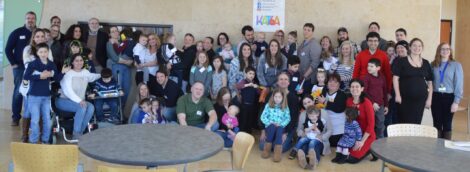
Research Updates

2025 KAT6 Foundation Newly Funded Research Projects
We are pleased to support eight new studies advancing our understanding of KAT6 syndrome.
These projects address disease mechanisms, model development, potential therapies, and biomarkers—laying critical groundwork for clinical trials.
1. Engineering novel genetic tools to unravel the complex KAT6-disease phenotype
Chief Investigator: Effie Apostolou, PhD
Institution: Weill Cornell Medicine, New York City
Dr. Apostolou’s team is working to create a stem cell genetic model which will allow them to control the amount of KAT6A and KAT6B proteins available in a cell. This will allow them to see how different amounts of these proteins affect cell development and highlight future potential therapeutic targets. The group is committed to making their model available to the broader research community. (This study is fully funded by an anonymous donor.)
2. Patient-specific neurodevelopmental models for KAT6B mutations
Principal Investigator: Valerie Arboleda, MD, PhD
Institution: David Geffen School of Medicine, University of California, Los Angeles
This study leverages patient-derived induced pluripotent stem cell (iPSC) lines to investigate how specific KAT6B variants contribute to the phenotypic divergence between Genitopatellar Syndrome (GPS) and Say-Barber-Biesecker-Young-Simpson syndrome (SBBYSS). Brain-like cells grown from patient samples will help researchers understand condition-specific development and open the door to personalized therapies.
3. Neurobehavioral differences in early- and late-truncating KAT6A mouse models
Principal Investigator: Valerie Arboleda, MD, PhD
Institution: David Geffen School of Medicine, University of California, Los Angeles
Dr. Arboleda’s team is creating new, KAT6A variant-specific mouse models to study how different types of KAT6A variants affect brain development and behavior. Based on data from their lab, they will test therapies to see if it can help improve symptoms in mice with severe KAT6A mutations. This study brings us closer to testing treatments that target the specific effects of different mutations in people.
4. Biomarker discovery in KAT6A for translation into clinical trials
Chief Investigator: Sarah Donoghue, MBBS, FRACP
Institution: Murdoch Children’s Research Institute (MCRI), University of Melbourne, Melbourne
This project seeks biomarkers in blood and brain tissues to further understand how cognitive function develops in KAT6A with the hope that we will be able to use this information to measure disease progression and treatment success. This work is building on multi-Omic work that we are doing in the lab to characterize KAT6A models of mice and KAT6A human cortical neuron experiments. We are hoping to understand the impact of KAT6A on brain function in mice and whether carnitine treatment improves this, paving the way for future human trials. Together, these studies will help get us closer to starting clinical trials in people with KAT6A syndrome.
5. A multidisciplinary clinical program and identification of a metabolomic profile in KAT6A/KAT6B conditions to inform clinical trial readiness
Co-Investigators: Olaf Bodamer, MD, PhD andWilliam Brucker, MD, PhD
Institution: Boston Children’s Hospital & Harvard Medical School, Boston
Dr. Bodamer is launching a new clinical program for patients with KAT6A and KAT6B syndromes at Boston Children’s Hospital. The team will collect detailed health data and samples from patients to better understand the natural course of these conditions. They’ll also search for unique biomarkers that could help doctors know when a treatment is working. This project combines high-quality patient care with research aimed at preparing for future clinical trials.
6. Epigenetic landscapes and gene regulation in KAT6 disorders
Co-Investigators: Maria A. Serrano, PhD and Gustavo Mostoslavsky, MD, PhD
Institution: Center for Regenerative Medicine & Boston University Chobanian & Avedisian School of Medicine, Boston
This research examines how KAT6 mutations affect gene regulation in brain, gut, and blood cells. The team will use an advanced method to see how these cells’ “epigenetic landscapes” (chemical markers that control gene activity) are different from healthy cells. It may also identify blood-based biomarkers for easier monitoring of disease progression and treatment.
7. CA3 neuronal development in KAT6A and KAT6B patient-derived iPSCs
Principal Investigators: Thomas Durcan, PhD, Faïza Benaliouad, PhD and Gilles Maussion, PhD
Institution: Neuro: Montreal Neurological Institute-Hospital & McGill University, Montreal
Focusing on the CA3 hippocampal region linked to memory, this study uses patient-derived stem cells to uncover how brain cell development is altered in KAT6 syndromes. The goal is to find points for therapeutic intervention.
8. When Proteins Go Wrong: Unravelling the Impact of KAT6 Variants on Protein Structure and Function
Principal Investigator: Shabih Shakeel, PhD
Institution: Walter and Eliza Hall Institute of Medical Research
This project is focused on characterizing the effects of different KAT6A and KAT6B mutations on protein structure and important protein functions such as binding with protein partners and acetylation. They will do this first characterization by isolating the proteins and studying them in test tubes. Dr. Shakeel’s team will then see how these changes in function lead to downstream changes to actual cells. (This study is fully funded by an anonymous donor.)
MCRI is Seeking Participants for New KAT6A Research Study
Biomarker discovery in KAT6A for translation into clinical trials
For KAT6A syndrome and other neurodevelopmental disorders, researchers are starting to understand the dysregulated cellular processes affecting neurons and their supporting cells. The Chromatin Disorders Research Team at Murdoch Children’s Research Institute is currently using a mouse model, alongside human cortical neurons to study gene expression and metabolomics KAT6A syndrome, in collaboration with Professor Anne Voss at the Walter and Eliza Hall Institute of Medical Research. This work is being led by PhD student Dr Sarah Donoghue and supervised by Professor David Amor and Professor Paul Lockhart. The goal of this project is to understand the differences in brain development that occur in KAT6A syndrome, and to identify biomarkers that may show response to treatment in clinical trials.
The team is looking to extend their work on blood biomarkers in KAT6A mice to children and adults with KAT6A syndrome. In this project, they will measure a range of molecular compounds in blood samples from human participants with KAT6A syndrome, using untargeted metabolomic and proteomic analyses. They will compare the plasma profile of 50 KAT6A syndrome participants to the plasma samples of 20 participants without KAT6A syndrome. The aim is to identify biomarkers that are detectable in the plasma of participants with KAT6A syndrome, with the hope that these can be translated for use in clinical trials, as an objective measure of treatment efficacy as the community proceeds to clinical trials.
For more information about this research, please contact Sarah Donoghue at sarah.donoghue@mcri.edu.au.

Attention Researchers
ATTENTION RESEARCHERS:
The KAT6 Foundation is addressing a critical research priority raised by families—gastrointestinal challenges faced by children with KAT6A and KAT6B. This population experiences a concerning increase in mortality due to poor GI motility and perforation. Tragically, we recently lost another child to GI perforation, which has heightened anxiety and urgency within the community.
We are keen to better understand the factors that contribute to susceptibility to poor motility, bowel obstruction, and the risk of perforation in children with KAT6A and KAT6B. Equally important is identifying effective treatment strategies to address these serious issues.If you are interested in collaborating on this important challenge, please email the KAT6 Foundation at support@kat6a.org.
Learn more about Bowel Obstructions in the KAT6 Population.
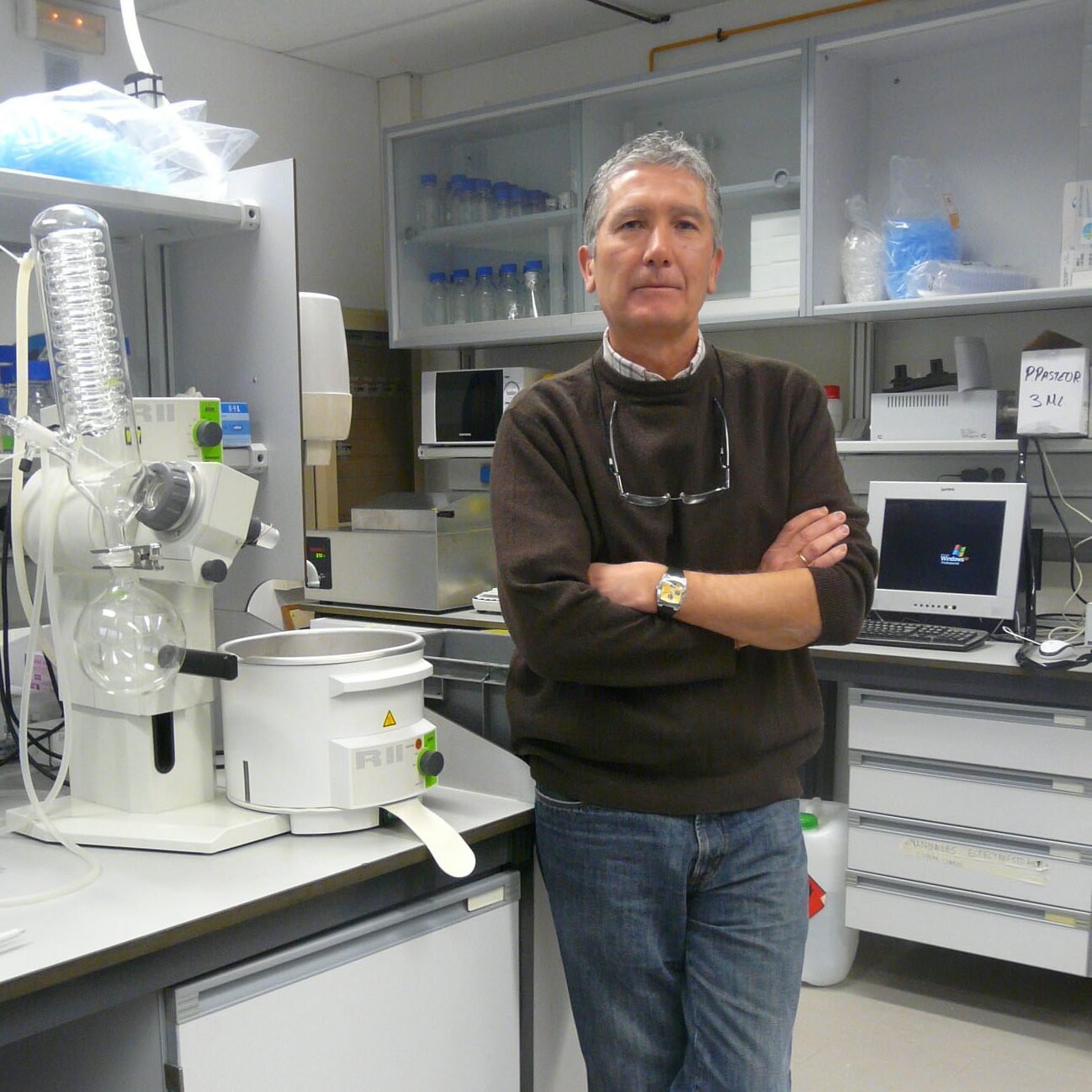
KAT6 Foundation Reaches Milestone as First Funded Research Project is Published
We are proud to report that research led by Dr. José A. Sánchez-Alcázar and his team was published by Genes on November 15, 2022 in an article titled Pantothenate and L-carnitine Supplementation Corrects Pathological Alterations in Cellular Models of KAT6A Syndrome. This is an important milestone for our Foundation as it is the first research project that we directly funded to reach publication, and is an important step forward on the path to finding a treatment for KAT6 individuals. Development of surrogate models simulating KAT6A gene variation is the first step towards understanding the pathophysiological alterations caused by this gene variation. By outlining pathophysiological pathways, treatment model(s) addressing alterations in these pathways can be developed for testing.
Three individuals with KAT6A gene variation participated in the study conducted at Universidad Pablo de Olavide in Spain. An initial series of experiments generated evidence supporting the use of patient-derived fibroblast to study KAT6A gene variation. The team identified four critical pathophysiological processes altered by KAT6A gene variation: 1) Coenzyme A (CoA) metabolism, 2) Iron metabolism, 3) Enzymatic antioxidant system and 4) Mitochondrial function. Two compounds were identified to have a positive impact on the altered physiological pathways. These compounds are: 1) Pantothenate and 2) L-carnitine. Pantothenate is a CoA metabolism activator and L-carnitine is a mitochondrial boosting agent. Supplementation with pantothenate and L-carnitine supported the survival of the KAT6A fibroblast in a stress inducing medium. The concentration of pantothenate and L-carnitine varied in all three KAT6A cell lines suggesting that different type of mutations respond differently to these positive compounds. The KAT6A gene plays a significant role in histone acetylation which is a key process involved in cell progression and differentiation. Supplementation with pantothenate and L-carnitine resulted in significant increase in histone acetylation, recovery of gene expression patterns and expression levels of proteins affected due to the KAT6A gene variation.
We want to extend our sincere thanks to Dr. José A. Sánchez-Alcázar and his entire team for their professionalism and commitment to rare disease research and the KAT6 community. We look forward to building upon this partnership in the future.
Recap of KAT6A & KAT6B Virtual Symposium: GI Health and Beyond
The Gastrointestinal Health and Beyond in Children with Rare Genetic Variations was a 2-hour long, patient-centered, collaborative event organized by the KAT6 Foundation. It was designed to fuel conversation about the gastrointestinal challenges faced by children with KAT6A and KAT6B gene variations and enable open dialogue between families, clinicians, and researchers. The webinar provided a platform for the KAT6 community to expand its network and build connections with new researchers and experts working on tackling GI and GI related issues. More than 90 individuals registered for this event. On the day of the webinar, 20 families and 35 scientists attended the event. With some international representation, the majority of the families and researchers were based in the USA.
Dr. Tanya Tripathi, research coordinator of the KAT6 Foundation moderated three scientific presentations by renowned scientists – Dr. Sarkis Mazmanian, Dr. Gustavo Mostoslavsky and Dr. Richard I Kelley. Please read the summary of the presentations here.
Recap of KAT6A & KAT6B Virtual Symposium: Speech & Language
On March 24, 2022, The KAT6A Foundation hosted the second KAT6A and KAT6B Virtual Symposium. The event was designed to solidify the KAT6A and KAT6B research network of clinicians and researchers through identification of research gaps, opportunities and collaborations. The symposium series aims to drive patient- centered and collaborative research to improve outcomes for individuals with KAT6A and KAT6B syndromes. The symposium series also aims to spark new collaborations among the KAT6A and KAT6B research groups and healthcare communities.The first KAT6A and KAT6B symposium, conducted in 2021, discussed a range of neurodevelopmental challenges faced by children with KAT6A and KAT6B gene variations. The second symposium expanded on the stakeholder representation to include parents of children with KAT6A and KAT6B gene variations along with health care professionals, clinicians, and researchers. This symposium focused on understanding the impact of KAT6A and KAT6B gene variations on speech and language development, a domain that is most commonly affected in this population of children.10 speakers and nearly 60 members of the KAT6 community attended the the symposium. The symposium ran for three hours and was organized in two sessions: the first session provided an overview of the KAT6A Foundation’s goal to empower patient-centered research and initiatives led by the Foundation to support research. The second session focused on understanding the pathophysiology of KAT6A and KAT6B related speech and language disorders.
Please read the symposium recap pdf for a complete summary of each presentation. The next virtual symposium is tentatively scheduled in September 2022. This symposium will focus on unraveling the range of gastrointestinal difficulties faced by individuals diagnosed with KAT6A and KAT6B syndromes.