KAT6 NEWS & STORIES
Latest updates from the KAT6 Foundation
Find stories of hope, updates from the foundation, international news, and more!
Featured blog posts
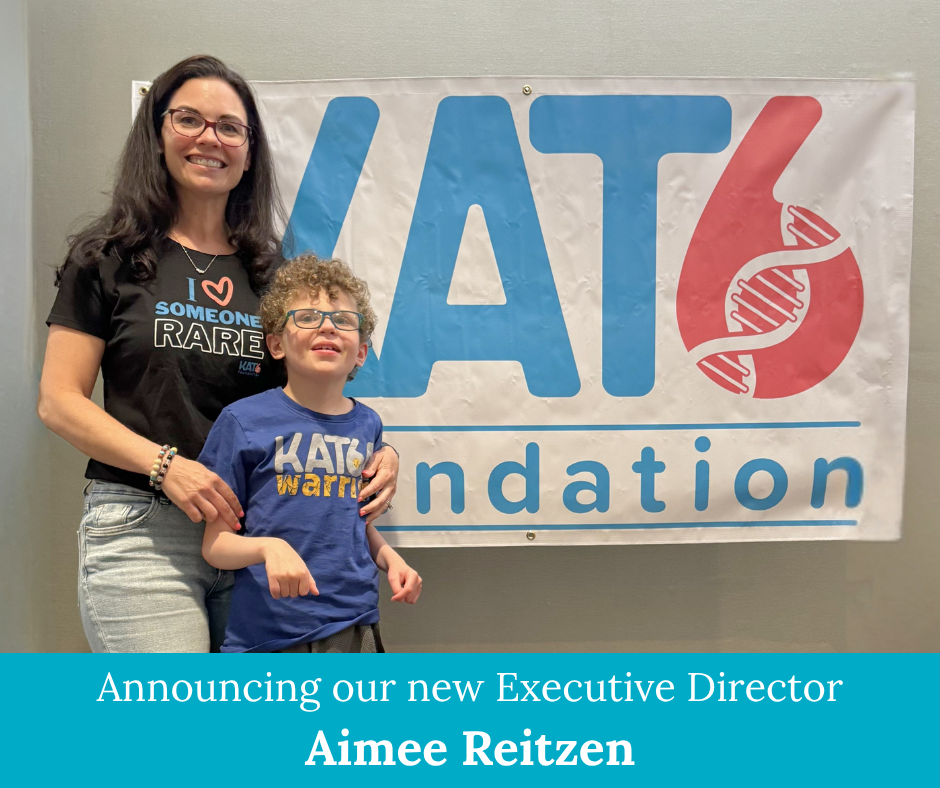
Announcing our New Executive Director
Dear KAT6 Community,
On behalf of the KAT6 Foundation Board of Directors, I am pleased to announce the appointment of Aimee Reitzen as the KAT6 Foundation's new Executive Director.
Many of you already know Aimee through her years of service to our community. As a founding Board member and longtime volunteer, she has helped shape the Foundation from its earliest days. Throughout her nearly decade-long involvement, Aimee has led many of the Foundation's communications, awareness, and family support efforts, including developing the KAT6A & KAT6B Caregiver Handbook, launching the Foundation's website, spearheading the creation of the Empowered Grants Program, and helping grow KATwalk from a small grassroots fundraiser into the Foundation's signature annual event. For many families, she has also been one of the first people they connected with after receiving a diagnosis, offering guidance, resources, and a sense of community during an often overwhelming time.
As the parent of a child with KAT6A syndrome, Aimee brings a unique combination of personal experience, professional expertise, and deep commitment to our mission. For nearly a decade, she has worked tirelessly to support families, strengthen connections across our global community, and help advance research and educational initiatives that benefit individuals with KAT6A and KAT6B syndromes.
Since our founding in 2017, the KAT6 Foundation has grown tremendously. Together, we have funded important research, established the Patient Registry and iPSC Biobank, expanded educational resources, launched family support initiatives, supported the development of the KAT6 Clinic at Boston Children's Hospital, and built a truly global community. Aimee has been an important part of that journey, and we are excited to see her step into this leadership role as we continue building on that progress.
Please join me in congratulating Aimee on her new role. I look forward to working alongside her as we continue advancing our mission to improve the lives of individuals and families affected by KAT6A and KAT6B syndromes.
Thank you for your continued support of the KAT6 Foundation and the incredible community we have built together.
Warm regards,
Jordan Muller
Chairperson, Board of Directors
KAT6 Foundation
.jpeg)
The Day the World Stopped & The Team That Kept Us Moving
In the Korean culture, we celebrate when a baby turns 100 days old. Historically, it marked the major milestone of a baby surviving past the point where infant mortality was highest. Today, it’s a joyful time for family to come together to bless the baby with happiness and health. On the very day we should have been celebrating Lily’s 100th day of life, we received her KAT6A diagnosis from her neurologist, and the world stopped.
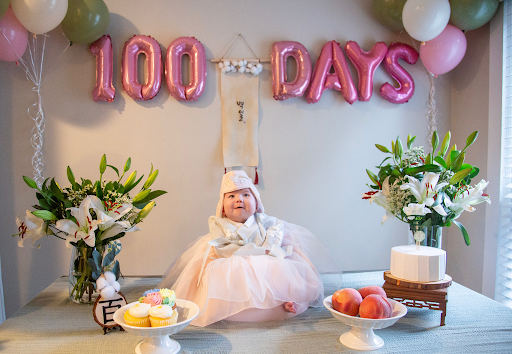
Lily was born at 36 weeks and spent her first 29 days in the NICU. At first, her NICU admission was due to low oxygen saturation but poor feeding and hypotonia quickly followed. Every day, I’d start my routine of trying to nurse her then bottle feed her only for her to end up feeding through a tube. As her mom, I felt immense pressure to figure it out. I was the one who was supposed to be able to take care of her. I spent hours at the NICU, 7 days a week, trying to increase her intake volumes little by little. I assumed this would be very temporary though and that one day, feeding would just click for her and we’d be over this hurdle. But as the days went on, we continued to struggle. Each day brought a new specialist. She became a patient of Neurology, Cardiology, Urology, Audiology, Gastroenterology, Physical Therapy, and Feeding Therapy. Part of me thought the hospital was being overly cautious or just trying to take advantage of my insurance coverage. Why did she need to see all these specialists? We were going to get out of here anyway and resume our normal lives. Looking back now, I don’t think I was fully able (or willing) to grasp the reality of our situation. I was hopeful that this would be a temporary blip and that everything would work out. I never even considered there could be something deeper going on.
After a month, we just barely got to a point with bottle feeding where we received the green light to take her home. I continued to hold out hope that things would just improve naturally, but Lily’s hypotonia made her easily exhausted and she was never able to finish her bottles. Ultimately, she was diagnosed as failure to thrive around the same time we received her diagnosis. This is the point when I realized I needed help. I needed that team of specialists from the NICU that I took for granted. I started to understand the value of early intervention. Lily and I needed help. So at just three months old, Lily started weekly physical therapy and feeding therapy and I started my journey of putting together Lily’s team of doctors.
As a parent of a medically complex child, juggling and repeating are two things I’ve gotten good at. I can list off all of Lily’s doctors, their departments, their locations, and our most recent visit notes. I can coordinate appointments, make calls, and re-arrange schedules. What I can’t do is be an expert in all of these fields, no matter how hard I try. Lily’s Physical Therapist, Sarah, was the one who matched Lily’s pace and worked with her week after week to build her core and help her coordination. Her Feeding Therapist, Rachel, was the one who figured out that using a speciality feeding valve in her bottle would help accommodate her low oral muscle tone. Her Gastroenterologist, Steven, was the one who recommended a high calorie formula to increase her growth velocity. Her Nutritionist, Natalie, is the one who keeps track of her protein intake and volume levels. The KAT6 support group helped us get in touch with Dr. Richard Kelley who was able to review her lab work and recommend the mitochondrial cocktail to support her development. The list goes on and on because Lily has an entire team of doctors, specialists, and therapists who support her (and me).
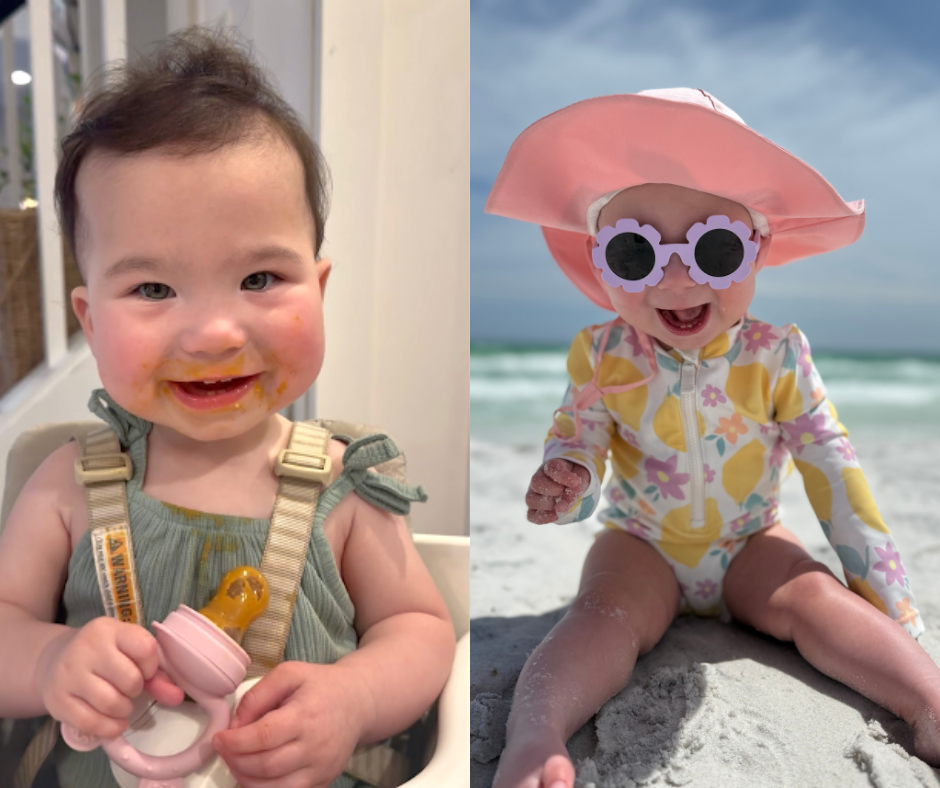
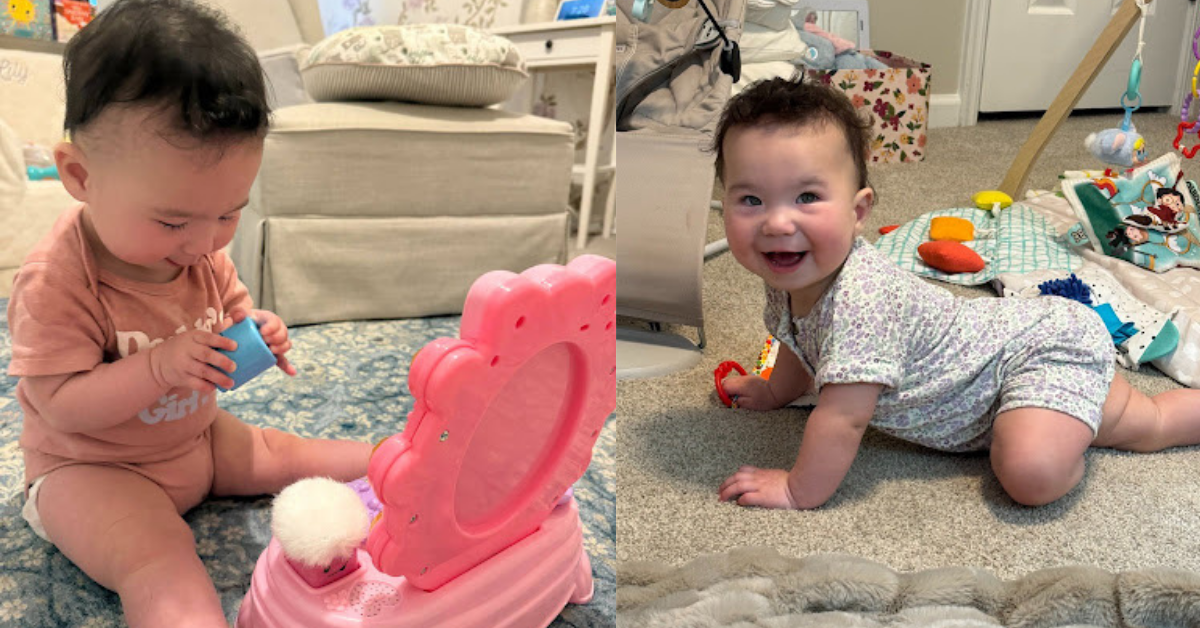
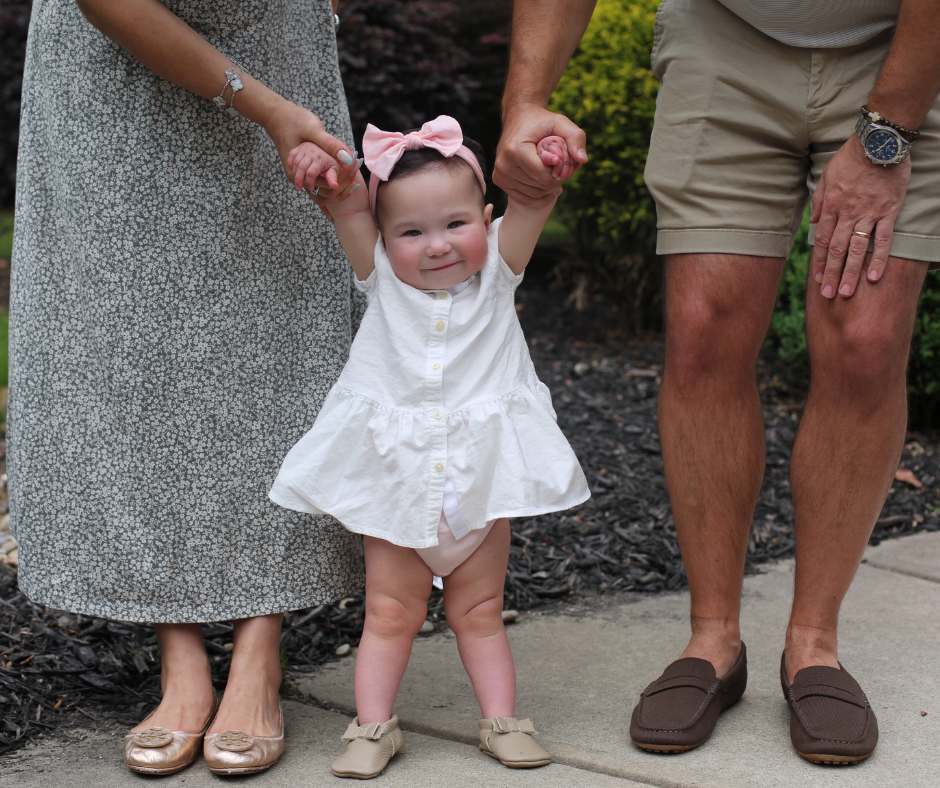
With KAT6A, I’ve learned that it’s hard to know what the future will look like. It’s hard to anticipate what Lily’s progress will be or where she’ll need more support. I’ve learned that instead of wondering or worrying, we need to just tackle the symptoms as they arise. We need to celebrate all the wins both big and small. We need to take things at Lily’s pace. As a parent, you always hear people say that it takes a village and now I truly understand that. She has a community of people who all share a singular goal - ensuring that Lily is able to thrive. I will forever be grateful for her team. Because of them, Lily recently reached some major milestones. She is able to go from her tummy to an independent sitting position without any help. She’s able to scoot around on her belly and army crawl from one side of a room to another. She is eating level 2 solids and learning to drink from a cup. She is waving hello. And lastly, she has started to do something that bursts my heart wide open. She has started to form the word “mama” with her mouth and has even said it a few times. I’m so proud of my sweet girl and everything she has been able to accomplish with the help of all those who love and support her.
Announcing our New Executive Director
Dear KAT6 Community,
On behalf of the KAT6 Foundation Board of Directors, I am pleased to announce the appointment of Aimee Reitzen as the KAT6 Foundation's new Executive Director.
Many of you already know Aimee through her years of service to our community. As a founding Board member and longtime volunteer, she has helped shape the Foundation from its earliest days. Throughout her nearly decade-long involvement, Aimee has led many of the Foundation's communications, awareness, and family support efforts, including developing the KAT6A & KAT6B Caregiver Handbook, launching the Foundation's website, spearheading the creation of the Empowered Grants Program, and helping grow KATwalk from a small grassroots fundraiser into the Foundation's signature annual event. For many families, she has also been one of the first people they connected with after receiving a diagnosis, offering guidance, resources, and a sense of community during an often overwhelming time.
As the parent of a child with KAT6A syndrome, Aimee brings a unique combination of personal experience, professional expertise, and deep commitment to our mission. For nearly a decade, she has worked tirelessly to support families, strengthen connections across our global community, and help advance research and educational initiatives that benefit individuals with KAT6A and KAT6B syndromes.
Since our founding in 2017, the KAT6 Foundation has grown tremendously. Together, we have funded important research, established the Patient Registry and iPSC Biobank, expanded educational resources, launched family support initiatives, supported the development of the KAT6 Clinic at Boston Children's Hospital, and built a truly global community. Aimee has been an important part of that journey, and we are excited to see her step into this leadership role as we continue building on that progress.
Please join me in congratulating Aimee on her new role. I look forward to working alongside her as we continue advancing our mission to improve the lives of individuals and families affected by KAT6A and KAT6B syndromes.
Thank you for your continued support of the KAT6 Foundation and the incredible community we have built together.
Warm regards,
Jordan Muller
Chairperson, Board of Directors
KAT6 Foundation
Questo è Samuele
Ciao a tutti,
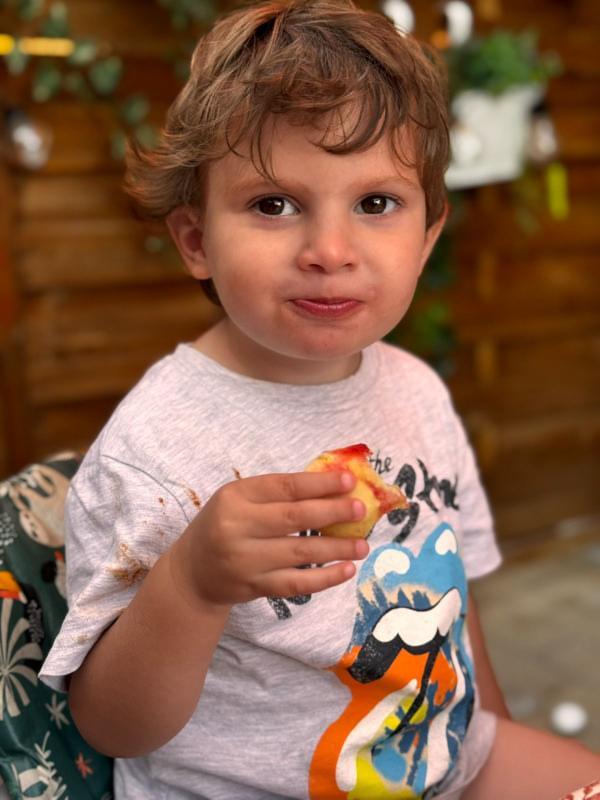
Questo è Samuele. È nato il 5 aprile 2022 e, fin dai suoi primi giorni, ha riempito le nostre vite di un amore difficile da spiegare a parole.
Nei primi mesi di vita, però, qualcosa non tornava. Samuele faceva fatica a fissare e mantenere lo sguardo di mamma e papà. Erano piccoli segnali, quasi impercettibili per molti, ma non per la sua mamma, Serena, educatrice d'infanzia. Il suo sguardo esperto e il suo cuore di mamma avevano già capito che c'era qualcosa da approfondire.
Per mesi si è tenuta dentro dubbi e paure. Poi, il 9 agosto, ha trovato il coraggio di condividere tutto con il papà. Da quel momento è iniziato un percorso che ci ha portato presso l'Ospedale Bellaria di Bologna, seguiti dalla Dott.ssa Paola Visconti (Neuropsichiatria Infantile – IRCCS).
All'inizio l'ipotesi era quella di un disturbo dello spettro autistico. Ci dissero che era "uno dei più piccoli mai visti e con tratti tra i più marcati". Parole che fanno tremare le gambe.
Samuele ha iniziato prestissimo la neuropsicomotricità e la piscina, già a 9 mesi, perché presentava una forte ipotonia.
In tutto questo, la mamma non si è mai arresa. Con amore, passione ed estrema dedizione ha messo tutta se stessa in ogni esercizio, in ogni gioco trasformato in terapia, in ogni piccolo progresso conquistato giorno dopo giorno. Sempre con un obiettivo: fare un passo in più. Anche minuscolo. Ma in più.
Oggi Samuele ha quasi quattro anni. Ha buone capacità di comprensione, considerando la sindrome, e buone competenze motorie. Parla usando singoli vocaboli, detti a modo suo, ma chi lo conosce sa perfettamente cosa vuole dire. La valutazione cognitiva ha evidenziato un QI pari a 88, un dato che racconta molto più potenziale di quanto si possa immaginare.
Il 28 novembre 2025 è arrivata la diagnosi genetica: sindrome KAT6A. Una malattia rara, di quelle che ti costringono a studiare, a cercare, a confrontarti con altri genitori nel mondo, a diventare esperto per necessità.
Ma prima di qualsiasi diagnosi, prima di qualsiasi sigla, Samuele è un bambino. È un bimbo felice. Entusiasta della vita. Ama il suo cane Joy, viaggiare, sperimentare cose nuove, mangiare (da buon italiano questa è una delle sue passioni più grandi!), fa basket, continua ad andare in piscina ed è amato da tutti i suoi compagni.
Ai suoi genitori Samuele ha insegnato che le etichette non definiscono una persona. Che i tempi possono essere diversi, ma il valore è lo stesso. Che la forza non fa rumore, ma costruisce ogni giorno.
E questa è solo l'inizio della sua storia.
This is Samuele
Hi everyone,
This is Samuele. He was born on April 5th, 2022, and from his very first days he filled our lives with a kind of love that is hard to put into words.
In his first months, however, something didn't feel quite right. Samuele struggled to fix and maintain eye contact with mom and dad. They were small signs, almost imperceptible to many, but not to his mother Serena, an early childhood educator. Her trained eye and her mother's heart already knew that something needed to be explored further.
For months she kept her doubts and fears to herself. Then, on August 9th, she found the courage to share everything with his dad. From that moment on, a journey began that led us to the Bellaria Hospital in Bologna, where we were followed by Dr. Paola Visconti (Child Neuropsychiatry – IRCCS).
At first, the hypothesis was autism spectrum disorder. We were told he was "one of the youngest ever seen, and with some of the most marked traits." Words that make your legs tremble.
Samuele started neuropsychomotor therapy and swimming very early, at just 9 months old, due to significant hypotonia.
Throughout all of this, his mother never gave up. With love, passion, and extraordinary dedication, she put all of herself into every exercise, every game turned into therapy, every small achievement earned day after day. Always with one goal: to take one more step forward. Even a tiny one. But forward.
Today Samuele is almost four years old. He has good comprehension skills, considering the syndrome, and good motor abilities. He speaks using single words, pronounced in his own way, but those who know him understand perfectly what he wants to say. His cognitive evaluation showed an IQ of 88, a number that speaks of far more potential than one might imagine.
On November 28th, 2025, we received the genetic diagnosis: KAT6A syndrome. A rare condition, the kind that forces you to study, to search, to connect with other parents around the world, to become an expert out of necessity.
But before any diagnosis, before any label, Samuele is a child. He is a happy little boy. Full of enthusiasm for life. He loves his dog Joy, traveling, trying new experiences, eating (as a true Italian, this is one of his greatest passions!), he plays basketball, continues swimming, and is loved by all his classmates.
To his parents, Samuele has taught that labels do not define a person. That timelines may be different, but value is the same. That strength does not make noise — it builds, quietly, every single day.
And this is only the beginning of his story.
Latest blog posts

Bruno
Bruno’s journey began in 2019. From his birth on October 11th, 2017 we already knew that something was happening but we didn’t have a final diagnosis until February 21st, 2019.
Even though the pregnancy was normal, when I was 37 weeks pregnant Bruno hadn’t turned yet. He was going to be born breech and my gynecologist convinced me to let them turn him around in my uterus to avoid a C-section. I agreed and when I was 40 weeks pregnant my labor was induced since Bruno’s heart wasn’t beating as well as doctors had hoped.
My labor was amazing and in only four hours I had my baby in my arms. I still cry when I think about that tiny beautiful face.
From there on things began to happen. Forty eight hours later we left the hospital without being able to get Bruno to breastfeed or take a bottle. He was fed 10 ml of formula with a syringe, and was diagnosed with hypotony cervical-axial and micrognathia.
From that moment on, everything has been agonizing. At only fifteen weeks he had a stomach protector and they changed his formula to a special milk without proteins from cow’s milk. It turned out he was lactose intolerant and he had almost got intestinal ulcers. Because of all of his stomach problems he wasn’t even gaining 50gr and we weren’t able to stabilize his weight in any way.
He spent every night crying and we cried with him. When we were able to correct his dose of medication from his stomach he started gaining weight. However, he was already 4 months behind in growth and we began to notice that he wasn’t doing many things that corresponded to his age as far as psychomotor movements. All of this, combined with an atrial septal defect in one of his many check-ups, sounded the alarm when he was only 6 months old. He already had a heart diagnosis, an appointment with the geneticist, check-ups with infant digestive specialists, and he had started with physical therapy and child psychology.
It all continued to develop and the operations started to become the new normal; heart surgery, tear duct opening, a possible knot if his esophagus. It was a nightmare that never ended and every time we went to the pediatrician it was something new.
Finally we received the feared but long awaited diagnosis; KAT6A syndrome. Although we thought that a diagnosis would give us encouragement, it was the total opposite. It erased all the hopes that we had that one day Bruno would lead a normal life. We forgot about all of the strides that he had made in the last 16 months and we thought that we would never be happy again.
At first the doctors only had bad news for us, saying that he would never be able to speak or walk because he had a severe handicap. However, little by little we have seen that with therapy and effort, great things can be achieved and we began to see the light again.
Bruno is currently going to physical therapy, a psychologist, speech therapy, and special therapeutic classes at the swimming pool and at the equestrian center with horses. He can walk and although he doesn’t speak he can make sounds and pronounce some syllables. He communicates in his own way despite his disabilities and above all, and most importantly, he is HAPPY.
On our journey we found the KAT6A Foundation on Facebook and through this group we have connected with other families in Spain. We also found the ‘Asociación KAT6A y Amigos’ which has helped us immeasurably to overcome every obstacle and has guided us to help Bruno progress as much as possible.
Thank you to all of you and to our medical team who have made something which once seemed so complicated, much easier for us now.
By Veronica
Spanish Translation:
Bruno comenzó su viaje en 2019. Desde su nacimiento el 11-10-2017, nosotros ya sabíamos que algo ocurría, pero no tuvimos un diagnóstico definitivo hasta el 21-02-2019.
Aunque el embarazo fue normal, cuando estaba de 37 semanas Bruno no se había dado la vuelta, venía de nalgas y mi ginecóloga me convenció para que les dejase darle la vuelta en el útero y evitar la cesárea. Me presté a ello y cuando cumplí las cuarenta semanas me provocaron el parto porque el corazón de Bruno no latía todo lo bien que ellos querían.
Tuve un parto buenísimo y en apenas cuatro horas tenía a mi pequeño en brazos. Aquella preciosa carita, aún se me saltan las lágrimas al pensarlo.
Y ahí empezó todo, 48 horas después salimos del hospital sin conseguir que bruno succionara el pecho ni el biberón, alimentándose de 10 ml desde una jeringuilla, y con un diagnóstico de hipotonía cérvico-axial y micrognatia.
A partir de ese momento ya todo fue un calvario, con apenas 15 días ya tomaba protector estomacal y le cambiaron a la leche especial sin proteína de leche de vaca porque era intolerante y casi había llegado a colitis ulcerosa. Debido a todos los problemas estomacales que tenía no cogía ni 50 gr con lo que no conseguíamos estabilizarlo de ninguna manera.
Se pasaba las noches llorando y nosotros llorando con él. Cuando conseguimos dar con la dosis de medicación adecuada para el estómago, empezó a ganar peso, pero ya llevaba 4 meses de retraso y empezamos a notar que había muchas cosas que por edad le correspondía hacer a nivel psicomotor y no las hacía. Eso unido a que el pediatra descubrió una CIA en una de sus múltiples revisiones, hizo que saltasen todas las alarmas y con sólo 6 meses ya tenía un diagnóstico cardiaco, una cita con genética, un control por digestivo infantil y había empezado en atención temprana con fisioterapeuta y psicólogo.
Todo siguió avanzando y las operaciones empezaron a sonar en nuestra cabeza, corazón, apertura del lacrimal, testículo en resorte, posible nudo esofágico; parecía una pesadilla que no acaba nunca, cada vez que íbamos al pediatra era una cosa nueva
Y llegó el temido pero a la vez esperado diagnóstico, Mutación en KAT6A, y aunque pensamos que un diagnóstico nos daría aliento, todo lo contrario, mató todas las esperanzas que teníamos de que algún día Bruno pudiera llevar una vida normal. Todos los avances que había hecho en los 16 meses que tenía se nos olvidaron, y pensamos que nunca más volveríamos a ser felices.
Al principio nos lo pusieron todo muy mal diciéndonos que no podría hablar que tenía una discapacidad muy grande y que no sabían si llegaría tampoco a caminar, pero poco a poco vimos que con terapias y con esfuerzo se podían conseguir grandes cosas y empezamos de nuevo a ver la luz.
Hoy por hoy, Bruno acude a fisioterapeuta, psicólogo, logopeda, terapia acuática y terapia ecuestre, ya camina sólo y, no habla, pero emite sonidos y dice alguna sílaba. Se relaciona y comunica a su manera a pesar de su discapacidad y, sobre todo, lo más importante, es FELIZ.
Por el camino nos encontramos con la Kat6A Fundation en Facebook y, a través de ellos, con el resto de familias que hay en España y con la Asociacion Kat6A y Amigos, que nos han ayudado lo indecible a
superar cada obstáculo, y nos han guiado para poder ayudar a que Bruno avance todo lo que sea posible.
Gracias a todos ellos y al equipo médico por hacernos fácil lo que al principio nos pareció tan complicado.


Caroline's Autobiography
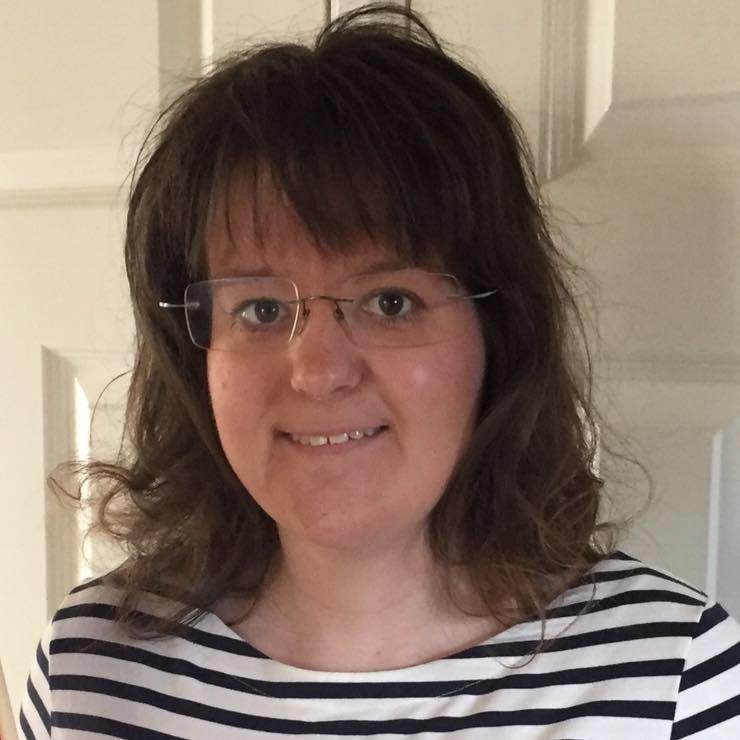
I was born in 1989. The birth lasted for 33 hours. I was measured to be 49 cm and 3160 grams. During birth I had swallowed amniotic fluid. I could not breathe, and my skin turned blue. The doctors took me to the next room to pump. I also had a hidden cleft palate, so I had difficulties at breastfeeding. I probably couldn’t close my lips around the nipple, so I had to get fed with baby formula. From when I was 7.5 months to when I was 10 months, I was very cold with fever up to 40 celsius. I could often cry until I turned blue and lost my breath, so the doctors diagnosed it asthma. When I was three months old, I was hospitalized for 3 weeks with left foot in a knit because of an bone cyst.(which made it so that the foot broke). I had common cold, chickenpox and otitis, so I had 10 penicillin treatments through 6 months in my early years.
In kindergarten I was a silent and calm child. I remember the other kids didn’t let me in on their play, and I, instead of using words, reacted violently. In primary school, fifth grade, PPT (the school psychiatric team) gave me an IQ test, where my score was a little over “mentally deficient”. The doctor recommended to keep it, and put the term “mild” in front of it, as it would improve my right to facilitation at school. I was granted a classroom assistant, was placed front row in the classroom, window-side. Thus, I had to turn around to see what my classmates were up to. Socially, this was a disaster. I went to a speech therapist, and measurement of hearing. I have had a lot of otitis throughout my childhood. I had many infections as a child, but it’s rare that I become sick when I was in my 20’s. I took the most of it with a smile.
My adulthood has been kind of better. I have some struggles, because I got detected with ADD/ADHD Inattentive type back in 2014 during the autumn, so I’m struggling with some of the symptoms that comes with it as well. I got driver license in 2011, and I love to drive. I would like to expand my social life, but since I’m a calm and silent person(at times) I think it’s a little difficult to get to know more people, specially in occasions where there are many people. I can then seem shy or that I’m not interested, but I easily get distracted when there are alot of people around.
Now that I am an adult, I work in a protected company which is a permanently adapted job for people who for various reasons can’t be in ordinary work. I have great colleagues and it’s a great place to work. We are also good at taking care of health, environment and safety requirements I have two friends that I work with and since they don’t have a driver license, I pick them up in the morning and bring them to work. We use to meet after work and on weekends.
I’m happy that I found and can be a part of the KAT6A support group.
18 Years and 31 Days
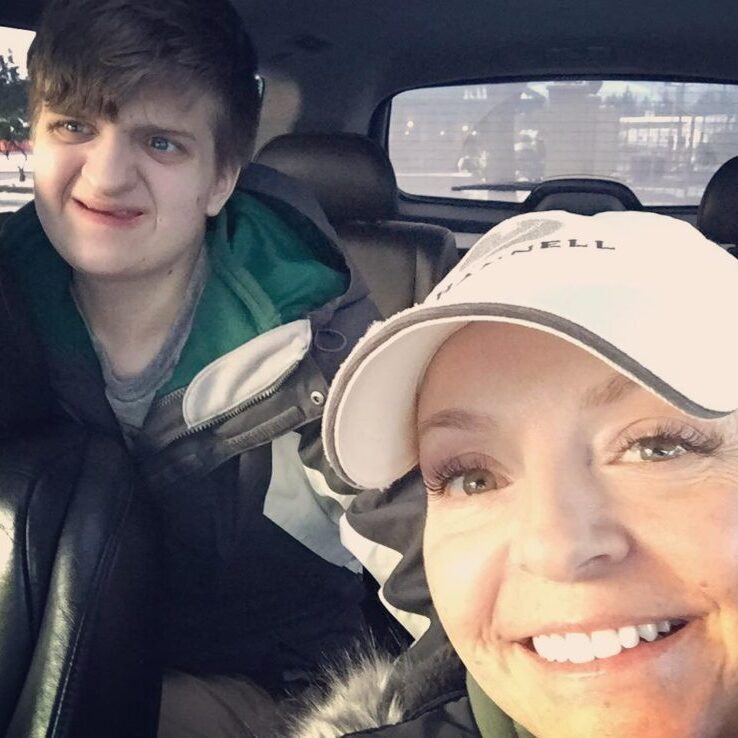
18 years and 31 days after he took his first labored breath, we have a diagnosis for my boy.
The genetics department called a couple of days after Christmas to share the news, and I have been reeling since. For 30 days now, I have been down the rabbit hole of investigating KAT6A Syndrome. I waited 16 years for this news. And now that I have it, I’m a mixed mess of emotion. Relieved to finally have an answer. Shocked to finally have an answer, when I was resigned to not ever having one. I’m overwhelmed by the news and the information I’ve been devouring. Gratified to see that I have been providing Braeden with the best options for addressing the symptoms and pieces of this syndrome, with the exception of a supplement cocktail that may help.
I joined a Facebook support group that is nothing short of amazing. For the first time in Braeden’s 18 years and 31 days of life, I am reading story after story about fellow KAT6A parents and children and with tears in my eyes exclaiming “us too!” The camaraderie is uplifting and so much more helpful than I can adequately express. I’m seeing photos of kiddos that could be Braeden at that same age. That hold their hands in the same unique position that he does. There are only 180 or so diagnosed cases of KAT6A Syndrome, worldwide. In a month, that number jumped up from 166 known cases. Braeden is one of the older diagnosed patients. Most of the parents in the support group have younger children. Braeden appears to have a *middle of the road* case. This syndrome affects everyone differently. The severity of symptoms ranges from very profound disabilities, to very mild. I’ve said over and over that I’m an open book because I don’t want other special needs parents to feel the pain of isolation. So far, Everything that Braeden has dealt with, appears to be KAT6A related. The ACM1, apraxia, orchiopexy repair, sensory issues, failure to thrive, low muscle tone, acid reflux…….all of it. KAT6A Syndrome. Within this support group I’ve been able to give parents of younger patients hope that their kids will outgrow some of the symptoms they are dealing with now. I’d forgotten several things Braeden outgrew. Ankle braces, acid reflux, severe feeding difficulties among a few. From parents of the few patients who are older than Braeden, I’ve gotten similar comfort. The main thing being that this doesn’t appear to be degenerative.
The slightly unnerving part of that, is that we don’t know for certain. This Syndrome was only discovered a few short years ago. 2015, I believe.
I’ve chirped about this on Facebook incessantly over the last month. Today I needed to write about it here, to unburden myself of how overwhelmed I am. There are so many moving parts to Braeden turning 18, and this diagnosis is so profound right in the middle of all of those things….today I’m feeling the weight of it all. Today I’m exhausted. And hell, for shits and giggles, my body decided to throw another health crisis for me into the mix. Hello kidney stones, my old nemesis. I passed one during Braeden’s birthday week, and there are 4 more waiting in the wings. Today I have low back pain again, and I am in a cold sweat that another meteor is ready to bust loose.
Today the weight of all of it is heavy.
Today I’m allowing myself some tears, some escape TV watching, and grace for not accomplishing anything on my to-do list.
Tomorrow, I will fill out the research questionnaire online, and register Braeden so that his medical history can be used to further the medical community’s knowledge about KAT6A Syndrome.
Next month, I was gifted airline tickets so I can attend the second annual KAT6A clinic. I’m so looking forward to meeting other people with this syndrome, and their parents who truly understand what this life is like. I think it will be very emotional and uplifting. I’m excited to learn more from the researchers and doctors who are working hard to learn more about it.
For the rest of today…..grace. Giving Braeden a bath. Reading to him for awhile before bed time. Packing his bag to take him to work with me tomorrow. Tonight I will read something that isn’t geared toward finishing the guardianship process, or healing my kidney stones and thyroid and skin cancer. Tonight I will spray my pillow with lavender, and meditate. Tonight I will turn off my brain and sleep. Tonight I will be *brave* enough to *believe* that things are always working out for us.
by Sonia
Read more from Sonia at her personal blog https://andhecallsmemommomm.wordpress.com/
Life as a Father of a Special Needs Child
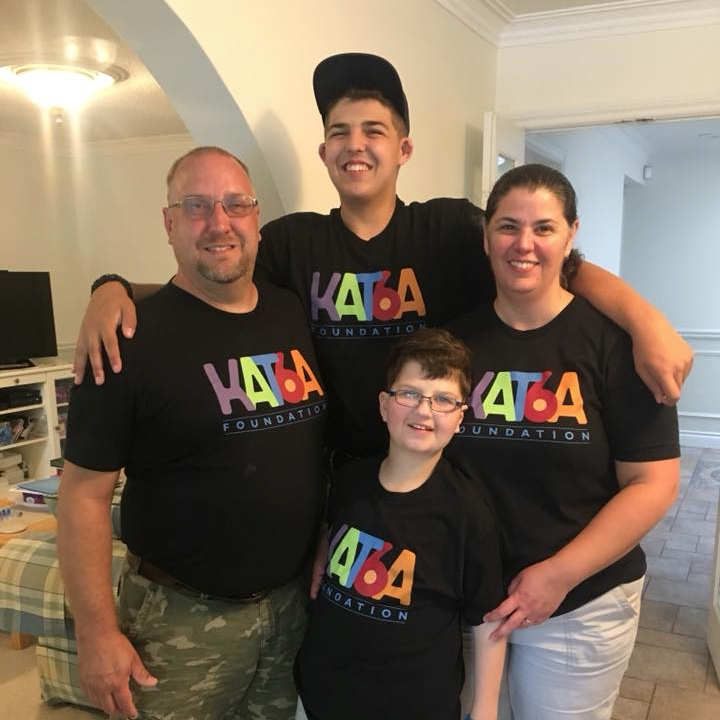
It feels funny even writing this title, Special Needs Child, what does that mean? All children are special and have different needs. It might be easier to use the other “label” we have recently received medically fragile/technology dependent to describe my son, Toby.
Growing up in a small urban community of 30,000 during the 70’s and 80’s, you knew most people and while there were some kids that needed a little extra, there weren’t many. Unfortunately it wasn’t till I got married and started coaching swimming with Special Olympics that I became involved with the disabled/handicapped community. Over the 15 years that I spent with the team I learned a lot and made some great friends (some of whom now call my son their friend as well) but I will get into that latter.
Zachary my older son was born healthy and only spent the minimum time in hospital. Even to this day he is overall healthy and has developed normally hitting the developmental milestones by which the doctors measure a child. Almost 2 years later my son Toby was born. This was a very different experience.
Toby was born 8 days early on a Friday the 13th. I had to travel for business and was flying home when the doctors delivered him by emergency c-section. My wife had labored part of the night and my parents had come down to take her to the hospital and look after Zachary. When my wife arrived at the hospital she was already dilated but her water hadn’t broken. The doctors discovered that Toby was sideways and tried to turn him before delivery. The doctors discovered that Toby was in distress so decided to do a c-section with epidural. After they broke her water, the doctor’s lost Toby’s heartbeat and decided that they needed to do an emergency c-section with a general anesthesia. When delivered, Toby was without vital signs and had to be resuscitated. The pediatrician was on the phone with the doctors who did the delivery rushing to the hospital in his car so the anesthesiologist and the delivery room nurse resuscitated him. As the doctors weren’t sure how long he was without vital signs and he was having difficulty breathing, they put him on oxygen and rushed him into the special care nursery.
When I landed at the hospital, I called home expecting my wife to be there only to be told that my mother had taken her to the hospital a few hours before. I then called the hospital and spoke to one of the nurses who had just come on shift. All she would tell me on the phone was that it was a boy and he had been delivered by c-section and I should try to get to the hospital as soon as possible. When I arrived at the hospital, I headed right to the maternity ward expecting to find my wife, my mom and my son there. I was told that my son was in the nursery and I could see him but my wife was still recovering from the c-section. I visited with Toby for a few minutes and then went to see my wife who was just coming out of anesthesia. It was different seeing him, all hooked up to various monitors and on oxygen to help him breath. Later that day the doctors came to see us and discuss some of what had gone on during the delivery and they continued to monitor him in the nursery. My wife wasn’t able to get into see him till later the next day as they didn’t want her tearing the stitches. I made sure that Zachary came in to see his mom and new little brother.
Over the next few days, the doctors continued to monitor him and run various tests including head ultrasounds, CT scans, x-rays and bloodwork. Most times the nurses were really good and would let us know when the tests results were received, but the CT results seemed to take forever to be received. Eventually they said that the doctor was coming up to discuss with us. Shortly before the meeting, an unknown individual showed up in the nursery. She spoke with the nurses in hushed tones and this is when I started to suspect that something might be seriously wrong. The doctor arrived and as there were other parents in the nursery asked us if we would like to step across the hall to discuss the results. As we were leaving the nursery, the unknown woman followed and picked up a box of Kleenex on the way out the door. At this point, I knew we were starting a difficult journey. The doctor and social worker discussed the test results. They showed that Toby wasn’t developing as expected. They indicated that they could do further testing here at this hospital but would have to send the results to a children’s hospital about 15 mins away to have them interpreted or they could see about transferring him to the children’s hospital where all the testing could be done and we would have all the pediatric specialists we might need at our finger tips. This was day 5 after delivery. They suggested that we go home that evening (first time my wife had slept away from the hospital since Toby was delivered) and let them know in the morning.
The next morning we went back and met with the doctors. We felt that it was best to transfer Toby to the children’s hospital and so our 5 week journey there began. During his time there, more tests were done, specialists consulted and he continued to monitor for what the doctors called “failure to thrive”. During this time, my wife lived at the hospital and I tried to work, manage home and spend time with Toby. Zachary got to spend quality time with both sets of grandparents and also got to see his brother. Everyone said that he was continuing to grow but not at the rate which they hoped/expected him too. After a total of about 6 weeks in hospital we were finally able to bring him home. His first official trip out was to attend my swim team’s annual pool party and BBQ. The second was to visit with his great-great Auntie who was visiting from the east coast. Over the next year, he continued to be followed by multiple specialists and at a developmental pediatrician. There were a few minor medical issues which were dealt which including club feet surgery (Tendon transfer bilaterally) at 18 months old and strabismus in both eyes at ?. We were told that genetically there was nothing found on the tests done and that they believed the developmental delays he was experiencing were a result of his traumatic birth.
Toby struggled when he started in school because he didn’t speak. We were able to get him additional resources but the education system was recommending that we put him into a communication program which would help him develop functional communication. At age 6 we did this thinking that this would help him and still believed that it was in his best interests to help him grow and develop into the person he was and be able to communicate with those around him. After 3 years in this program, he was making little progress and we were becoming frustrated with some of the “professionals” who were supposed to be working with him. He had not progressed to using assistive communication devices such as his Ipad to communicate and instead preferred to try to verbalize and attempt to speak. At this point while he was able to function at home he was so far behind his peers at school academically that he wasn’t going to be able to return to a regular classroom and we made the decision to integrate him into a lifeskills class. We met with the teachers, school board professionals and made this difficult decision. Since entering this class he has begun to flourish and began to speak more because he was now with classmates who while they all had limitations, most of them did speak and he picked up on this and did start speaking more and his speech began to improve. This improvement continues till today and he is now able to make himself understood verbally in most situations. We see that while his expressive language continues to lag behind, he does understand (receptive language) is much better. We aren’t sure how much of his surroundings he actually understands but it does appear more than he is able to tell us in words.
About 2 ½ years ago we had a number of bouts of pneumonia and our new journey began. Initially they couldn’t understand why he would get so sick from the pneumonia and eventually determined that he had an immunodeficiency. They began treating this and we noticed some improvement. The doctors at our local children’s hospital tried to do a pulmonary function test to determine what if any damage had been done by the recurrent bouts of pneumonia. Unfortunately he wasn’t able to perform the testing at their location due to equipment issues so he was referred to another specialist at a nearby children’s hospital who gathered information, looked at his chest x-rays, did some further testing and came back to us with the question “Is the PFT really the most important thing here or do we need to find out what is going on and work from there?” We agreed that it was more important to determine underlying cause of the lung issues. We went in for what we thought was a bronchoscopy and CT of his lungs to see if they could identify the cause of what they were seeing in the chest x-rays of his lungs. After reviewing the CT the doctors indicated that he appeared sicker than they had expected and admitted him and wanted to run further testing. Over the next 2 weeks he underwent a double bone marrow biopsy, lymph node biopsy and lung resection as well as the bronchoscopy and bronchial lavage (washing of the lungs). All of these came back inconclusive or not clear. No bacteria or viruses grew in the material from his lungs and there wasn’t any evidence of malignancy so they continued to test and coordinate with multiple specialist. After a month as an inpatient they said, that they didn’t know exactly what was going on but we could take him, they would continue to follow him and sent us home with oxygen to used at night and a high dose of prednisone which they hoped would help clear up his lungs, shrink his spleen which was enlarged and hope to see an overall improvement in his health. They also did some genetic testing as they indicated it had come a long way in the years since had testing done at birth.
Months later the results of his genetic testing came back. It showed that he had a “de novo” genetic mutation. It was called KAT6A and had only been identified in the last 3-5 years. No one seemed to know much about, there was not currently any curative treatment and all they could offer was to treat the symptoms caused by it. Through doing research and getting to know others with this rare genetic diagnosis we have discovered that some of the issues he has had at birth are likely related to this misspelling of his genetic makeup but it doesn’t explain his immunological issues. He continues to be treated regularly for the immunology issues and overall his health has improved. He is getting sick less and we are seeing gradual improvement.
At this time, Toby is the oldest of 8 youth in Canada who have been identified and one of approximately 170 in the world, who have this variation in his KAT6A gene. This is still a very rare condition and while we believe that there are likely more people with variant it is a costly and lengthy process to undergo the whole genome sequencing required to identify it.
While it has had its challenges over the years, I wouldn’t trade the experiences and people we have meet over the years for anything. Toby is a happy, loving young man who is growing up and takes his challenges in stride. When he meets a new doctor and they ask if they can poke or prod him to see what an enlarged spleen feels like or listen to his chest, he is more than willing. Just because the doctors say your child is unique or a conundrum, don’t look at this negatively and think maybe by learning about my child they can help someone else.
Holidays with Holden
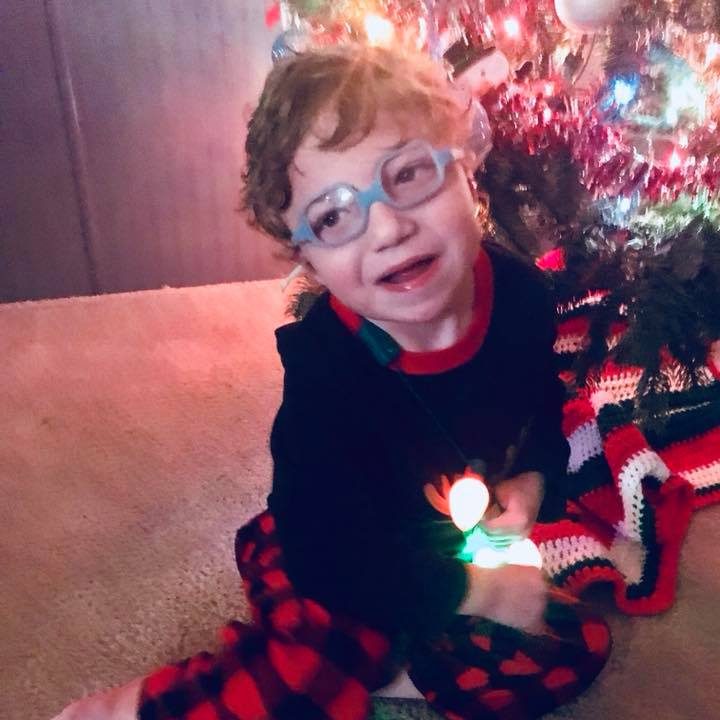
Christmas has always been a big deal in our house. All of us, kids and parents, enjoy the feeling of Christmas. We especially love the glittery, sparkly decorations that come along with it. We always have lots of garland, lights, and decorations in our house—you know—all the sparkly fun things kids love!
When you have a special needs child, those things can be either wonderful or horrific. For Holden, who is three and a half years old, it depends on his mood of the day. This year, when we pulled the Christmas tree out of the bag for the first time, we thought poor Holden was going to have a heart attack! A big, green, prickly, scary thing in the house! Holden must have thought it was a big green monster. But we got it set up with all the decorations and lights and he began to be curious about it. Pretty soon he was pulling ornaments off the tree. As the mom of three boys, I will be the first to tell you that the last thing you want is a child pulling ornaments and decorations off your beautiful tree. But when Holden began to do that instead of showing fear or aggravation I was happy! We were all relieved he was no longer scared of the tree and was enjoying having it in the house. We let him explore and figure out that the Christmas tree was harmless and was not going to hurt him.
Like many kids with special needs, Holden does not do well with change, and he has become much more observant of his surroundings over the last year. So many different things can upset him and cause him to be very unhappy. Now that it is the Christmas season, our house is not looking the same as it always does. The first few days with the decorations, he was really confused and upset about the changes. With a lot of patience and some time, Holden has become used to all the new things in the house and is actually starting to enjoy some of them.
Since we never know what simple thing might be the one thing that he just doesn’t agree with, we were worried about what his reaction to Sant Claus would be. Surprisingly, Holden was perfectly fine seeing Santa and sitting on his lap! His older brothers were sitting next to him, so that made him feel safe and secure.
We hope everyone has a blessed Christmas season.
Love,
The Green Family
Jack makes a Splash
It has been an exciting few months in our household. We welcomed our daughter, Emma, on July1st, 2018. Jack has been a wonderful big brother thus far. He is beginning to notice Emma more and more each day; there are even times when he seems annoyed by his little sister (as a typical three-year-old might)!
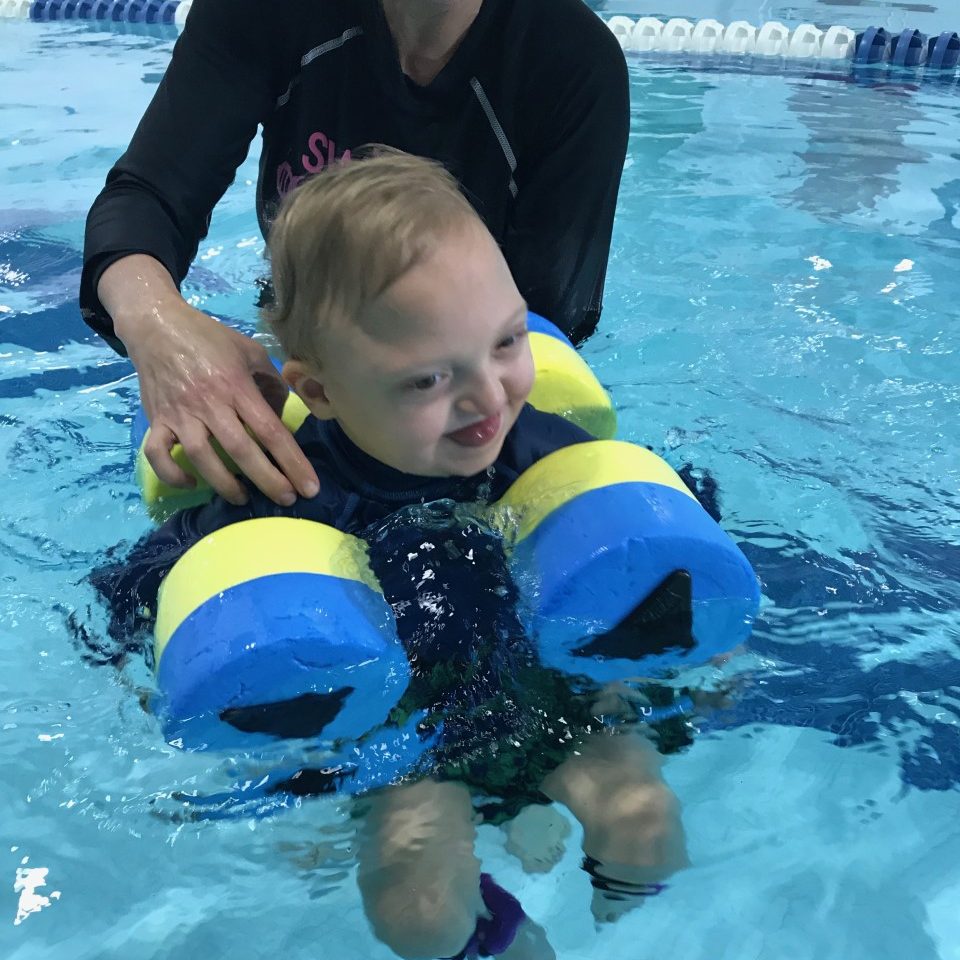
Even though life has been quite hectic since our newest addition arrived, we have made sure to continue with all of Jack’s weekly therapies. One therapy in particular that has made an impact is Aquatic Therapy. Jack works with a PT in the water one on one every Wednesday morning for 45 minutes. Not only does Jack truly enjoy swimming, but the benefits are clearly evident. Each session provides Jack with the opportunity to improve core strength, mobility, balance reactions and range of motion. He is happy and motivated to move in the water. The therapeutic properties of the water allow Jack to move more freely and independently. He tolerates handling, stretching, and active exercises, in conjunction with lots of sensory input. Jack often smiles throughout his sessions and happily kicks and splashes his way around the pool. It goes without saying that physical therapy is so important for our KAT6A kids, but we can honestly say that Jack would not be making all the progress that he is without his weekly time in the water!
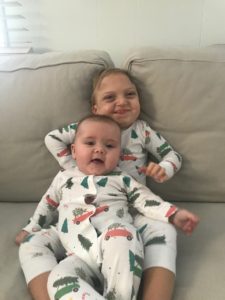
Personal Stories
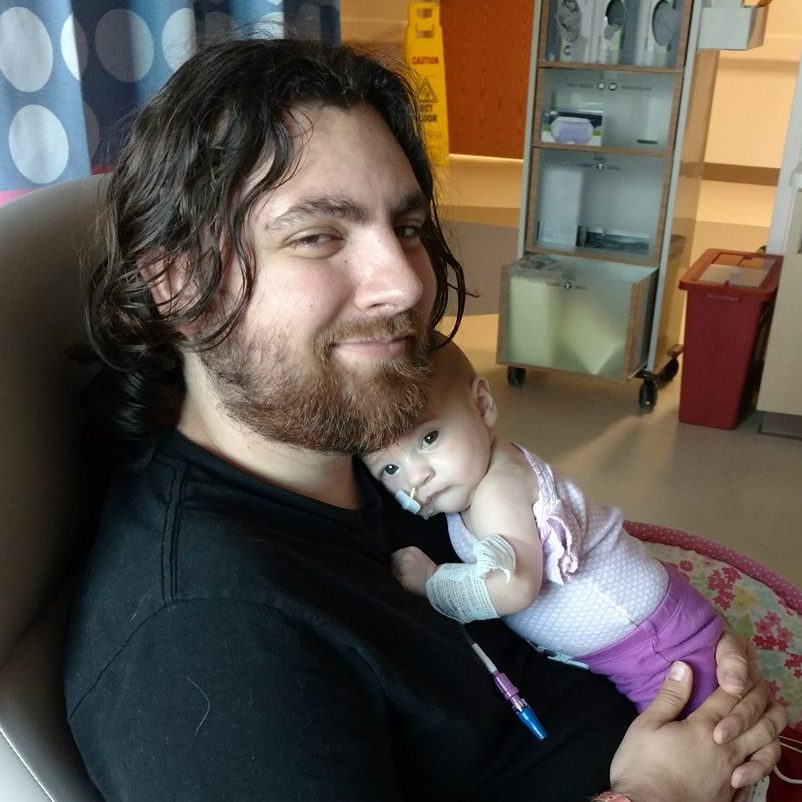
Both Sides of the Bed
It’s a scene I’m very familiar with. The parents sit across from me, anxious and fidgety. Sometimes they cry, sometimes nervous giggles. Always fear. Confusion and concern for their child. As a psychiatric nurse, I know the parents are, by extension, secondary patients that I must also care for. I help calm them down as they try to rationalize their child’s attempt, or most recent self-harm. I reassure them that this isn’t the end of the world. There is hope for them and for their child. I help them come to grips with their loss of control. I explain the treatment, sometimes I can explain the behavior. Sometimes it is more normal than they realize. Patient care is something I’m fairly familiar with; it is easy to comfort from the outside looking in.
But then, it’s your own child…and everything is different.
You realize your hypocrisy. All those times you reassure and quiet their fears, only to spiral in panic as soon as you are placed in their shoes. There is a realization that hits in, how little control you have, and how truly helpless you are. You are simply a silent observer, through tear-stained glasses, forced to watch a tragic performance, deviating from a script you didn’t write.
Every lab draw was agony. Every IV and test broke me. Even the feeding tubes and consistent weight loss. Almost every procedure was something I had done before or observed. I never imagined during my training that I would see my own daughter submitted to the same. All of my experience and training was useless. Everything is different when the patient is your child.
I remember holding my precious girl’s little hands, listening to the doctor explain, again, how they didn’t know what to do. I prayed silently, hoping someone could hear me. So much uncertainty. Every test and every potential answer was a red herring. I didn’t know how much longer I would be able to refer to my daughter in the present tense. That question burned in my head every time I visited the NICU.
I finally interrupted the doctor to ask as bluntly as I dared. “Will my baby die?” The doctor replied through tears that she did not know. I left feeling nothing. I had no more tears to give and no strength to feel sorrow. I had to accept that my daughter would probably never come home.
That type of pain damages you. In some ways, you do not fully recover. It is almost as if part of your soul dies in that moment. I cannot begin to imagine the pain of actually losing your child. My daughter pulled through…but there is still a large scar in my heart. It will haunt me, forever.
It was so difficult to accept that my daughter would live. Almost more difficult than accepting that she wouldn’t. Answers came, and with them, solutions…but none of it felt real. It took a while for me to hope again. To let myself plan a future. To assume she would be OK.
I did, though. My daughter, diagnosed with KAT6A, is developmentally delayed…but healthy, living, and progressing. We are a part of a support group, and going to a clinic specifically for KAT6A in a couple weeks. Her story isn’t over.
At this point, I would love to end with a cheesy message of hope. But I have none. Only a message of pain. But pain can connect people, and strengthen bonds. Pain bares open our souls and reveals our truest self.
If you are reading this, you have likely experienced pain. Perhaps you, like me, have had to watch your loved one suffer. Just know that I, too, feel your pain. I do not understand it. Yours is unique to you, and I will never claim to know how you feel, but know you do not suffer alone. We all carry our own burdens, often too heavy to hold on our own. I share my pain with you. If it somehow resonates with you, please consider sharing your own pain. Allow us to share your suffering. You do not need to hurt alone.
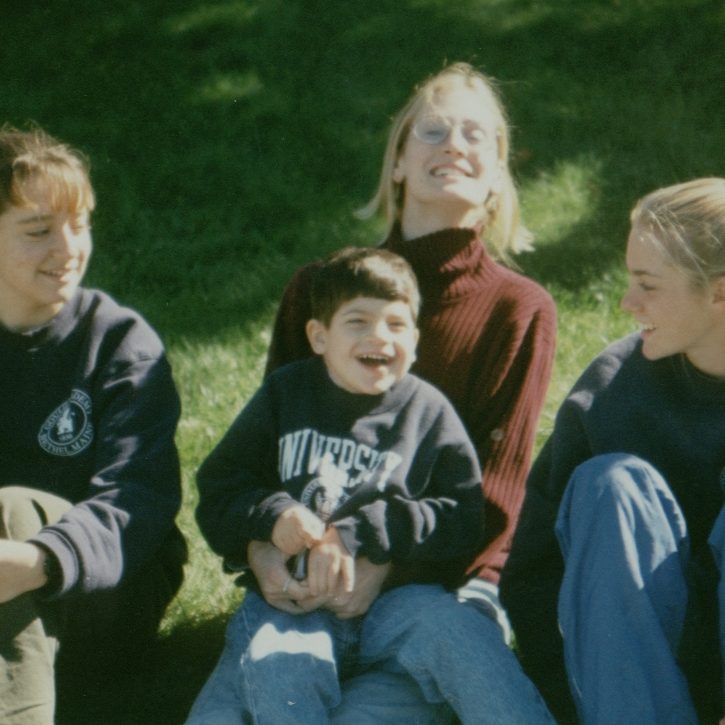
Life on the Other Side
When parents have a baby or child with a serious diagnosis, there are many unknowns. One is the future—what will happen as my child grows up. Will his siblings resent all the attention I give him? Will he have friends? Will he have a place to belong? Will his life have meaning? Will I be able to meet his needs? Will that be enough? Are all our dreams of the future shattered?
Here is Sam’s story.
Sam was born in August 1990 six weeks prematurely. Nothing was right, even from the start. He didn’t breathe, he couldn’t regulate his body temperature, and he couldn’t eat. And things didn’t get too much better very fast. He had bradychardia, he had strange breath-holding spells (or were they seizures?) when he would turn blue and pass out. He spit up a lot, he had terrible screaming spells, he had pneumonias, he wasn’t moving normally, his developmental milestones weren’t being met…he was blind. That was just the first four or five months. At eight months we found out he had an intestinal malrotation and needed surgery for that as well as a nissen fundoplication and g-tube placement. That was the first of many intestinal surgeries and hospitalizations. At age three there was another suspicion that was confirmed —he also had autism. We spent so much time at Maine Medical Center in Portland, Maine, that he and I virtually lived there. My husband and our older daughters, ages 11 and 14, shuttled back and forth to “visit” us. There were so many doctor and therapy appointments, so many evaluations and tests, procedures and surgeries that about four or five years passed in a blur. See, I don’t even know how many years!
But gradually Sam was better intermittently, and we adjusted to our new life. He eventually sat up, crawled, and learned to walk with a walker. He did not learn to talk, and he still had a lot of medical problems and developmental delays. He had insomnia. It turned out that he wasn’t blind in the ordinary sense, but he did have cortical visual impairment. It was pretty clear that he was never going to be very much like any other kid. He had very strange, maladaptive behaviors and a lot of screaming when things weren’t the way he thought they should be (like, if the car turned right and he liked left turns). It was pretty clear he was not going to be very much like any other kid. There was a lot to be scared about.
He started “home” school at a few months of age — vision therapy, physical therapy, occupational therapy, developmental therapy, and then some kind of autism therapy. By age 2.5 he was off to special preschool in the mornings and the individual therapists came in the afternoons. Too much therapy!! But at age 4 we began a new kind of therapy, Applied Behavior Analysis — at school and at home. That was a great turning point. We finally had everyone on the same page, working as a team. And if they didn’t want to get on board, they got out. We were learning too.
About the time Sam was turning five, our family made some decisions. It was pretty clear that I couldn’t work outside the home because there was no daycare or provider for Sam. His doting sisters were now 19 and 16 and it was pretty clear that Sam was the center of the universe to all of us…was that the best thing for him? For us? We had the bright idea that we could put our newfound skills to work, give me a “job” so I wasn’t so totally focused on Sam, and provide siblings to Sam nearer his age. A win-win!! The job? We became a treatment foster family. This means that we provided a home to kids with developmental or mental health issues.
Ho ho ho! and it wasn’t even Christmas! First came a couple of sisters aged 11 and 12 — not exactly the little boys Sam’s age that we had pictured, but they definitely became siblings, made our lives more lively, and kept us from over-focusing on Sam. They stayed with us until they were ready to spread their wings and fly. Next came another girl…this time only six years old, then a few years later a girl aged 11. Again, these kids were permanent siblings — Sam, and the two younger girls were each only a year apart in age. We had many others in and out temporarily while they were either working on returning to their birth families or moving on to a different situation, or just for regular respite.
So Sam was never lacking for siblings…especially sisters. It wasn’t always easy, it wasn’t always pretty, but it was our family. It was a hopping household for sure.
Meanwhile, Sam grew, and grew older. He had his intermittent emergency hospitalizations, usually related to his gastro-intestinal abnormalities. He had a few surgeries, lots of doctor appointments, lots of testing, some ups, some downs. When he was 10, we had to leave our hometown due to the paper industry going belly-up…from human resources in a very large paper company, David moved to human resources in a small hospital, and we moved 50 miles down the road. We decided it would be a good move and adjusted to new providers, a new school system and a new house. And good news! We were now 45 minutes closer to the nearest service town! Since we have always had to make that trip to Bangor at least once a week and sometimes daily, that was a big deal. And the ambulance could get to Portland 45 minutes quicker too…always look on the bright side of life!
And so time passed. Sam went to school — there were ups and downs. He developed an exaggerated startle reflex, hyperekplexia, which further compromised his ability to walk. We spent untold hours advocating at the state and local level for appropriate services. We had a few unpleasant experiences and we had a lot of pleasant experiences. He had some wonderful teachers and after-school staff, he had a few not-so-good ones. We traveled a lot: by planes, trains, and automobile and had a lot of amazing adventures with our crazy family. Sam never learned to walk independently or to talk, but he learned to get around and he figured out how to communicate in his own way. (He had to with all those sisters!) He made friends, oh boy, did he make friends! Time flew by, and then it was time to cross over into the dreaded “other side”…adulthood.
And you know what?? It is great here!
Bored? Lonely? Stuck at home? Never!! Over the past few years Sam has truly found his place in life.
One advantage of living in a very rural area is that there are no “day programs” —Sam has one-on-one staff for 37.5 hours a week. They are busy — with Special Olympics, their self-advocacy group, friends, and community groups all over town. He has one special volunteer job, and participates in lots of other special projects, for instance, they are planning a special KAT6A fundraiser for spring, because Sam finally has a diagnosis, and a cause, and his friends want to help. Sam has more friends than I do!
He still lives at home with us because that is what we choose. And because we find it more difficult to travel now that Sam is a grown man, we have turned our property into a full-fledged redneck resort, just for Sam and our family and friends. If we can’t go to them, we want them to want to come to us, and they do come! Three of his sisters left home, went out to explore the world, and then came home to Maine. Along the way they found and married three very special men, who love Sam almost as much as his sisters do. Another sister lives in a nearby town. There are children, dogs, babies, friends, and family underfoot constantly…and adventures to be had with all of them. Uncle Sam is a great favorite — who else’s uncle can play with toys the way he can?? And Sam has lots of fun grown-up toys everyone wants to share!
He makes a difference to many and has a fulfilling, meaningful place in his family and community. His greatest gift is making people feel loved—his smile can light up a room and his hugs make troubles melt. He participates. He contributes. There isn’t anyone who knows Sam who doesn’t love Sam. What more could anyone want?
It is not the life I pictured when I married my handsome prince nearly 43 years ago. But it is a far cry from the life I feared and worried about twenty years ago.
Life is good here on the other side with Sam.
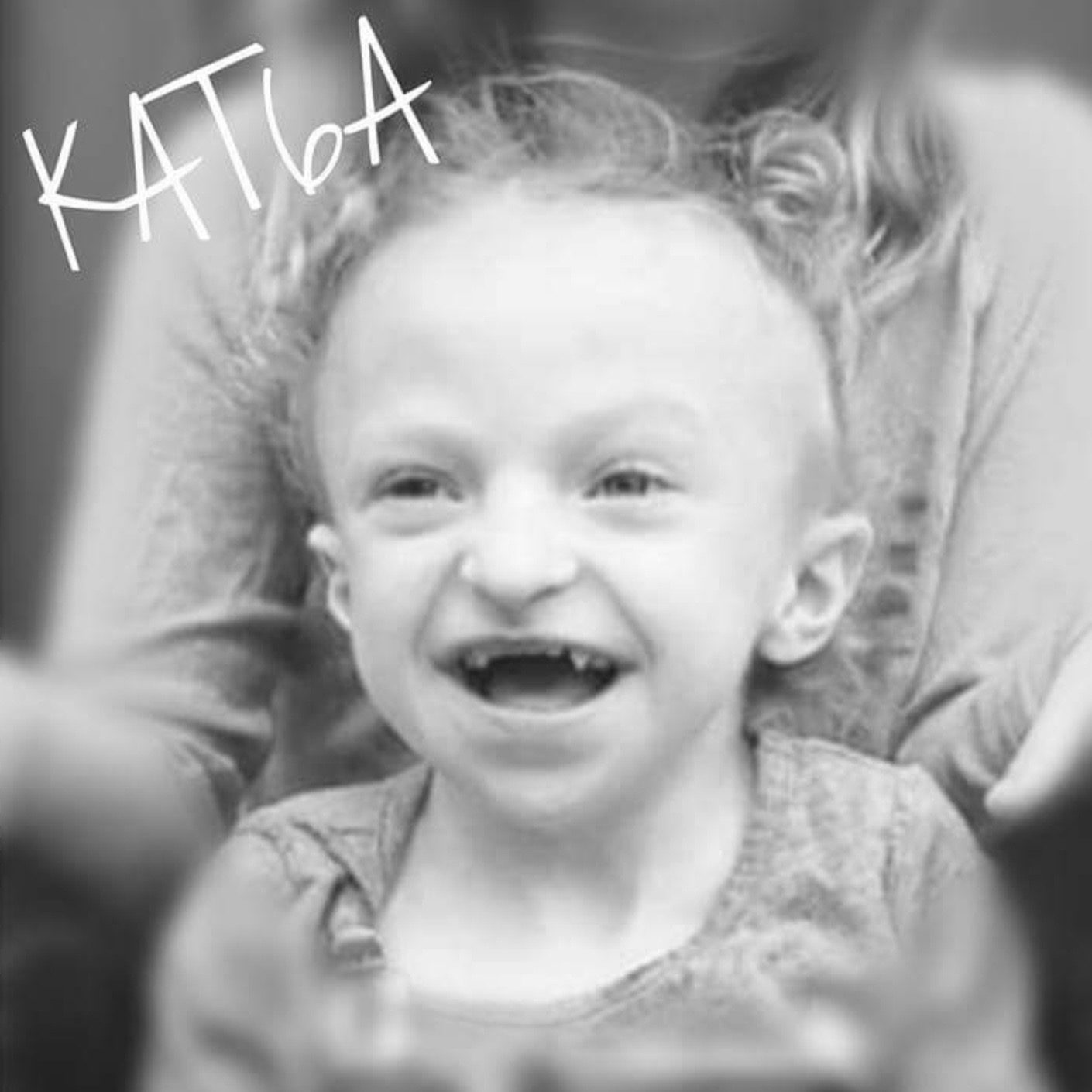
Sweet Savannah, Second Diagnosed
When I first discovered that I was pregnant with Savannah at just 8 weeks something immediately felt off. Having a child before I found myself questioning that I didn’t feel any clear signs or symptoms of pregnancy. I remember thinking that something might be wrong and that unfortunately my body may reject this unexpected and precious gift. I worried and wondered until we had our first OB appointment at 13 weeks. When I saw her little heartbeat I was so relieved!
Just when we thought we were in the clear the ultrasound tech said she had to bring in a doctor. My heart sunk and I knew in that moment that my instincts had been right. There was a problem with our growing baby. The doctor came in and kept quiet as he circled the same area of my abdomen over and over again. He finally looked at my husband and I and said, “one kidney is extremely large, much larger than it should be at this time.” He explained nothing further and said we would need to be followed by a maternal and fetal health specialist.
This is when our journey really began. We followed up with the suggested specialist where we were informed that she had “hydronephrosis” essentially a birth defect that was causing her to retain urine in her kidney. We were informed that she had a 30% chance of having other birth defects as well that may not be seen via ultrasound. We were asked if we wanted an amnio and then the dreaded topic of abortion was presented. We denied both. There was lots of talk of a premature delivery or the possibility of inducing me early to perform emergency surgery on her kidney. A ton of worry, stress and fear had fully taken over. We continued to see our specialist along with our regular Ob-Gyn over the remaining course of the pregnancy. I had more ultrasounds and non stress tests than I could keep track of.
I went into premature labor at 28 weeks and again at 32 weeks, I was given medication to reduce contractions and shots to mature Savannah’s lungs; just in case we couldn’t keep her in any longer. Luckily she stayed put just long enough to make it full term, 37 weeks ! She entered the world at 6 lbs. 3 oz. She was BEAUTIFUL!
During her initial physical it was noticed that she had a cleft palate, microcephaly, bilateral Simian creases and several other markings that appeared to be syndrome like. But strangely for the first time since finding out we were expecting, I had no fear. I looked at her beautiful little face and I felt at peace. I knew that we had a lot ahead of us but I also knew that we would be ok. She had some breathing difficulty and was refusing to eat, so she was transported from her birth hospital to a major medical facility several hours away.
We met a team or physicians in the nicu, a geneticist, a cardiologist, a pulmonologist an ophthalmologist, and a neurologist. They immediately began to test Savannah for every possible syndrome they thought she might have. Test after test came back negative or normal. We had an extremely hard time with feeding, and she just wouldn’t eat. A therapist came in to work with her do to her cleft palate, but still no luck. It was at that point that a gastroenterologist wanted to perform a scan to make sure that her everything was okay with her intestines. Her results came back that she had a malrotated intestine. (another birth defect)
At 2 weeks old, Savannah went through surgery to correct this problem and have a G-tube placed. We spent another 6 weeks in the NICU before being discharged with no answers. After Savannah came home she started to have serious blue spells, she was re-admitted to the NICU for an additional 2 weeks to run further testing where it was discovered that she had severe reflux. With anti-acid medication and a pulse ox monitor we were finally going home.
Weeks and months were flying by and all although Savannah wasn’t growing much she seemed healthy. We continued to have follow-up appointments with all of her specialists and tested for new syndromes with every chance we got. Months turned into years. Savannah had severe developmental delay and did not sit unsupported until she was 18 months old. She began to crawl at 2 and 1/2 years old and pulled to stand for the first time at age three. She was seeing therapists multiple times a week for feeding, speech, occupational and physical therapy.
When Savannah was three and a half years old she woke up late one morning (not like her), she appeared to be getting sick, no fever but she looked sleepy and was occasionally gagging. In just a few short hours it was clear that Savannah was in serious distress and something was terribly wrong. We rushed her to the ER, she had to be transported to a nearby hospital via helicopter where it was confirmed that she had a large bowel obstruction. Her body was going through septic shock and she had to be put in a medically-induced coma immediately. She was sent in for emergency surgery where they corrected the obstruction and resected several inches of dead bowel. She required 3 blood transfusions and was left open for 24hrs before they had to take her back into the OR and & resect yet again. She had an extremely hard and difficult recovery ahead of her. She was kept in a sedated coma for 3 weeks total and against all odds was able to fight through the worst time in her life and come back stronger than ever!
A few months later at our annual follow up with our geneticist she had mentioned that she would like to try to get Savannah approved for whole exome sequencing. It was through this test that a diagnosis was finally made! 4 years later! Savannah’s test had come back with a spontaneous nonsense variant in her kat6a gene. At the time we were told that she was the second person EVER to be diagnosed and we had no idea what it meant or what to expect. We agreed to have her results and findings published in hopes that others undiagnosed wouldn’t have to go through years of not knowing.
We researched Kat6a endlessly, we tried to find anything and everything we could online and in medical books, but got nothing. 2 years later we finally found a website randomly on the internet about a child with kat6a! Finally we weren’t alone! We reached out to the family and to our amazement we discovered that there was a Facebook page where families who had loved ones diagnosed were coming together! Several more diagnoses had been made! It was astonishing to see the similarities in the facial features of our children and to hear how much they were all alike. Little by little our group was growing.
Our published papers and reports were working, our consent to make Savannah’s results from exome sequencing public had allowed other families to find hope and answers as well. Today we are still searching for help, understanding and treatment. Not much is known about kat6a but we are now at one hundred and seven people strong and we will not give up!
Savannah is now seven years old, she still has many difficulties in life but with perseverance comes progress. I’m thrilled to share that she just learned how to walk independently this year! She is a complete Joy to be around, so easy going and happy all the time. We couldn’t imagine our lives without her and without doubt we are better people because of her! Looking back on Savannah’s story isn’t easy she’s been through more tests, procedures, surgeries and obstacles than anybody I know. As her parents we have had to face plenty of heartache, frustration and anger along the way but who doesn’t!? Life is a beautiful struggle sometimes and as long as we can help just one person to find hope, and happiness through her story then it’s worth reliving it a million times! We try to take things one day at a time now and try to live each day to the fullest ; instead of living in fear of the unknown. We are so proud of savannah, how far she’s come and all of her accomplishments and we look forward to all the happiness and triumphs for her that are still yet to come.
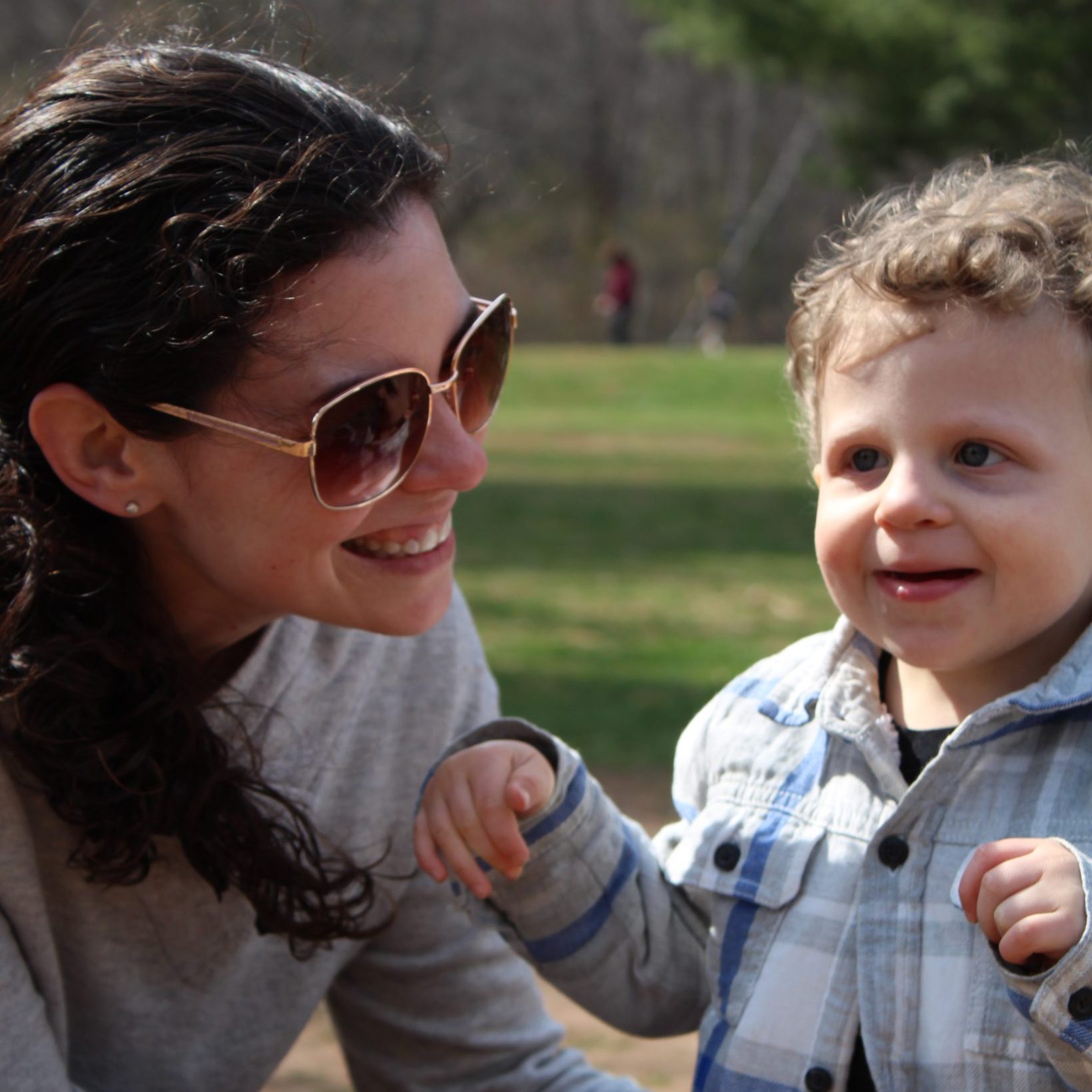
Live, Love and Laugh with Will
Will was born in 2015 at 41 weeks and weighed a healthy 7 pounds, 12 ounces. We thought he was the strongest baby in the world because he held his head high immediately after delivery. I have the most amazing photos of him, minutes old, laying on my chest pushing his own chest and head up. It was impressive to my husband and the delivery nurses, but I know now that should have been our first red flag. In the week following, whenever he was placed on his tummy, he would roll over. We were so proud of our super baby and we joked he’d be walking by nine months. When I mentioned this to his pediatrician, she seemed to think it was a fluke and that this rolling wouldn’t persist. Breastfeeding was a huge struggle. It was extremely difficult to get him to latch since his body refused to relax, but I chalked it up to being normal since not all babies are natural breastfeeders and I succumbed to exclusively pumping when his pediatrician wasn’t satisfied with his weight gain. By three months it was evident that his muscle tone was much higher than it should be. His hands were permanently fisted and creases had formed by his elbows and knees since he kept his body scrunched up at all times. It was nearly impossible to stretch out his body for an accurate length measurement. That’s when we first discovered the term hypertonia, which would begin our journey to finding answers.
At four months we were referred to a neurologist. The first neurologist did an EEG and it was normal. He found his head percentile to be less than the tenth percentile, but that was not concerning. Since his other milestones were on pace, such as smiling, laughing and eye contact, we held high hopes that through some physical therapy that he would loosen up. After an evaluation by our local Early Intervention program, he was disappointingly denied services since his high muscle tone had not resulted in a delay in any of his milestones. In fact, he was able to sit for a few seconds on his own. So I was left with some daily stretches to do with him.
At five months my concerns grew and I decided it was time to get him physical therapy privately, so I called the physical therapist who had done his initial evaluation. At this point he had stopped rolling over and wasn’t tracking objects and was having intense sleep issues since his body just couldn’t seem to settle. Upon my first session of private therapy, the physical therapist noticed his regression immediately. She expressed great concern for my little boy and recommended that I see a different neurologist and she personally requested a new evaluation through Early Intervention since she had no doubt he would now qualify.
By six months, Will’s head percentile had fallen to the third percentile. The new neurologist that we saw prescribed a brain MRI and an array of blood work due to his poor reflexes, hypertonia, poor visual tracking, gastrointestinal issues, difficulty feeding and microcephaly. The results of the MRI and all the blood work were normal. So the next step was to see a geneticist to rule out any rare genetic disorders. The initial genetic testing all came back normal including the microarray test. We were thrilled and very hopeful that Will would outgrow these symptoms since each specialist’s general impression of him was fairly normal and we were repeatedly told that “he looked good.”
At a follow up visit with the geneticist at nine months, he suggested that we do Whole Exome Sequencing since our insurance agreed to cover its cost. In the several months that we waited for test results, Will’s development began to improve. His head size stayed at the same percentile, he was tracking objects, sitting independently, playing with a variety of toys in his jumper, swallowing purees and began crawling just after his first birthday. So at fourteen months when my husband and I were given the KAT6A diagnosis, we were extremely shocked and devastated since we had convinced ourselves that the test results would come back normal as they had in every other instance. At that time we were told that there were only a dozen others in the world with this diagnosis and that they were nonverbal, profoundly intellectually disabled, and in most cases had heart conditions. We were told to see cardiology immediately and to think about signing in the future since the literature stated that some of the children communicated that way. It felt like our world had come crashing down. It had never dawned on us that our baby may never talk, learn to read, live independently or likely have serious health problems.
In the following days and weeks, I read anything I could get my hands on and was determined to understand the science behind it. After cardiology ruled out any abnormalities, I felt some anxiety lift. I dedicated my time to making sure that he would receive the highest level of early intervention therapy that was available, and so I requested speech/feeding services and small group therapy in addition to the PT, OT and teacher he was already receiving. My husband and I also did a lot of grieving and worrying during this time. You name it, we worried about it.
Two months after D-day, as I sometimes refer to it, I decided to reach out to the email address on the Chloekat6a.org website. That’s when I learned about the Facebook support group and my life forever changed. I found on the support group that Will was actually the 40th child diagnosed and that there was even a mother of an adult in our group. I cried as I watched videos of children riding their bikes, swimming in pools, fluently signing, talking and even doing math. This page portrayed so much love and hope that I could never have gotten out of reading technical research articles. Despite a huge range in abilities, I could see evidence of joyful kids every where and that is when I knew that this diagnosis would not define Will or our family’s happiness. I was truly overwhelmed by the number of people who reached out to me to share their stories, offer information and emotional support.
Through the support group, I was connected to Dr. Richard Kelley, and under his advice started Will on a mitochondrial cocktail shortly after his second birthday. The effects of the cocktail were noticed almost immediately in Will. His stamina and energy increased, constipation improved, he began eating solid foods rather than solely purees, and within weeks began walking independently.
Today, Will is a healthy 2 1/2 year old. He is the sweetest, happiest, most lovable boy with global developmental delays. He is very active and into everything. Many of Will’s developmental issues relate to motor planning difficulties and some lingering muscle tone issues. He is a solid walker and climber and is working on walking up/down stairs independently. He has four signs that he uses regularly to communicate and a few words that he uses from time to time. His receptive language is significantly better than his expressive. He loves to identify body parts and follows simple commands, such as “put your bottle in the sink.” He has some difficulty eating, but this has improved greatly with the help of a feeding therapist. Currently he eats a variety of foods cut into small pieces, and we are working on tearing pieces of food with his teeth himself, such as taking a bite from a slice of pizza. He has fine motor delays and does not have a proper pincer grasp. He has some sensory issues, but they are manageable. He mouths objects frequently, hates having his teeth brushed, covers his ears at loud drawn out sounds such as the vacuum, loves movement and is very stimulated by light. He sleeps well at night, but naps inconsistently. He is beginning to develop a playful relationship with his five year old brother, which is beautiful to see.
Parenting Will has allowed me the greatest highs and lows of my life. He has taught me to rejoice in the little things that I took for granted with my older son. He has amazed me with his persistence and determination. And although he cannot say it, he shows me so much affection in his tender touch and nonverbal request for a kiss. His laugh is contagious and everyone who gets to know him can’t help but fall in love his sweet soul.
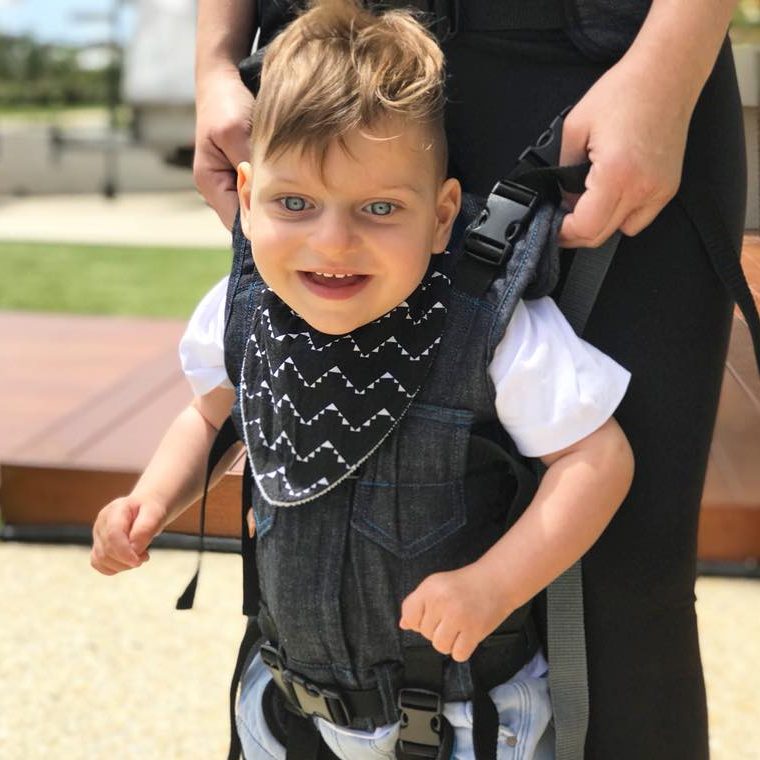
Franki the Fighter
Franki was born on Mother’s Day 2016. Shortly after he was born the paediatrician informed us that he had been born with a few birth defects that, by themselves, shouldn’t amount to anything to warrant us to worry about. But we did. We were shattered and overcome with anxiety. Little did we know then, that it would take an 18 month journey of worry, uncertainty and frustration before we would receive the life-changing diagnosis of KAT6A Syndrome.
Franki’s fight began 5 days after birth when we were told by his craniofacial surgeon that Franki would need to have major cranial surgery to repair his sagittal Craniosynostosis at 3.5 months of age. Before we could schedule this in, Franki underwent emergency surgery to repair an inguinal hernia at 4 weeks of age and in doing so they also performed an Orchiopexy to correct his other Cryptorchidic birth defect.
By 6 months of age, he had missed several important milestones such as being visually attentive and tracking objects or recognising faces, tolerating tummy time, rolling over and sitting up. Franki’s hands were also permanently fisted, held up to his face and he regularly arched his back and twisted his legs – all red flags for what we first feared may have been due to Cerebral Palsy, but later discovered was due to something called Dystonia, a neurological muscle movement disorder.
Looking back, we knew from the very start that there was something very wrong with our blue eyed baby boy. Breastfeeding Franki proved immensely difficult, made worse by a double tongue and lip tie. He had severe reflux (and still does) which we sought medication for, suffered terrible colic and constipation (now managed by daily medication) and cried incessantly all day every day for much of his infancy, so much so that we nick named him Cranky Franki during these episodes.
We received the heart breaking news that Franki had cerebral vision impairment after first suspicions of delayed vison maturation had not improved by 7 months. A very poor sleeper by nature, Franki’s irritability grew, much to the mystery of his doctors at the Princess Margaret Hospital for Children here in Perth.
By 8 months of age, and after many trips to the hospital and various doctor’s appointments later, Franki was diagnosed with global developmental delay and so started his multi-disciplinary therapy journey and our first appointment with the genetics team followed soon after.
AT 15 months of age, Franki had his first 7 minute seizure. He underwent many tests including CT’s, MRI’s, EEG’s, a lumbar puncture, ultrasounds and x-rays. All genetic tests also came back unremarkable and within normal limits. Fast forward to November 2017, the Genetic Services of Western Australia had almost exhausted all testing available to them until they detected a pathogenic variant on his KAT6A gene from a Massively Parallel Sequencing via TruSight One test. We then learnt that Franki was only the 107th person in the world to be diagnosed!
Aside from his many challenges, Franki is a very affectionate and warm natured little boy whose smile, is pure magic, and whose determination to succeed is inspiring to all that know him. Currently, Franki is still non-verbal, but is now sitting independently at 18 months and continues to surprise us every day. Whilst his diagnosis is bittersweet, it is validation for the concerns we suspected from the very beginning, and ultimately, it has enabled us to forge a strong connection with other KAT6A families who share the same unique journey, all over the world! Pretty special, indeed.
If you are interested in learning more about Franki’s story, visit http://frankijulesmoura.net/
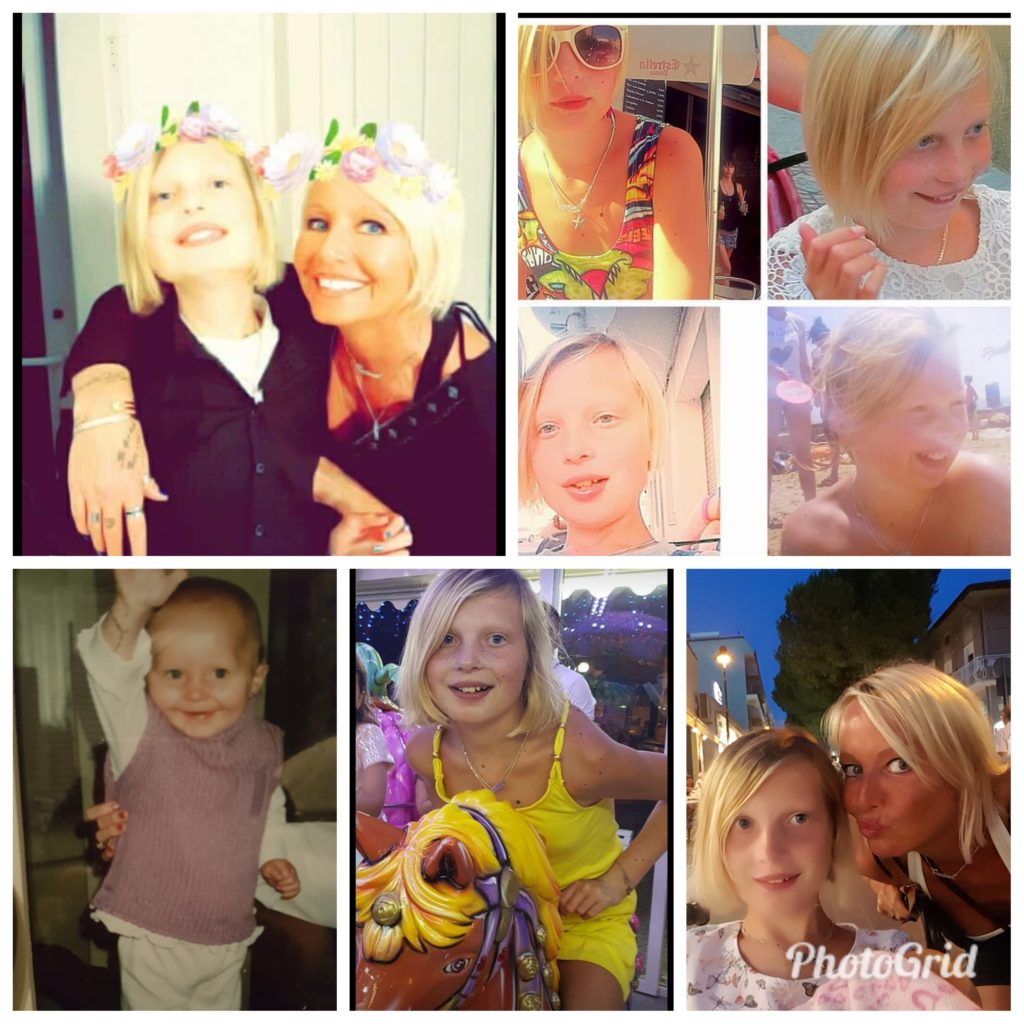
Chloe’s History
Coucou..je m apelle Chloé..j ai 16ans et demi
Maman va vous raconter un bout de mon histoire
Il a fallut 16ans et 5 mois pour enfin trouver le nom de la maladie: KAT6A je suis là seule à ce jour diagnostiquer en Belgique
16 longues annees de combat… a frapper à toutes les portes.. un parcours du combattant…de douleurs..de peur..de doute..de pleurs…d angoisse et d impuissance et surtout seules face à ses médecins qui ne comprenais rien..
Un merci tout particulier à mon généticien qui n a jamais baisser les bras et à la cardiologue qui nous a jamais abandonnée..et a mamy et papy
Mais nous n avons jamais perdu espoir
Chloé est une vraie petite guerrière..a traversée déjà beaucoup trop d opération et de souffrances du haut de ses 16 ans
Son sourire..sa force..sa joie..son courage..son amour..sa persévérance.
Une vraie merveille
Mon diamant! mon trèfle à 4 feuilles,unique elle est extra-ordinaire.
Née à 39 SA..2kg820..TN:47cm..
PCN:31,5cm
-Microcephalie pré et post natale
-apnee du sommeil
-Assise à 2 ans..et la marche à 2ans et 8mois
Épilepsie
-Absence de language..a ce jour dis quelques mots une trentaine et le plus beau “maman Je t’aime” a 15 ans et essaye de se faire comprendre
-Artere sous claviere droite rétro oesophagienne
-RGO important
-difficulté alimentaire avec nécessité de gastrostomie et nyssen a l âge de 2 ans
A ce jour Ne mange plus du tout à part du liquide par biberon ou à la paille
-intolérance aux bruits
-déficience intellectuelle retard mental
-bruxisme important
-sommeil agité et très difficile
-Opérer d une CIA a 5ans
-fuite valve mitrale
-Hypotonie
-amyotrophie
-atrophie musculaire ne pèse plus que 38 kilos
-Pieds et mains toujours froids
-Hyperlaxite articulaire douleurs intenses dans les membres:dérivé de morphine
-coudes inversé
-Cyphose dorsale
-scoliose
-instabilité des rotules luxables
-troubles du comportement
-Dysfonctionnement du tronc cérébral responsable de trouble de la fonction alimentaire majeurs
-Opérer 2 fois des dents trop petite mâchoire
-anévrisme de l aorte ascendante stade 3
Prise de betabloquant
-constipation sévère impossible à gérer
-ventre toujours gonflé et remplis d air
-dépendante de moi pour les gestes du quotidien:habillage,toilette,manger
– a besoin d une chaise roulante pour ses déplacements car plus de tonus musculaire..fatigue et douleurs
Chloé a aussi une profusion de naevus plus de 100
Des exéreses ont déjà été réalisé sur plusieurs car ils étaient très suspects heureusement ils étaient benins
A ce jour elle dois encore se faire opérer de plusieurs naevus qui semblent très dangereux
Mon généticien pense que j ai aussi une autre maladie qui engendrerait une profusion aussi importante
Voilà vous savez les grandes lignes
Je voulais juste remercier ce groupe..ces parents incroyable et ses petits héros qui sont devenu comme une famille..un repère..un phare qui m’éclaire.
Par Carine
English Translation:
Hello..I call myself Chloe..I am 16 years and a half Mom will tell you a piece of my story It took 16 years and 5 months to finally find the name of the disease: KAT6A I am here alone to date diagnose in Belgium 16 long years of fighting … knocking on all the doors .. an obstacle course … of pain … of fear..of doubt … of tears … of anguish and impotence and especially alone in front of his doctors who did not understand anything .. A special thank you to my geneticist who never give up and to the cardiologist who has never abandoned us … and has mamy and grandpa But we have never lost hope Chloe is a real little warrior … has already gone through far too much surgery and suffering from her 16 years His smile, his strength, his joy, his courage, his love, his perseverance.
A real wonder My diamond! my clover with 4 leaves, unique it is extra-ordinary.
Born at 39 SA..2kg820..TN: 47cm .. NCP: 31,5cm
-Microcephaly pre and post natal
-Sleep Apnea
-Seated at 2 years old..and walking at 2 years and 8months Epilepsy
-No language..a date say a few words about thirty and the most beautiful “mom I love you” at 15 years old and tries to be understood
-Arte under right retro esophageal keyboard
-RGO important
-difficult food with need for gastrostomy and nyssen at the age of 2 years. To this day does not eat anything other than liquid by bottle or straw
-noise intolerance, mental retardation
-bruising easily
-sleep agitated and very difficult
-Operate a CIA at 5 years
-passed mitral valve
-Hypotonia
-amyotrophie muscular atrophy weighs only 38 kilograms
-Feet and hands always cold
-Hyperlaxitis articular intense pain in the limbs: derived from morphine Inverted
-Cyphosis dorsal
-scoliosis
-instability of luxable patella
-troubles behavior
-Brainstem dysfunction responsible for major food function disorder
-Operate teeth twice too small jaw aneurysm of ascending aorta stage 3 Betablocking
-serious constipation unmanageable
-always inflated and filled with air
-dependent on me for the daily gestures: dressing, toilet, eating
– needs a wheelchair for his movements because more muscle tone … fatigue and pain
Chloe also has a profusion of more than 100 nevi Exereses have already been made on several because they were very suspicious fortunately they were benign. To this day she still has to undergo surgery of several nevi that seem very dangerous. My geneticist thinks that I also have another disease that would generate such a large profusion. Here you know the main lines. I just wanted to thank this group..this incredible parents and her little heroes who have become like a family..a landmark..a lighthouse that enlighten me.
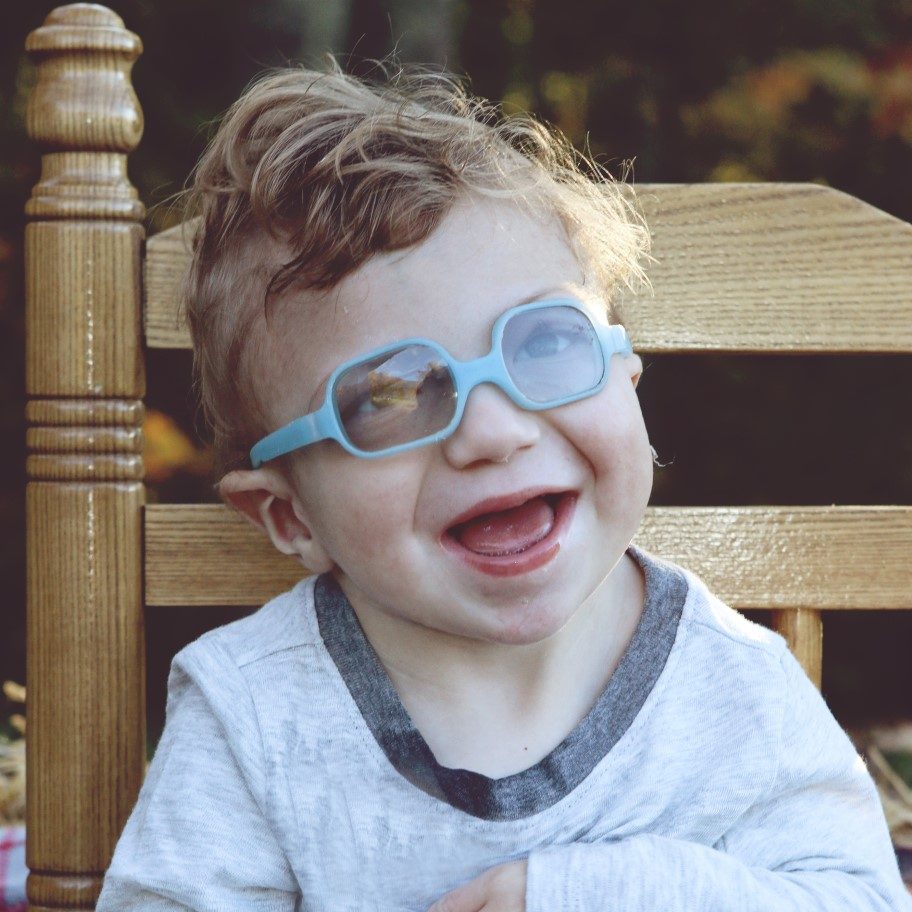
Sweet Holden
Our sweet son Holden was born in April of 2015. He was diagnosed with KAT6A in December of 2016. The doctors told us there were issues present during the pregnancy. Holden had enlarged kidneys and calcium deposits on his heart and bowel. We saw a few specialists and had some tests ran but nothing showed any major problems. I was also diagnosed with oligohydramnios (low amniotic fluid) due to his kidneys during the second and third trimester of my pregnancy with Holden. He was delivered emergency C-section at 36 weeks at our local hospital. We noticed right away that he was having a hard time sucking therefore he couldn’t eat, he also was very small only 4lbs 14oz. The doctors decided it was best that he be treated at a neonatal intensive care unit a few hours away. That was the hardest thing as a mother that I have ever had to do, watch helplessly as my precious newborn baby was rushed in an ambulance to another hospital so far away. He spent about 5 weeks in the nicu. They ran so many genetic tests on him and everything came back normal. While he was in the nicu we learned that he had hydronephrosis of the right kidney, his testicles were ascended, and he had mal rotation of his intestines, among other small issues such as hypertonia, hypotonia, low set nipples and ears, bilateral ear pits and a bicuspid aortic valve. Holden also had to have a g-tube insertion and surgery on his intestines due to the mal rotation.
He got to come home from the nicu when he was around 1 month old. We were set up with many specialists to see over the next year including cardiology, neurology, plastic surgery, neuro surgery, G.I, urology and genetics, hoping to find out what was causing Holden so many issues. When Holden was a couple months old we learned that he has a rare eye condition called CVI, he also has astigmatisms and is near sighted. Holden was also diagnosed with microcephaly and a neck condition concerning his c1 and c2 vertebrae. We got set up with our local CDSA agency and now have awesome therapists to work with. Holden receives P.T., O.T., vision and speech. When we saw our genetics team when Holden was just a few months old they set us up with a research program that offered whole exome sequencing. It took about 6 months but they gave us the answer we had been looking for, for almost 2 years, that Holden had a rare syndrome called KAT6A.
Holden has had 3 surgeries since birth, the mal rotation of his intestines, deflux of his right kidney, and had his testicles descended surgically. He will have one more surgery this year on his neck. He is going to have his c1 and c2 vertebrae fused to his skull because they did not form properly. We pray that will be his last.
Although Holden has been faced with so many challenges medically and physically he has accomplished so much. He was sitting at 16 months and beginning to eat pureed foods. Now that he is going on 3 years old he is crawling all over the place and chasing his brothers, and he is eating all kinds of pureed foods with texture added. We are so very proud of him! It is truly amazing to us what this sweet boy is capable of and we know as his family that the sky is the limit. He is the sweetest most loving child I have ever met. He loves his two older brothers and our dog. He loves bubble baths and funny noises. Holden just lights a room with his smile. We are very confident that he will walk and communicate with us through signs and/or verbally.
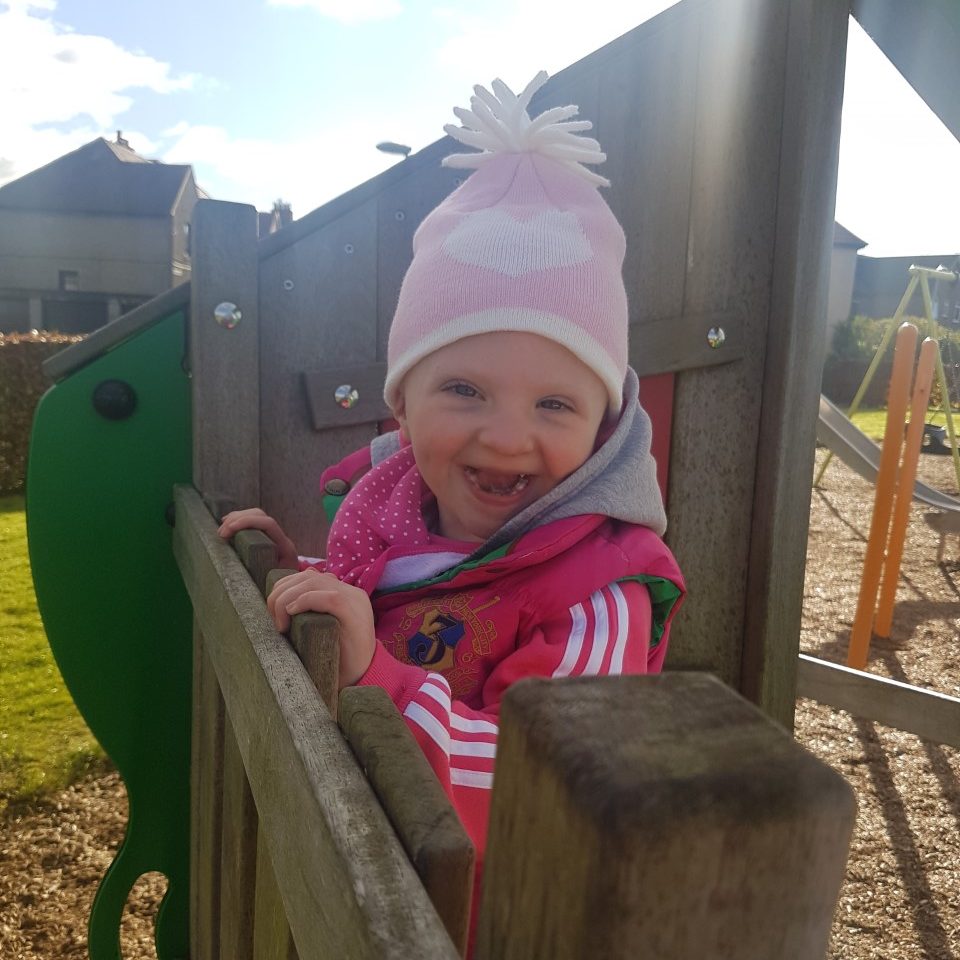
Joyful Madison
Madison is 3 years old and was diagnosed with KAT6A a few months ago.She is non verbal and doesn’t walk yet. She does shuffle her bum along the floor very fast and holds on to things to get around. She is the happiest little girl on the planet. She has low muscle tone and a hole in her heart. She also has severe gastro, which she takes omeprezol for everyday and is on melatonin for sleep at night. Her older brother and sister love spending time with her as do we. She started nursery school in September and is loving it. She is a joy to the world.
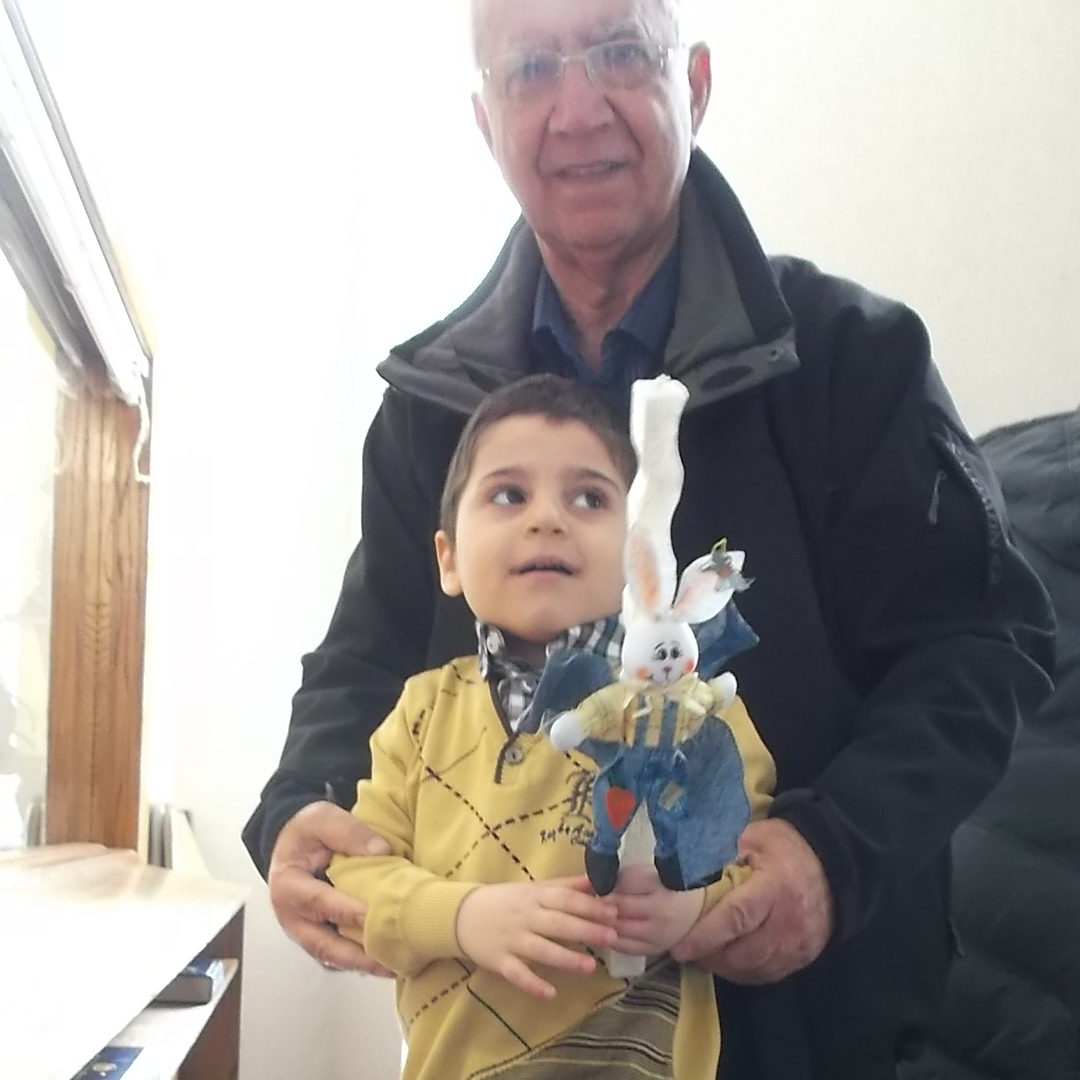
Dear Grandson
Peter,
Je t’aime beaucoup
Tu es le premier petit-fils de la famille
Et surtout le frère ainé de tes frères et ta sœur
Qui sont charmants
Paul, John
Et Mary
Tu es le trésor que le bon Dieu a donné à papa Emile et maman Natacha
Toi le bien aimé pour ta beauté exceptionnelle
Qui avec la temps devient rayonnante dans la famille
PETER
J’aime ta tendresse envers tes frères et ta sœur
Surtout pendant le jeu et au moment du dejeuner, calme, fin et silencieux
Tu es devenu l’enfant préféré de la famille
Et le but de tes grand-parents est de t’acheter des cadeaux
Et les habits les plus chers
Dignes d’un prince come toi très cher Peter
Moi ton grand-père qui a visité l’Amérique pour quelques jours
Je t ai entouré avec mes mains et tu t’es assis sur mes genoux
Que des fois j’ai prié le bon Dieu
Qu’il me permet de te voir de nouveau
Mais je le prie surtout
Pour qu’ il fait son miracle de te guérir de ta difficulté
Et que tu t’exprimes comme tes frères et ta sœur
Sans difficulté à prononcer les mots
Que Notre Dieu tout puissant accepte
English translation:
Peter,
I love you so much
You are the first grandson of the family
And especially the older brother of your brothers and your sister
Who are charming
Paul, John
And Mary
You are the treasure that God has given to Father Emile and Mother Natasha
You are so loved for your exceptional beauty
Which with the time becomes radiant in the family
PETER
I love your tenderness towards your brothers and your sister
Especially during playtime and at lunch time, quiet, calm and silent
You have become the favorite child of the family
And the goal of your grandparents is to buy you gifts And the most expensive clothes
Worthy of a prince like you dear Peter
I, your grandfather who visited the USA for a few days
I surrounded you with my hands and you sat on my lap
How many times have I prayed to God that he allows me to see you again
But I pray him especially to do his miracle to heal you of your difficulty
And that you’ll be able to express yourself as your brothers and your sister
Without difficulty to pronounce the words
May our Almighty God accept
Medical News
KAT6 Clinic Opens at Boston Children's Hospital
Major Development: A KAT6 Clinic Has Opened at Boston Children’s Hospital
We’re excited to share that a new multidisciplinary clinical program for individuals with KAT6A and KAT6B is now open at Boston Children’s Hospital, led by Dr. Olaf Bodamer and Dr. William Brucker. This clinic will serve as a true medical home for families, offering coordinated care across specialties.
The KAT6 Foundation is proud to have helped fund the development of this program, made possible through the generosity of our donors.
As the team continues organizing the clinic, families who are interested in care are encouraged to contact rarediseases@childrens.harvard.edu. This inbox is monitored several times a day, and families can expect a response within 24 to 48 hours. After reaching out, families will receive an intake form and the opportunity for a brief informal meeting to discuss expectations. Appointments for an initial evaluation are available on a regular basis with Dr. Brucker and/or Dr. Bodamer.
In addition to patient care, the clinic will gather natural history data and collect biospecimens for the IRB-approved KAT6 biorepository, which supports ongoing biomarker discovery. The clinicians will also continue collaborating with research partners such as the Serrano Lab at Boston University.
For appointments or additional details, families can reach the clinic coordinator at rarediseases@childrens.harvard.edu
300 Longwood AvenueBoston, MA 02115

Bowel Obstructions in the KAT6 Population
Parents and caregivers of children or adults with KAT6 disorders are the first to recognize whether the person they care for is in distress. Those continually looking after the person’s needs are the best ones to intervene and advocate for medical care when it appears that a problem is present and getting worse. But what are we looking for and when might it call for emergency care?
INTESTINAL BLOCKAGE
Gastrointestinal issues are common with KAT6 disorders. Low muscle tone throughout the body may mean low motility in the gut — weak contraction of the muscles that mix and propel contents in the gastrointestinal tract. When there is a temporary lack of normal muscle contractions of the intestines this is known as ileus — not a blockage, but a stoppage. (Think of a blockage as a train wreck, preventing any other train from passing through, and think of a stoppage as merely a train sitting on the tracks and failing to move along.)
When the contents of the upper or lower bowel cease to move, the resulting mass can become enlarged and can harden as it dries out, stretching the part of the intestine where the mass occurs. Regular contractions can return and eventually move it along, but if the contents sit too long they can begin to ferment and decay, with potentially serious results. Vomiting and diarrhea, for example, are normal consequences once the body applies its other resources to the obstruction.
If it does not eventually start moving on its own it may respond to non-invasive treatments such as stimulants taken orally or a rectal enema, depending on proper assessment of the location of the problem. But if there is a physical barrier to continued movement of intestinal contents, the problem can quickly become life-threatening.
MALROTATION AND VOLVULUS
Around the tenth week of gestation, as the intestinal tract is developing, it normally moves from the base of the umbilical cord into the abdominal cavity. As the intestine descends into the abdomen, it makes two rotations and settles into its normal position. When a portion of the intestine, or even the entire intestinal tract, fails to lie properly in this space, it ls known as a malrotation.
A malrotation may cause immediate symptoms and problems after a baby is born or may lead only to intermittent trouble, or it may cause no problems at all. In some people it is not discovered until well into adulthood or perhaps never discovered at all. In others, it can be the source of repeated obstructions. The point is, a malrotation is an anatomical defect and one that must be suspected if problems arise, especially in early childhood. It can lead either to continuous or intermittent problems but is not necessarily dangerous.
When a loop of intestine and the membrane that holds it in place twist around each other like sausage links or a kinked garden hose, this causes a bowel obstruction called a volvulus. A certain kind of volvulus in a horse is commonly called a torsion. It is not going to clear and open back up on its own, and normal muscle contractions in the gut are not going to force a trapped mass of intestinal contents to move past it.
The trapped material, already partially digested, continues to break down, though, and some contents may be ejected as diarrhea or gas, while most of it will remain and swell the gut. A person suffering a volvulus, who enters emergency surgery soon enough, may still lose part of the intestinal tract in surgery. Without emergency surgery a volvulus is almost certain to be fatal.
If a volvulus is suspected in an emergency room, a buildup of gas in the intestine may show up on a series of x-rays, which must be taken at intervals long enough for changes to appear but no so long that surgery comes too late.
OTHER GI ISSUES
The esophageal sphincter is the valve between the esophagus and the stomach. When the muscle that keeps this valve closed is weak, a blast of burning stomach acid may rise as far as the throat. This is acid reflux. A baby with KAT6A or KAT6B can be resting quietly in a baby seat, alert and cheerful, and suddenly scream in pain and terror. If this happens with any frequency, reflux should be suspected when nothing else is likely.
Dumping syndrome is a group of symptoms, such as diarrhea, nausea, and feeling light-headed or tired after a meal, that are caused by rapid gastric emptying, a condition in which food moves too quickly from the stomach to the duodenum. This can become an issue after a person has undergone GI surgery. Adjustments in diet or medicine can resolve things, and, if surgery was involved, time may be the best healer.
OUR NEED TO REMAIN VIGILANT
Communication problems are common with the KAT6 population as well as an apparent high tolerance for pain. Children and adults with KAT6 disorders, especially those who can’t tell us that something hurts or where it hurts, need to be monitored continually for lack of gut movement. Constipation, (a general term for any disruption of intestinal activity that leads to pain and irregularity of bowel movements), can make a normally cheerful person irritable.
A volvulus is a rare occurrence in the general population, but among the KAT6 population it seems common enough to be of serious concern. Although we are still studying the matter and don’t have statistics, it appears that untreated bowel obstructions are the leading cause of death among children affected by KAT6 disorders.
Many of those with KAT6 disorders are tube-fed through a gastrostomy. For some, this is their only source of nutrition, and so variations in gastrointestinal activity are less likely to be caused by daily changes in diet.
What is the person’s normal frequency of bowel movements? Has it been a day longer than normal? Two days? Is she also becoming irritable, combative, unable to sleep? Does this happen in repeating cycles? What does her blood work show? What does a gastroenterologist say? Do cycles of irritability correlate with cycles of unusual toilet contents? Someone close to the patient needs to be asking these questions and insisting on answers.
People with KAT6 disorders may show no signs of a bowel obstruction until it has progressed to a serious degree. They may quietly tolerate the increasing pain until it has become severe. An obstruction can go from bad to dangerous quickly. It is hard to differentiate an obstruction from other gastro-intestinal issues. Obstructions can happen again and again and can strike at any age.
While it is probably more likely to become an issue early in a child’s life, an affected person who has a KAT6 disorder can seem to be OK for years, perhaps irritable at times for no apparent reason. Just because it hasn’t been diagnosed at an early age it could be that a complete obstruction simply hasn’t happened yet. The best prevention of complications is be on top of it all of the time. Not all doctors understand that, with a bowel blockage, you can still pass diarrhea — the assumption seems to be that if they’re passing anything at all then there’s no obstruction.
Medical services vary from country to country, and while another country may have excellent hospitals and perfectly competent doctors, they may also have different approaches to parent involvement, different protocols for intervention, and different standards for what can and should be treated.
Compounding the danger, a doctor may not consider an intestinal obstruction if a parent or caregiver hasn’t suggested it, and so a doctor wants to ascribe a change in behavior to anxiety, a virus, a food allergy, and so on. Meanwhile the child has mere hours to get the problem resolved or else irreversible damage has been done with a high potential for fatal results.
LIVING WITH IT
We aren’t supposed to tell people about our poop or ask others about theirs. With KAT6 in a family we could save a life if we get beyond that taboo. In our own experience, Beth and I share in all phases of the care of our son, Sam, who is now 32 years old. He is one of the more severely disabled individuals with KAT6A syndrome, and so we must pay constant attention to all the signs he gives us. We “read” his behavior, we both examine his bowel movements daily or at least describe to each other what he has done. (He even has an “I POOPED TODAY” T-shirt.)
Sam has had a gastrostomy and feeding tube since he was a baby and receives all medicine and sustenance through the tube. He had a nissen fundoplication during his first surgery as a baby, so he cannot burp or vomit. He had a malrotation of the duodenum at birth (corrected by surgery), reflux as a baby, a volvulus before he was two (indicated by changes in a gas pocket on successive x-rays), a second near-fatal obstruction due to adhesions, and numerous instances of ileus and other partial obstructions requiring hospital stays. As an adult he is now treated for ulcerative colitis. He does not walk and can’t speak. But he is engaging and even mischievous, affectionate, enthusiastic, and popular. When he hurts, his only ways to show it are in withdrawal, resistance, and restlessness.
We are fortunate that Sam has had doctors who care about him as a person and who listen to us, his parents. His doctors, though, need to trust what we are telling them, and so our information must be reliable. By educating ourselves, paying close attention to the signs that Sam gives us, and making sure we communicate consistently and accurately with medical providers, we have been Sam’s best advocates.
Many parents have observed GI benefits from a mitochondrial cocktail and other supplements, such as Cytra-3. Learn more about these supplements by watching Dr. Richard Kelley’s presentation from our 2022 Conference. It is essential to consult your child’s physician before starting anything new.
Foundation News
Announcing our New Executive Director
Dear KAT6 Community,
On behalf of the KAT6 Foundation Board of Directors, I am pleased to announce the appointment of Aimee Reitzen as the KAT6 Foundation's new Executive Director.
Many of you already know Aimee through her years of service to our community. As a founding Board member and longtime volunteer, she has helped shape the Foundation from its earliest days. Throughout her nearly decade-long involvement, Aimee has led many of the Foundation's communications, awareness, and family support efforts, including developing the KAT6A & KAT6B Caregiver Handbook, launching the Foundation's website, spearheading the creation of the Empowered Grants Program, and helping grow KATwalk from a small grassroots fundraiser into the Foundation's signature annual event. For many families, she has also been one of the first people they connected with after receiving a diagnosis, offering guidance, resources, and a sense of community during an often overwhelming time.
As the parent of a child with KAT6A syndrome, Aimee brings a unique combination of personal experience, professional expertise, and deep commitment to our mission. For nearly a decade, she has worked tirelessly to support families, strengthen connections across our global community, and help advance research and educational initiatives that benefit individuals with KAT6A and KAT6B syndromes.
Since our founding in 2017, the KAT6 Foundation has grown tremendously. Together, we have funded important research, established the Patient Registry and iPSC Biobank, expanded educational resources, launched family support initiatives, supported the development of the KAT6 Clinic at Boston Children's Hospital, and built a truly global community. Aimee has been an important part of that journey, and we are excited to see her step into this leadership role as we continue building on that progress.
Please join me in congratulating Aimee on her new role. I look forward to working alongside her as we continue advancing our mission to improve the lives of individuals and families affected by KAT6A and KAT6B syndromes.
Thank you for your continued support of the KAT6 Foundation and the incredible community we have built together.
Warm regards,
Jordan Muller
Chairperson, Board of Directors
KAT6 Foundation
KAT6 Foundation: Leadership Update
Dear KAT6 Families, Friends, and Partners,
We are writing to share an important update about the KAT6 Foundation’s leadership.
The Board of Directors would like to share an important recent change to our organization. After eight years of incredible service to our community, Natacha Esber and Emile Najm, the founders of the KAT6 Foundation, have made the decision to step down from their positions as Chair of the Science Committee and CEO, respectively. We extend tremendous gratitude to them as the creators of our foundation, and as tireless advocates for our mission to advance scientific research and to support our families. There is no part of this organization that has not been touched by their incredible passion, vision and drive. Natacha has advanced scientific research and provided countless hours of medical advice to numerous families. Emile has run the legal and financial aspects of our foundation, as well as overseeing all of our committees. Together they created our conferences and enthusiastically welcomed new families into our fold.
We are beyond grateful to them for founding this organization and for the many years of dedication, vision, and relentless work they have poured into building a brighter future for individuals living with KAT6A and KAT6B. Their leadership helped create the strong foundation we stand on today, and because of their efforts, our community, our research network, and our global visibility have grown in extraordinary ways.
They will always be a cherished part of our community, and we hope you will join us in thanking them for their years of service and lasting impact.
Our Board of Directors is fully engaged and will be stepping in collectively to ensure uninterrupted operations during this transition. In the meantime, Jordan Muller will be serving as Interim Executive Director, providing operational leadership, coordination, and continuity.
Our Science Committee members will continue their work without interruption, and all funded research projects and partnerships remain active. There will be no delays or changes to ongoing scientific or community initiatives.
The heart of the KAT6 Foundation has always been our community and the many dedicated parents, caregivers, clinicians, and volunteers who bring this work to life. That remains absolutely unchanged.
As the Foundation evolves, we will post several new roles in the coming weeks. If you or someone you know would like to join our mission, we would love to hear from you. Our team is mostly made up of parents and caregivers, but not entirely, and we welcome anyone with a passion for helping this community thrive. Please keep an eye out for position announcements soon.
We are also thrilled to share that planning is underway for our first ever KAT6 Family Weekend in 2026. This is a milestone event many of our families have dreamed of. We cannot wait to bring our community together in person for connection, learning, joy, and support. The date and location will be announced in January 2026, and we look forward to seeing you all there.
We are confident that this next chapter will bring continued growth, clarity, and opportunity for our community. Our mission remains unwavering: to advance research, strengthen family support, and build a connected global community for every individual living with KAT6A and KAT6B.
With deep gratitude for Emile and Natacha’s incredible service, and with excitement for the road ahead, we thank you for your trust, your compassion, and your partnership.
With appreciation,
The Board of Directors
KAT6 Foundation
For more information: Q and A
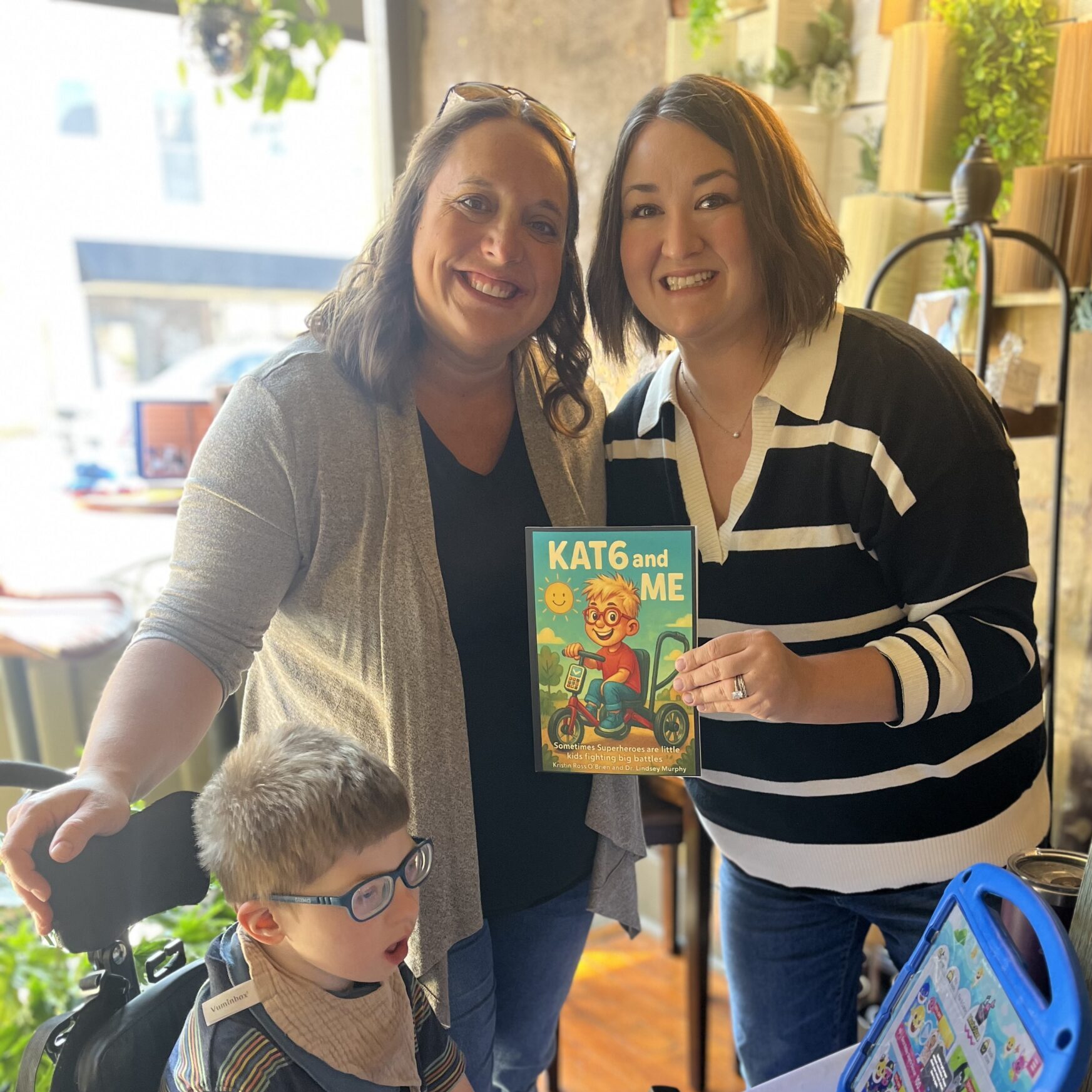
The Story Behind 'KAT6 and Me': Turning a Family's Journey into Hope
When Kristin Ross O’Brien’s son Max wanted to write a school report about his younger brother’s rare genetic condition, she made a surprising discovery; there were no children’s books about KAT6.That moment sparked a dream: to create the story that didn’t yet exist.Together with her friend and child life specialist, Dr. Lindsey Murphy, Kristin brought that dream to life in KAT6 and Me; a beautifully written and illustrated book that teaches, comforts, and celebrates children living with KAT6 disorders, while helping others understand and include them.“The idea for KAT6 and Me began with Max,” Kristin recalls. “He wanted to write about KAT6, but there weren’t any books, not even for adults. From that moment, it became our family’s wish to one day write the children’s book that didn’t exist; a story that could teach, comfort, and celebrate kids like Bash, and help others understand them too.”
A Collaboration Built on Friendship and Shared Purpose
Kristin shared her idea with longtime friend Dr. Lindsey Murphy, an associate professor of child life at Missouri State University. The connection between the two was immediate.“I’ve been a witness to Bash’s journey from the beginning,” Lindsey says. “Knowing there was something tangible I could do to support their efforts for education, inclusion, and advocacy was an easy ‘yes.’”The writing process flowed naturally.“We’d already been friends for years, connected through a playgroup for our kids,” Lindsey explains. “Kristin brought the heart and soul. She knows her child and the KAT6 community better than anyone. My background as a child life specialist helped us make complex or emotional topics understandable for children. Together, we blended those strengths.”Kristin agrees that the process was both heartfelt and fulfilling.“We wrote this book in the fringes of our lives- over coffee while our kids happily destroyed the playroom,” she laughs. “We talked about how to highlight Bash’s abilities instead of just his challenges, and how to weave facts into storytelling that still felt magical.”
The Heart of the Story: Bash
At the center of KAT6 and Me is Bash, Kristin’s youngest son, whose journey has inspired many.“Bash came into our lives first as our foster son when he was six months old and instantly captured our hearts,” Kristin shares. “Before he turned two, we were blessed to officially adopt him and make him a forever part of our family.”Diagnosed with KAT6B syndrome as an infant, Bash’s life has been filled with both challenges and incredible joy. Despite facing multiple therapies, surgeries, and medical complexities, his optimism and determination shine through.“Every small victory, every sound, and every step for Bash is a celebration,” Kristin says. “He’s a kindergartener, a disability advocate, and even a playground philanthropist. . . helping bring adaptive playground equipment to our small town. His happy personality touches everyone he meets.”
A Bridge for Families, Educators, and Professionals
Both authors hope KAT6 and Me will serve as more than a story. They see it as a bridge for connection and understanding.“For families, I hope this book gives language they can use to explain a diagnosis in a positive, age-appropriate way,” Lindsey says. “For professionals, I hope it reminds them that small gestures, listening, explaining clearly, offering hope — make a lasting impact.”Kristin adds,“My greatest hope is that KAT6 and Me becomes a bridge. I want families who are newly diagnosed to feel less alone. I want siblings to have words that help them explain and celebrate their brothers and sisters. I want teachers and classmates to see what inclusion looks like- to recognize that kids with complex needs have the same love of laughter, friendship, and play as any other child.”
A Ripple of Awareness
Since its release, KAT6 and Me has reached far beyond the rare disease community.“We expected families affected by KAT6 to be our main audience,” Lindsey notes, “but teachers, advocates, and libraries across the world have embraced it as a tool for inclusion and awareness.”Kristin and her family have shared the book through local events and readings in Boonville, Missouri, and have donated copies to schools, hospitals, and libraries.“Parents of children with rare diagnoses have sent us pictures of their kids holding the book,” Kristin says. “Teachers have told us they’re using it to start conversations in classrooms. And siblings, kids like my Jack, Max, and Leah, now have a way to explain and understand their brother’s condition. That’s exactly what we dreamed this book could do.”
Giving Back to the Community
To honor the children and families affected by KAT6 disorders, all royalties from KAT6 and Me are donated to the KAT6 Foundation to support research, awareness, and family connection.“Every purchase helps fund the search for answers and celebrates children like ours,” Kristin explains.Lindsey and Kristin’s collaboration continues, with plans for additional projects to serve families across the KAT6 community.“Our conversations keep sparking new ideas,” Lindsey says. “We already have plans for more books to reach other audiences within the KAT6 community.”
A Story That Connects and Inspires
What began as a school project has grown into a heartfelt movement of awareness and inclusion. Through KAT6 and Me, Lindsey Murphy and Kristin O’Brien remind readers that every story, no matter how small, has the power to connect, to teach, and to bring hope to families everywhere.“I learned that hope grows when it’s shared,” Kristin reflects. “Every message from another family, every photo of a child holding the book, reminds me that stories can connect people who might have otherwise felt alone.”About the AuthorsKristin Ross O’Brien is a writer, advocate, and mother of four living in Boonville, Missouri. Her family is passionate about inclusion and rare disease awareness.Dr. Lindsey Murphy is an Associate Professor of Child Life at Missouri State University and a dedicated advocate for children with complex medical needs.Read More about their journey in Q&A: Dr. Lindsey Murphy and Kristin Ross O'Brien


Empowering Families Through the Empowered Grant
"Wilder has done so well with the therapies she has received with the help of the Empowered Grant!" KAT6A and KAT6B syndromes are a pair of rare genetic variants that can cause a spectrum of health complications, impacting those diagnosed to varying degrees. As a foundation, we strive to spread awareness and advance research surrounding these syndromes. Part of this mission is fostering a strong community that supports individuals diagnosed and their families.
However, while essential and irreplaceable, support alone is not enough to address the wide range of complications many individuals face. Therapies and accessibility equipment—among other forms of treatment—allow individuals diagnosed with KAT6A and KAT6B to experience life more fully and with greater ease. Unfortunately, the more impactful the solution, the higher the cost—expenses that not everyone can afford.
Empowered Grants provide individuals diagnosed with KAT6A and KAT6B the funding needed to purchase assistive equipment, treatments, and technologies that may otherwise be out of reach.
Take Jack’s family, for example. While society has become increasingly accessible, there is still much work to be done—especially in historic areas where equipment like Jack’s wheelchair can be difficult to maneuver.
With help from the Empowered Grant, Jack’s family was able to purchase a portable ramp that has allowed them to take Jack into shops and restaurants with ease. Jack’s mother, Elyse, explains, “Purchasing and using the ramp in public has not only helped us, but helped many others, as the ramp has encouraged local business owners to purchase their own portable ramps for public use!”
Families have also used the grant to address more specialized needs. For example, David Exl explains that his daughter, Ella, was diagnosed with KAT6A, “which affects both her mental and physical development,” and “CVI (Cortical Visual Impairment), a visual processing disorder that makes it difficult for Ella to interpret visual stimuli.”
Using the Empowered Grant to fund Ella’s physical therapy, Exl shared that “a major milestone came in the fall of 2023 when she started crawling—it was the first time she could move around on her own.”
In addition to medical treatments, meaningful social connections have proven instrumental in the lives of KAT6 families. The Empowered Grant also supports these connections by helping families—like Siahna Anderson’s—fund special programs such as summer camps.
According to Shannon Anderson, Siahna’s mother, at “Adams Camp—a camp designed specifically for kids with special needs—” Siahna “gets to experience camp activities such as swimming, canoeing, horseback riding, summer tubing, shopping, and overnights with friends.” She also receives therapies such as speech, music, occupational therapy, physical therapy, and art therapy.
These programs offer individuals with KAT6 a sense of belonging and normalcy that may be difficult to experience otherwise. Living with any condition can be scary and isolating, but the opportunities made possible by the Empowered Grant can ease that burden through new experiences and meaningful connections.
Backed by our generous donors, we have awarded more than 120 Empowered Grants to KAT6 families around the world. Whether for medical equipment or specialized therapies, this funding provides individuals access to essential resources tailored to their unique needs. The KAT6 Foundation remains deeply committed to supporting our community through Empowered Grants—and the life-changing opportunities they make possible.
Learn more about how to apply for an Empowered Grant to support your child here.

KAT6 Foundation Selected as a 2024 #RAREis Global Advocate Grant Recipient
We're excited to announce that we've been selected as a 2024 #RAREis Global Advocate Grant recipient by the #RAREis program from Amgen! In total Amgen awarded 75 one-time $5,000 grants to global rare disease advocacy organizations to support programs and disease education initiatives.
We’re motivated to continue making a positive impact for the rare disease community by expanding our efforts in KAT6 education and advocacy as we work to address the needs of all those impacted.
Learn more about the #RAREisGrant here: https://www.rareiscommunity.com/rareis-global-advocate-grant/
#RAREisTM began as a social media campaign launched by Horizon Therapeutics, now Amgen, in 2017 to elevate the voices, faces and experiences of the rare disease community. It has since grown into a global program that provides individuals and families around the world with access to resources that connect, inform and educate as they navigate their daily lives. The hashtag (#), #RAREis, remains as a way to follow the conversation on social media and remains in the name and logo to represent the broader program and community. As part of their mission, they strive to improve the experience of living with a rare disease by providing support to many organizations that offer crucial programs and services for people living with rare diseases.
KAT6 on Screen
July 1, 2023
Working through ZebraKinder — our KAT6 counterpart in Austria, filmmaker Niko Mylonas has released the new production, “Genetic Defekt.” Coordinated by executive producer (USA) Emile Najm for the KAT6 Foundation and retaining its German title, the production is available in English narrated by our own Katie Bator as well as in its original German.
While the film does touch on the technical aspects of KAT6, it is, in essence, an opportunity to get acquainted with families at home and abroad who live with KAT6A and KAT6B. We of course want to educate ourselves on the ways in which the genetic defect expresses itself in its several variations, but the film centers around the daily lives of those affected.
We see in the film the spectrum from subtle, almost unnoticeable effect to severe impairment, depending on the type of gene anomaly — truncation, missense, deletion, and other variants. We meet Ella in Innsbruck and her advocate-aunt, Monika Rammal. We visit Gianna in Michigan, Samantha in Germany, Will in New York, Warren, Bay, Max, Hadley, and many more. We hear from some of the scientists and parent-advocates we’re familiar with including Dr. Jacqueline Harris, Dr. Angie Serrano, Aimee and Jeff Reitzen, Susan and George Hartung. We visit with the Najm family, who, on behalf of Peter, had the inspiration in 2017 to organize parents in starting a foundation for KAT6 support and research.
In addition to a glimpse into the everyday trials and sweet triumphs of those who live with KAT6, the film lets us spend a poignant few minutes with the parents of Helin, a girl in Germany who fell ill and, although brought to a hospital, did not survive. Her parents share the message to be learned from that tragedy.
While the film points out that the disease is yet rare, it is not new. Nor perhaps is it as rare as was previously thought. And that could be the film’s lasting contribution. Once you’ve seen it, show it to others, speak of it, send it, share it widely. Make it the centerpiece of a gathering or fund-raiser. And make clear that, whenever there is a question of a genetic irregularity in a child, testing is available. Our children deserve the care we can give, and we, as parents and caregivers, deserve the best information.
At 48 minutes in length, “Genetic Defekt” is a tool we have long needed to promote awareness of the adversity that has brought us together.
-OR-

Picture: Kuno Büsel (left) and Niko Mylonas (right)
We are pleased to announce that on September 28, 2023, the KAT6 Foundation was awarded the Austrian Child Welfare Award, the MYKI-Award 2023 for the film.
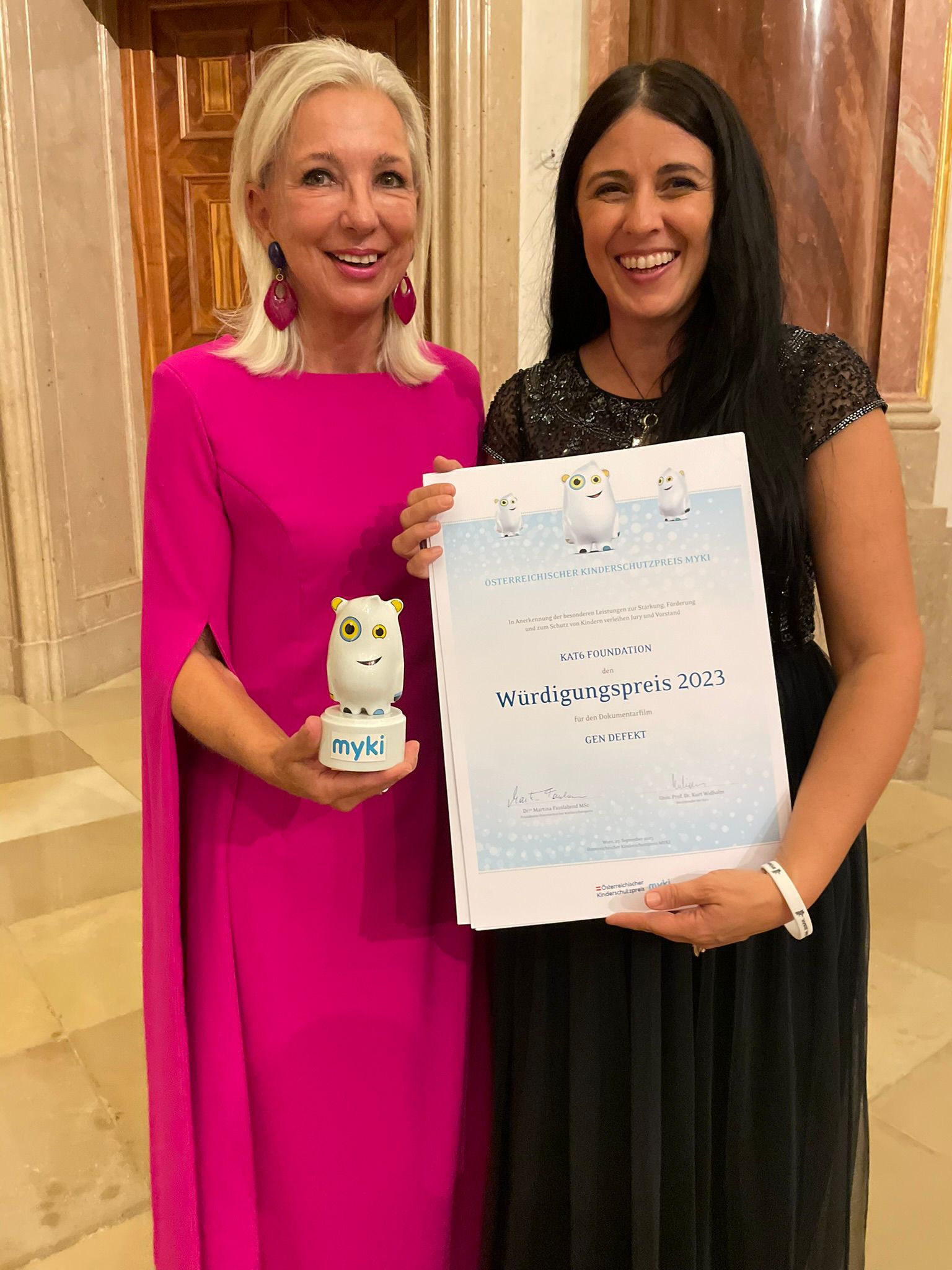
Picture: Executive Producer (Austria) Monika Rammal receiving the MYKI-Award on behalf of the KAT6 Foundation.
The KAT6 Foundation Establishes Committee to Study Mortality
TO ALL KAT6 CAREGIVERS:
A PLEA FOR INFORMATION
The KAT6 Foundation has established a committee to study mortality within our community. It is sobering to realize that there is a need for this. While we are all here to surround and support those burdened with the loss of a loved one, the ultimate objectives for this committee are to guide parents in understanding how best to adjust to KAT6 disorders and to prevent suffering among our most vulnerable members.
As parents we are silently alert for signs that our child is in distress, which can arise due to sickness, physical trauma, or emotion. We watch for the expected discomfort of common illnesses.
A child who is upset may simply be complaining out of selfishness or a violated sense of fairness, and what’s wrong can be easily fixed. When we hear crying or whining, though, especially when children are immature and lack verbal skills, we pay attention to the other ways they communicate.
AN OVER-RIDING CONCERN
Our children with KAT6 disorders must endure the usual childhood ailments, but they (and we) may not suspect less-common possibilities that lurk in the background. Heart conditions and bone frailty are two that have proved common, but one more affliction has been responsible for claiming the most lives among our affected population: bowel obstructions. Over a three-year period we have lost as many as five members of our tiny group to this tragic cause.
Slow motility in the gut — weakness of the muscles that push the contents along — is a common KAT6 disorder. Symptoms of a bowel obstruction are subtle at first and can be mistaken for something else. Obstructions do not readily clear without intervention, and there is no easy test until the situation has become critical.
Many of our kids have a high tolerance for pain and, when in distress, may at first seem merely to be cranky or anti-social. If their sleep patterns are already poor — and that is common — then we may not notice this one more thing contributing to their insomnia.
It is hard to imagine a child’s misery, unable to describe the pain, when we, the care givers who know our children, and the medical providers have not yet even suspected gut pain. And it horrifies us to think that a child can die not understanding why we are failing to do something to ease the agony.
WHAT YOU CAN DO NOW
With the high proportion of deaths due to this one cause, the mortality committee urgently asks parents and caregivers to help. With an eye to preventing the suffering of even one more bewildered and innocent member, the committee needs data, clear, reliable, factual information.
While we await autopsy reports, it is especially important that all KAT6 individuals be entered into the NORD Registry. The more we know about the ways in which KAT6 disorders are manifested the better the Foundation can support meaningful research, support caregivers, and help assure the comfort and well-being of the ones who have brought us all together.
To create a registry entry for a person with KAT6A or KAT6B, please use the link: https://kat6a.iamrare.org/Account/Register
To update an existing registry entry, and ideally you would do so annually, please go to: https://kat6a.iamrare.org/Account/Login
WHAT HAPPENS TO THE DATA
De-identified data in the KAT6A/KAT6B Patient Registry is available to scientists — including medical professionals, geneticists, pharmacologists, nutritionists, and others — who want to study any aspect of KAT6A and KAT6B. The KAT6 Foundation provides funding for many such research projects.
Members of the Foundation and the mortality committee are notified of the loss of a community member only through our support network, not by NORD or any other agent that is properly committed to privacy. Our ability, as a committee of the Foundation, to obtain an autopsy report and other information depends on the willingness of those who are affected and have access to the report and the details of the family’s loss.
To contact a member of the mortality committee, please use the contact form at https://kat6.org/contact or add a post to the KAT6 Support Group page at Facebook: https://www.facebook.com/groups/803280496369674
Your information may help save a life!
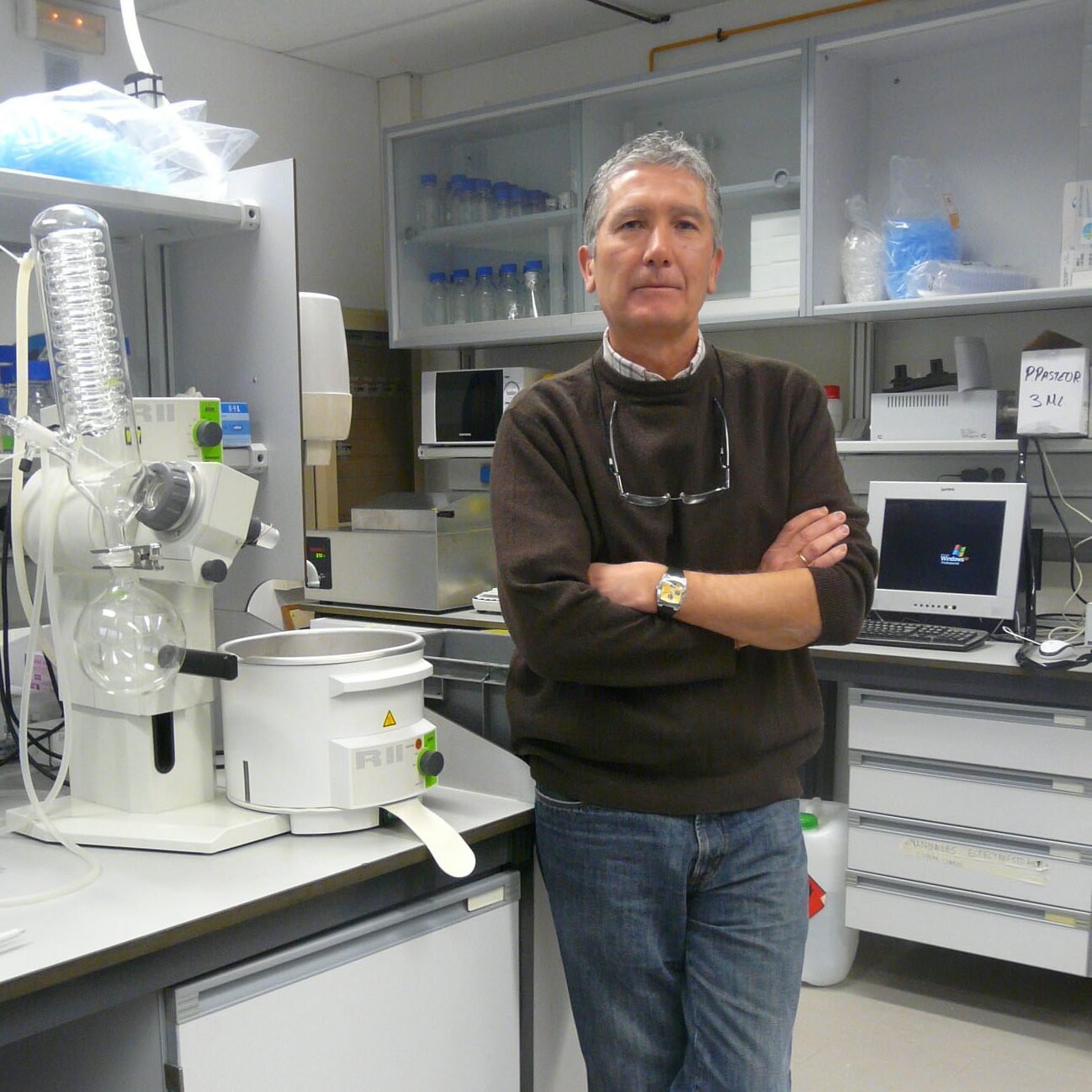
KAT6 Foundation Reaches Milestone as First Funded Research Project is Published
We are proud to report that research led by Dr. José A. Sánchez-Alcázar and his team was published by Genes on November 15, 2022 in an article titled Pantothenate and L-carnitine Supplementation Corrects Pathological Alterations in Cellular Models of KAT6A Syndrome. This is an important milestone for our Foundation as it is the first research project that we directly funded to reach publication, and is an important step forward on the path to finding a treatment for KAT6 individuals. Development of surrogate models simulating KAT6A gene variation is the first step towards understanding the pathophysiological alterations caused by this gene variation. By outlining pathophysiological pathways, treatment model(s) addressing alterations in these pathways can be developed for testing.
Three individuals with KAT6A gene variation participated in the study conducted at Universidad Pablo de Olavide in Spain. An initial series of experiments generated evidence supporting the use of patient-derived fibroblast to study KAT6A gene variation. The team identified four critical pathophysiological processes altered by KAT6A gene variation: 1) Coenzyme A (CoA) metabolism, 2) Iron metabolism, 3) Enzymatic antioxidant system and 4) Mitochondrial function. Two compounds were identified to have a positive impact on the altered physiological pathways. These compounds are: 1) Pantothenate and 2) L-carnitine. Pantothenate is a CoA metabolism activator and L-carnitine is a mitochondrial boosting agent. Supplementation with pantothenate and L-carnitine supported the survival of the KAT6A fibroblast in a stress inducing medium. The concentration of pantothenate and L-carnitine varied in all three KAT6A cell lines suggesting that different type of mutations respond differently to these positive compounds. The KAT6A gene plays a significant role in histone acetylation which is a key process involved in cell progression and differentiation. Supplementation with pantothenate and L-carnitine resulted in significant increase in histone acetylation, recovery of gene expression patterns and expression levels of proteins affected due to the KAT6A gene variation.
We want to extend our sincere thanks to Dr. José A. Sánchez-Alcázar and his entire team for their professionalism and commitment to rare disease research and the KAT6 community. We look forward to building upon this partnership in the future.
Recap of KAT6A & KAT6B Virtual Symposium: GI Health and Beyond
The Gastrointestinal Health and Beyond in Children with Rare Genetic Variations was a 2-hour long, patient-centered, collaborative event organized by the KAT6 Foundation. It was designed to fuel conversation about the gastrointestinal challenges faced by children with KAT6A and KAT6B gene variations and enable open dialogue between families, clinicians, and researchers. The webinar provided a platform for the KAT6 community to expand its network and build connections with new researchers and experts working on tackling GI and GI related issues. More than 90 individuals registered for this event. On the day of the webinar, 20 families and 35 scientists attended the event. With some international representation, the majority of the families and researchers were based in the USA.
Dr. Tanya Tripathi, research coordinator of the KAT6 Foundation moderated three scientific presentations by renowned scientists – Dr. Sarkis Mazmanian, Dr. Gustavo Mostoslavsky and Dr. Richard I Kelley. Please read the summary of the presentations here.
Research Updates

2025 KAT6 Foundation Newly Funded Research Projects
We are pleased to support eight new studies advancing our understanding of KAT6 syndrome.
These projects address disease mechanisms, model development, potential therapies, and biomarkers—laying critical groundwork for clinical trials.
1. Engineering novel genetic tools to unravel the complex KAT6-disease phenotype
Chief Investigator: Effie Apostolou, PhD
Institution: Weill Cornell Medicine, New York City
Dr. Apostolou’s team is working to create a stem cell genetic model which will allow them to control the amount of KAT6A and KAT6B proteins available in a cell. This will allow them to see how different amounts of these proteins affect cell development and highlight future potential therapeutic targets. The group is committed to making their model available to the broader research community. (This study is fully funded by an anonymous donor.)
2. Patient-specific neurodevelopmental models for KAT6B mutations
Principal Investigator: Valerie Arboleda, MD, PhD
Institution: David Geffen School of Medicine, University of California, Los Angeles
This study leverages patient-derived induced pluripotent stem cell (iPSC) lines to investigate how specific KAT6B variants contribute to the phenotypic divergence between Genitopatellar Syndrome (GPS) and Say-Barber-Biesecker-Young-Simpson syndrome (SBBYSS). Brain-like cells grown from patient samples will help researchers understand condition-specific development and open the door to personalized therapies.
3. Neurobehavioral differences in early- and late-truncating KAT6A mouse models
Principal Investigator: Valerie Arboleda, MD, PhD
Institution: David Geffen School of Medicine, University of California, Los Angeles
Dr. Arboleda’s team is creating new, KAT6A variant-specific mouse models to study how different types of KAT6A variants affect brain development and behavior. Based on data from their lab, they will test therapies to see if it can help improve symptoms in mice with severe KAT6A mutations. This study brings us closer to testing treatments that target the specific effects of different mutations in people.
4. Biomarker discovery in KAT6A for translation into clinical trials
Chief Investigator: Sarah Donoghue, MBBS, FRACP
Institution: Murdoch Children’s Research Institute (MCRI), University of Melbourne, Melbourne
This project seeks biomarkers in blood and brain tissues to further understand how cognitive function develops in KAT6A with the hope that we will be able to use this information to measure disease progression and treatment success. This work is building on multi-Omic work that we are doing in the lab to characterize KAT6A models of mice and KAT6A human cortical neuron experiments. We are hoping to understand the impact of KAT6A on brain function in mice and whether carnitine treatment improves this, paving the way for future human trials. Together, these studies will help get us closer to starting clinical trials in people with KAT6A syndrome.
5. A multidisciplinary clinical program and identification of a metabolomic profile in KAT6A/KAT6B conditions to inform clinical trial readiness
Co-Investigators: Olaf Bodamer, MD, PhD andWilliam Brucker, MD, PhD
Institution: Boston Children’s Hospital & Harvard Medical School, Boston
Dr. Bodamer is launching a new clinical program for patients with KAT6A and KAT6B syndromes at Boston Children’s Hospital. The team will collect detailed health data and samples from patients to better understand the natural course of these conditions. They’ll also search for unique biomarkers that could help doctors know when a treatment is working. This project combines high-quality patient care with research aimed at preparing for future clinical trials.
6. Epigenetic landscapes and gene regulation in KAT6 disorders
Co-Investigators: Maria A. Serrano, PhD and Gustavo Mostoslavsky, MD, PhD
Institution: Center for Regenerative Medicine & Boston University Chobanian & Avedisian School of Medicine, Boston
This research examines how KAT6 mutations affect gene regulation in brain, gut, and blood cells. The team will use an advanced method to see how these cells’ “epigenetic landscapes” (chemical markers that control gene activity) are different from healthy cells. It may also identify blood-based biomarkers for easier monitoring of disease progression and treatment.
7. CA3 neuronal development in KAT6A and KAT6B patient-derived iPSCs
Principal Investigators: Thomas Durcan, PhD, Faïza Benaliouad, PhD and Gilles Maussion, PhD
Institution: Neuro: Montreal Neurological Institute-Hospital & McGill University, Montreal
Focusing on the CA3 hippocampal region linked to memory, this study uses patient-derived stem cells to uncover how brain cell development is altered in KAT6 syndromes. The goal is to find points for therapeutic intervention.
8. When Proteins Go Wrong: Unravelling the Impact of KAT6 Variants on Protein Structure and Function
Principal Investigator: Shabih Shakeel, PhD
Institution: Walter and Eliza Hall Institute of Medical Research
This project is focused on characterizing the effects of different KAT6A and KAT6B mutations on protein structure and important protein functions such as binding with protein partners and acetylation. They will do this first characterization by isolating the proteins and studying them in test tubes. Dr. Shakeel’s team will then see how these changes in function lead to downstream changes to actual cells. (This study is fully funded by an anonymous donor.)
MCRI is Seeking Participants for New KAT6A Research Study
Biomarker discovery in KAT6A for translation into clinical trials
For KAT6A syndrome and other neurodevelopmental disorders, researchers are starting to understand the dysregulated cellular processes affecting neurons and their supporting cells. The Chromatin Disorders Research Team at Murdoch Children’s Research Institute is currently using a mouse model, alongside human cortical neurons to study gene expression and metabolomics KAT6A syndrome, in collaboration with Professor Anne Voss at the Walter and Eliza Hall Institute of Medical Research. This work is being led by PhD student Dr Sarah Donoghue and supervised by Professor David Amor and Professor Paul Lockhart. The goal of this project is to understand the differences in brain development that occur in KAT6A syndrome, and to identify biomarkers that may show response to treatment in clinical trials.
The team is looking to extend their work on blood biomarkers in KAT6A mice to children and adults with KAT6A syndrome. In this project, they will measure a range of molecular compounds in blood samples from human participants with KAT6A syndrome, using untargeted metabolomic and proteomic analyses. They will compare the plasma profile of 50 KAT6A syndrome participants to the plasma samples of 20 participants without KAT6A syndrome. The aim is to identify biomarkers that are detectable in the plasma of participants with KAT6A syndrome, with the hope that these can be translated for use in clinical trials, as an objective measure of treatment efficacy as the community proceeds to clinical trials.
For more information about this research, please contact Sarah Donoghue at sarah.donoghue@mcri.edu.au.

Attention Researchers
ATTENTION RESEARCHERS:
The KAT6 Foundation is addressing a critical research priority raised by families—gastrointestinal challenges faced by children with KAT6A and KAT6B. This population experiences a concerning increase in mortality due to poor GI motility and perforation. Tragically, we recently lost another child to GI perforation, which has heightened anxiety and urgency within the community.
We are keen to better understand the factors that contribute to susceptibility to poor motility, bowel obstruction, and the risk of perforation in children with KAT6A and KAT6B. Equally important is identifying effective treatment strategies to address these serious issues.If you are interested in collaborating on this important challenge, please email the KAT6 Foundation at support@kat6a.org.
Learn more about Bowel Obstructions in the KAT6 Population.
KAT6 Foundation Reaches Milestone as First Funded Research Project is Published
We are proud to report that research led by Dr. José A. Sánchez-Alcázar and his team was published by Genes on November 15, 2022 in an article titled Pantothenate and L-carnitine Supplementation Corrects Pathological Alterations in Cellular Models of KAT6A Syndrome. This is an important milestone for our Foundation as it is the first research project that we directly funded to reach publication, and is an important step forward on the path to finding a treatment for KAT6 individuals. Development of surrogate models simulating KAT6A gene variation is the first step towards understanding the pathophysiological alterations caused by this gene variation. By outlining pathophysiological pathways, treatment model(s) addressing alterations in these pathways can be developed for testing.
Three individuals with KAT6A gene variation participated in the study conducted at Universidad Pablo de Olavide in Spain. An initial series of experiments generated evidence supporting the use of patient-derived fibroblast to study KAT6A gene variation. The team identified four critical pathophysiological processes altered by KAT6A gene variation: 1) Coenzyme A (CoA) metabolism, 2) Iron metabolism, 3) Enzymatic antioxidant system and 4) Mitochondrial function. Two compounds were identified to have a positive impact on the altered physiological pathways. These compounds are: 1) Pantothenate and 2) L-carnitine. Pantothenate is a CoA metabolism activator and L-carnitine is a mitochondrial boosting agent. Supplementation with pantothenate and L-carnitine supported the survival of the KAT6A fibroblast in a stress inducing medium. The concentration of pantothenate and L-carnitine varied in all three KAT6A cell lines suggesting that different type of mutations respond differently to these positive compounds. The KAT6A gene plays a significant role in histone acetylation which is a key process involved in cell progression and differentiation. Supplementation with pantothenate and L-carnitine resulted in significant increase in histone acetylation, recovery of gene expression patterns and expression levels of proteins affected due to the KAT6A gene variation.
We want to extend our sincere thanks to Dr. José A. Sánchez-Alcázar and his entire team for their professionalism and commitment to rare disease research and the KAT6 community. We look forward to building upon this partnership in the future.
Recap of KAT6A & KAT6B Virtual Symposium: GI Health and Beyond
The Gastrointestinal Health and Beyond in Children with Rare Genetic Variations was a 2-hour long, patient-centered, collaborative event organized by the KAT6 Foundation. It was designed to fuel conversation about the gastrointestinal challenges faced by children with KAT6A and KAT6B gene variations and enable open dialogue between families, clinicians, and researchers. The webinar provided a platform for the KAT6 community to expand its network and build connections with new researchers and experts working on tackling GI and GI related issues. More than 90 individuals registered for this event. On the day of the webinar, 20 families and 35 scientists attended the event. With some international representation, the majority of the families and researchers were based in the USA.
Dr. Tanya Tripathi, research coordinator of the KAT6 Foundation moderated three scientific presentations by renowned scientists – Dr. Sarkis Mazmanian, Dr. Gustavo Mostoslavsky and Dr. Richard I Kelley. Please read the summary of the presentations here.
Recap of KAT6A & KAT6B Virtual Symposium: Speech & Language
On March 24, 2022, The KAT6A Foundation hosted the second KAT6A and KAT6B Virtual Symposium. The event was designed to solidify the KAT6A and KAT6B research network of clinicians and researchers through identification of research gaps, opportunities and collaborations. The symposium series aims to drive patient- centered and collaborative research to improve outcomes for individuals with KAT6A and KAT6B syndromes. The symposium series also aims to spark new collaborations among the KAT6A and KAT6B research groups and healthcare communities.The first KAT6A and KAT6B symposium, conducted in 2021, discussed a range of neurodevelopmental challenges faced by children with KAT6A and KAT6B gene variations. The second symposium expanded on the stakeholder representation to include parents of children with KAT6A and KAT6B gene variations along with health care professionals, clinicians, and researchers. This symposium focused on understanding the impact of KAT6A and KAT6B gene variations on speech and language development, a domain that is most commonly affected in this population of children.10 speakers and nearly 60 members of the KAT6 community attended the the symposium. The symposium ran for three hours and was organized in two sessions: the first session provided an overview of the KAT6A Foundation’s goal to empower patient-centered research and initiatives led by the Foundation to support research. The second session focused on understanding the pathophysiology of KAT6A and KAT6B related speech and language disorders.
Please read the symposium recap pdf for a complete summary of each presentation. The next virtual symposium is tentatively scheduled in September 2022. This symposium will focus on unraveling the range of gastrointestinal difficulties faced by individuals diagnosed with KAT6A and KAT6B syndromes.